
Why journal requirements matter
Every journal publishes instructions for authors: the article types it accepts, word and reference limits, section structure, reference style, file formats, declarations and policies on data, preprints and ethics. Editors use them to judge quickly whether a submission is ready for review. A manuscript that ignores them signals carelessness before anyone has read the science, and may be returned unreviewed.
Requirements come from three layers. The first is discipline-wide guidance, such as the Recommendations of the International Committee of Medical Journal Editors (ICMJE), which many medical journals follow (International Committee of Medical Journal Editors, 2024), or the style manual of a field. The second is publisher policy, for example on data sharing or preprints. The third is the journal's own guide for authors, which takes precedence. ICMJE conventions are an important example, but not universal. Choose the journal first (see how to select a journal), then prepare the manuscript for it.
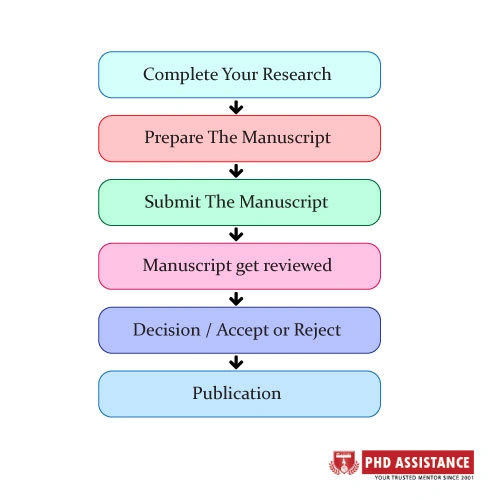
A pre-submission checklist
Work through the target journal's guide with a checklist like this one. Items marked "journal" vary and must be taken from the guide; the others apply almost everywhere.
| Item | What to check | Source of the rule |
|---|---|---|
| Article type and length | Type exists in the journal; word, abstract, table and reference limits met | Journal |
| Originality | Not under consideration elsewhere; any preprint or thesis version disclosed | Journal and publisher policy |
| Title page | Title, authors, affiliations, corresponding author, ORCID if requested, word count | Journal; ICMJE for medical journals |
| Abstract and keywords | Structured or unstructured as required; no undefined abbreviations or citations | Journal |
| Reporting guideline | Checklist completed for the study design, if the journal requires it | EQUATOR guidelines (e.g. CONSORT, STROBE, PRISMA) |
| Authorship and contributions | Everyone listed meets authorship criteria; contributions described | ICMJE; CRediT taxonomy |
| Declarations | Funding, conflicts of interest, ethics approval, consent, acknowledgements | Journal |
| AI use | Use of generative AI disclosed as the journal requires; no AI tool listed as author | COPE; journal |
| Data and code | Data availability statement; repository links where required | Publisher policy |
| Permissions | Permission obtained for any reproduced figure or table | Copyright holder |
| Figures and tables | Numbered, cited in order, with legends; files in the required format and resolution | Journal |
| References | Every citation matches an entry; style as required; details checked against sources | Journal |
| Files | Word or LaTeX template used if required; supplementary files labelled | Journal |
Section by section
The ICMJE Recommendations give a detailed account of what each section of a research paper should contain (International Committee of Medical Journal Editors, 2024). The points below summarise that logic in a form that applies beyond medicine; follow your journal where it differs. For a fuller treatment of writing each section, see how to write a journal manuscript section by section.
- Title page. Besides the title and authors, medical journals following ICMJE ask for items such as funding sources, disclaimers, a word count and the number of tables and figures. For titles, see writing an effective title.
- Abstract. ICMJE asks for structured abstracts for original research, systematic reviews and meta-analyses; many journals in other fields use unstructured abstracts.
- Introduction. Context, the gap and the objective or hypothesis, citing only directly relevant work and not reporting your own results.
- Methods. Enough detail for another researcher to repeat the study, including ethics approval and statistical methods.
- Results. In a logical order, without repeating every table value in the text, reporting all planned outcomes, including those that did not support the hypothesis.
- Discussion. Main findings, comparison with other studies, limitations and implications, without restating the results in detail.
- Units and abbreviations. Medical journals following ICMJE use metric units and often require SI units for laboratory values; define abbreviations at first use and use only standard ones.
Reporting guidelines
Many journals, especially in the health and life sciences, require a completed reporting checklist with the submission. Choose the guideline that matches the design, not the topic. CONSORT 2025 updated the trial guideline that had stood since 2010 (Hopewell et al., 2025).
| Study design | Guideline |
|---|---|
| Randomised trial | CONSORT 2025 (Hopewell et al., 2025) |
| Observational study (cohort, case-control, cross-sectional) | STROBE (von Elm et al., 2007) |
| Systematic review | PRISMA 2020 (Page et al., 2021) |
Reporting guidelines describe what to report, not how to conduct a study, but reading the checklist before you write often reveals missing information, such as how the sample size was decided or how missing data were handled (von Elm et al., 2007; Page et al., 2021). Statistical reporting is a common reason for revision; see reporting statistical results.
Authorship, AI use, prior publication and data
Authorship. Authorship carries credit and responsibility. ICMJE sets criteria that every author should meet (International Committee of Medical Journal Editors, 2024), and many publishers now ask for contribution statements based on the CRediT taxonomy, which describes roles such as conceptualisation, methodology, analysis and writing (Brand et al., 2015). Agree the author list and order with co-authors and your supervisor before submission; see writing a paper as a team.
Generative AI. COPE's position is that AI tools cannot be authors because they cannot take responsibility for the work, and that authors must disclose how such tools were used (Committee on Publication Ethics, 2023). Publishers' instructions differ in detail, as an analysis of journal and publisher policies showed (Ganjavi et al., 2024), so follow your journal's wording.
Prior publication. A thesis deposited in a repository, a preprint or a conference abstract is not always treated as prior publication, but policies vary and must be checked (Eve et al., 2021). Reusing your own published text is governed by text-recycling policies (Committee on Publication Ethics, 2024). For adapting a chapter, see converting a thesis into a journal manuscript.
Data. Most publishers now ask for a data availability statement saying where data can be found or why they cannot be shared. Depositing data in a repository with clear metadata follows the FAIR principles of findable, accessible, interoperable and reusable data (Wilkinson et al., 2016).
Final checks and the cover letter
Leave time between finishing the manuscript and submitting it. Most of the problems editors see at the desk are not scientific but mechanical: a missing declaration, figures cited out of order, references that do not match the citations, or an abstract that reports a different sample size from the results. These are easiest to catch in a final read made specifically for consistency rather than for argument.
- Read the guide for authors again from start to finish, ticking each requirement against the manuscript.
- Check that every number in the abstract matches the results and tables.
- Check that every in-text citation has a reference entry and every entry is cited, and open the source for any reference you have not read yourself.
- Confirm that figure files open, are legible at the printed size and are numbered in the order they are cited.
- Ask a co-author or colleague who has not worked on the paper to read the abstract and figures alone and say what the study found.
The cover letter is short. It names the article type, states the question and main finding in two or three sentences, explains why the work suits this journal's readers, and confirms the declarations the journal asks for, such as originality and agreement of all authors. It is not the place to repeat the abstract or to argue with expected objections. If the journal invites suggested reviewers, propose people with relevant expertise and no conflict of interest, and never suggest close collaborators. After submission, see the stages a journal article goes through.
Worked example (illustrative)
A doctoral researcher wants to submit an observational chapter on physical activity and sleep in older adults to a public health journal. Reading the guide for authors, she finds a 3,500-word limit, a structured abstract of 250 words, a maximum of five tables and figures and a required STROBE checklist. Her chapter has 9,000 words and eight tables. She cuts the literature review to the two paragraphs the introduction needs, moves three tables to supplementary material, completes the STROBE checklist and discovers that she had not reported how missing data were handled, so adds a sentence to the methods. She checks the journal's policy on theses (her thesis is embargoed, which she declares), writes a data availability statement pointing to the university repository, lists contributions using CRediT roles, and declares that she used a grammar tool but no generative AI for content. Each item on the checklist is now traceable to the guide.
Common mistakes
- Formatting for a generic "journal style" instead of the target journal's guide.
- Submitting a thesis chapter with its full literature review and over the word limit.
- Omitting the reporting checklist or completing it without checking the manuscript.
- Reproducing figures from other papers without permission.
- Listing honorary authors, or omitting someone who meets the authorship criteria.
- Failing to disclose AI use, a preprint or the thesis version.
- Copying references from databases or AI tools without checking them against the sources.
- Submitting to two journals at once.
Key takeaways
- The target journal's guide for authors takes precedence over general conventions; read it before revising.
- ICMJE Recommendations are an important model for medical journals, not universal rules (International Committee of Medical Journal Editors, 2024).
- Choose and complete the reporting guideline that matches your design, such as CONSORT 2025, STROBE or PRISMA 2020 (Hopewell et al., 2025; von Elm et al., 2007; Page et al., 2021).
- Authorship, contributions and AI use must be declared honestly; AI tools cannot be authors (Committee on Publication Ethics, 2023; Brand et al., 2015).
- Check prior-publication, text-recycling and data policies before submitting a thesis-based paper (Eve et al., 2021; Committee on Publication Ethics, 2024; Wilkinson et al., 2016).