Proofreading
For a fluent, already edited manuscript that needs a final check.
From$0.02 per word
Delivered in 3 to 5 working daysChoose Proofreading- Edits for clarity and style
- Journal formatting
- Editorial report

Copyediting by subject editors that makes your manuscript correct, clear and consistent, in your target journal's style.
Preparing a manuscript for journal submission? Our subject editors correct grammar, spelling and punctuation, improve clarity and flow, and make terms, abbreviations, numbers and references consistent in your journal's style, such as APA, AMA, Vancouver or Chicago. Every change is in tracked changes, so you keep control of your text and your meaning.
Many researchers overlook errors in grammar, consistency and formatting, not because they lack ability but because they are too close to their own writing. Editors and reviewers notice. Unclear language can hide good science, slow review and lead to requests for language editing or, sometimes, rejection.
Copyediting is a careful line-by-line edit of a complete manuscript. It corrects language and mechanics, improves clarity, and makes style consistent with the journal's guidelines, without changing your argument or findings. It comes after substantive editing, which works on structure and argument, and before proofreading, the last check of the final version.
Grammar, spelling, punctuation and word choice corrected so reviewers can follow your argument.
Terms, abbreviations, symbols, units, numbers, headings and references treated the same way throughout.
Text, citations and references in the style your target journal specifies.
Changes are made in tracked changes, and queries ask you rather than guess where meaning is unclear.
You spend less time on language corrections and more on your research.
Editing terms are often used loosely. These are the three levels publishers and professional editors usually distinguish. Choose the level your manuscript needs, not the most expensive one.
Works on the whole manuscript: its structure, argument, focus and fit to the journal. The editor may suggest moving, cutting or adding sections and checks that aims, methods, results and conclusions align. This is our manuscript rewriting service.
Works sentence by sentence on a complete draft: grammar, syntax, word choice, clarity, concision, academic tone and consistency, and applying the journal's style to text, citations and references. Some publishers call this language editing. This page describes this level.
The final check of a finished, already edited manuscript or proof: typing errors, spelling, punctuation, and inconsistencies in headings, spacing, numbering and citations. A proofreader does not rewrite sentences.
Journals follow a published style manual, a house style, or both. Common manuals are the AMA Manual of Style in medicine, the APA Publication Manual in psychology, education and the social sciences, the Chicago Manual of Style in the humanities and some social sciences, and the ICMJE recommendations with Vancouver (NLM) citations in biomedicine. IEEE, ACS and other societies have their own. Where the journal's author guidelines differ from the manual, the journal wins.
Your editor keeps a style sheet of decisions, such as British or American spelling, hyphenation, capitalisation, abbreviations, number and unit formats, and drug, gene or species nomenclature, and applies it across the manuscript, tables, figure legends and supplementary files.
All changes are made in Microsoft Word tracked changes, or as marked changes in LaTeX, so you can accept or reject each one. Where the meaning is unclear, the editor adds a comment asking you to confirm rather than guessing. Technical content, data and conclusions are not changed.
On request, we issue a certificate stating that the manuscript, identified by its title and date, was copyedited by PhD Research Lab. It shows the journal that language editing was done. It is not a guarantee of acceptance or an endorsement of the science, and it does not cover text you change or add after editing. Some journals may still ask for further language editing.
Our copyeditors work on the language, presentation and consistency of your manuscript without changing your research contribution.
The mechanics of language checked throughout, in British or American English as your journal requires.
Verb tense, subject-verb agreement, articles and sentence construction corrected.
Unclear, convoluted or over-long sentences rephrased so your argument comes through, without changing your meaning.
Informal or imprecise wording replaced with clear, formal academic language; hedging matched to the strength of the evidence.
Redundant words, phrases and repetition removed.
Terms, abbreviations (defined at first use), symbols, units, numbers, headings, list styles and cross-references made consistent across all sections.
In-text citations and the reference list formatted to the required style, and cross-checked so every citation has a reference and every reference is cited.
Titles, captions and legends checked for clarity and consistent numbering, and every table and figure checked to be cited in the text.
Headings, page set-up, font, spacing, numbering and indentation adjusted to the journal's or institution's requirements.
Wrong words that a spell-checker misses, missing words and details that do not match between sections, flagged for you to confirm.
Examples of manuscripts from our sample library.
A computer science manuscript on data security and detecting malicious activity. View sample
A public health research paper on the effects of the pandemic on mental health. View sample
A methods paper on memo-writing approaches in grounded theory. View sample
Here is what we need from you, what copyediting covers, and what sits in other services.
Send these with your request.
Part of every manuscript copyediting order.
Available as add-ons or other services.
Every copyediting order comes with an editor who knows your field and your journal's conventions.
Your editor works in or near your discipline, from computer science and engineering to the life sciences, medicine and clinical research, management and finance, the social sciences, law and the humanities, so technical terms are handled correctly.
After copyediting, a second editor proofreads the manuscript for remaining errors and consistency.
Editors work to the author guidelines of publishers such as Springer Nature, Elsevier, Taylor & Francis and Wiley, and to current editions of APA, AMA, Chicago, Vancouver and Harvard styles.
Editors with medical backgrounds edit clinical trials, case reports and reviews to AMA or Vancouver style and ICMJE recommendations, and check consistency with reporting guidelines such as CONSORT.
Your manuscript and data are kept confidential and used only for your order.
The path to journal publication is rarely straightforward. PhD Research Lab helps researchers like you resolve common language, style and formatting issues before submission.
“My supervisor told me there are problems with the formatting, the reference citations and the headings.”
We apply your journal's or university's style, such as APA, Chicago, IEEE or Vancouver, consistently to references, headings, spacing and fonts.
Usually works best: Fixed price Talk to us“The peer reviewers told me my manuscript lacks an academic tone and needs language editing.”
We copyedit the manuscript for clarity, coherence and academic tone while keeping your voice, so you can tell the editor how the language was addressed, with a certificate if the journal asks for one.
Usually works best: Fixed price Talk to us“I'm nearly done, but this is my first journal submission and I'm worried about my sentence structure and grammar.”
Before submission, your editor corrects sentence structure and grammar and improves academic tone, whether or not English is your first language.
Usually works best: Fixed price Talk to us“I want my results to be communicated clearly, but I haven't got the figures and tables right.”
We check that your results text matches your tables and figures, that each is cited and numbered correctly, and that titles, captions and legends follow the journal's specifications.
Usually works best: Hourly mentoring Talk to usScenarios are illustrative, based on requests we often receive from researchers.
We offer three levels of editing to suit the state of your manuscript and your journal's requirements. Prices depend on word count, discipline and deadline, and every package starts with a free quote. Priority delivery is available as an add-on for Standard and Substantive.
Prices in USD. Minimum charge $25 per order. Your exact price is confirmed in a free quote.
For a fluent, already edited manuscript that needs a final check.
For most manuscripts before submission, including authors writing in English as an additional language.
For manuscripts that also need comments on structure and argument.
One single point of contact (SPOC) stays with you through every step, so you always know who to ask.
PhD Research Lab copyedits every manuscript to your target journal's author guidelines and house style, or to your university's rules for theses. Editing changes how your research is expressed, never what it says: the content, data and conclusions remain yours. Our editors have supported researchers at universities around the world, including the UK, the USA, the Netherlands, Australia, the UAE, India, China, Russia, Kenya and Nigeria.
*Where access and copyright allow.
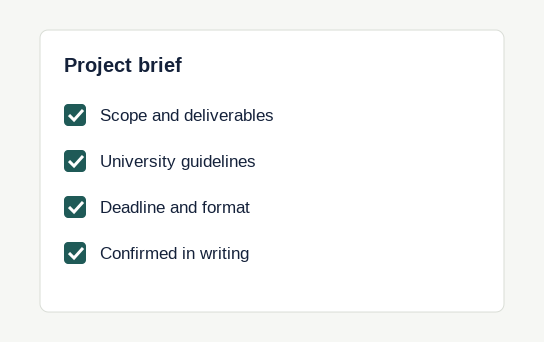
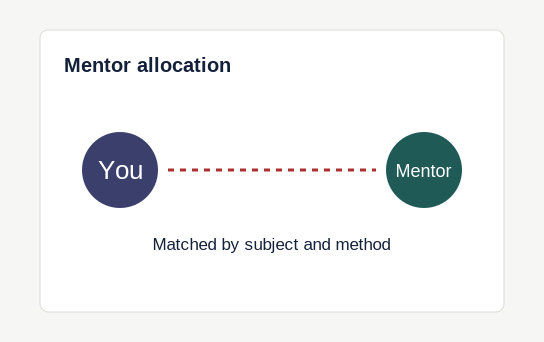
We have supported PhD projects for scholars around the world, and every task follows the same checks. These are real screens from our workflow.
Proofreading is a final check for surface errors in a finished text. Copyediting works line by line on language, clarity, consistency and style. Substantive (developmental) editing works on structure and argument. Most manuscripts need copyediting before submission; a manuscript with structural problems needs manuscript rewriting first.
Punctuation, spelling, capitalisation, verb tense, grammar, typing and contextual errors; consistency of headings, spacing, terms and formatting; sentence and paragraph clarity; and removing redundant or weak wording. Every change is made in tracked changes, so you can accept or reject it, and your tone and meaning are kept.
The whole manuscript: title, abstract, introduction, literature review or background, materials and methods, results, discussion, references, tables, figure legends and supplementary text. Copyediting does not rewrite your argument; for that, see manuscript rewriting.
Original research articles, systematic reviews and meta-analyses, review articles, short communications, case reports and case series, perspectives, commentaries and letters to the editor; thesis and dissertation chapters; clinical trial, real-world evidence and drug safety reports; conference papers and posters, technical reports and white papers, and grant applications; and teaching and patient education materials.
Your journal's author guidelines first, then the manual it names, such as APA, AMA, Chicago, Vancouver (NLM), Harvard, IEEE or a publisher house style.
It confirms that the named manuscript was copyedited by PhD Research Lab on a given date. It does not guarantee acceptance, endorse the research, or cover changes made after editing, and a journal may still request further language editing.
No editing service can promise acceptance; that depends on your research and the journal's reviewers and editors. Copyediting removes language barriers so your work is judged on its science.
Some journals ask authors to acknowledge language editing; check your journal's policy. Copyeditors are not authors.
Yes. You can contact our team by email, WhatsApp or phone, and our project coordinators can arrange a call with your editor.
Revisions within the scope of your package are included. Please read our terms and conditions when you place an order.
Prices depend on word count, editing level, discipline and deadline. Our project coordinators can tell you about current seasonal discounts and referral offers.
Yes. Your tracked changes show what was changed and why, and the PhD Research Lab Academy offers a course in academic editing and proofreading. See the Academy.
Prefer to do it yourself? Our Academy courses teach the same methods our mentors use, step by step.