Basic
For early-stage scholars formulating research questions, concept papers or early proposals.
From$149
Delivered in 5 to 7 working daysChoose Basic- Sampling and data collection strategy
- Theoretical model
- Analytical techniques

Mentoring to choose, justify and structure the research design that best answers your research questions.
Your research design links your conceptual research problem to an empirical study that can answer it. Your mentor works with you to match the design to your purpose and questions, and to justify every choice in your methodology chapter or manuscript.
A research design is more than an outline. It is the plan that connects the conceptual problem you are studying to an empirical inquiry that can answer it. It sets out the data you need, how you will collect and analyse it, and how each of these choices answers your research questions within the practical limits of time, resources and access.
A sound design means your study addresses its research questions, your findings are valid and reliable, your data are collected ethically and feasibly, and other researchers can follow, evaluate and replicate what you did. Whether your study is qualitative, quantitative or mixed methods, the design should reflect its logic of inquiry, its purpose and its direction of reasoning: deductive, inductive or abductive.
Many doctoral scholars find this step hard. Common problems are choosing between exploratory, descriptive, explanatory and predictive designs; linking research objectives to sampling and data collection; separating the overall research design from the individual research methods; justifying why one approach was chosen over another; and working within limited time, tools, data access and supervision.
Set up a design, whether descriptive, experimental, longitudinal or another, that fits your objectives and the data you can realistically collect.
Help students, faculty and supervisors choose suitable designs, such as cross-sectional, exploratory or case study designs, that meet institutional, integrity and ethics requirements.
Choose designs suited to your field, such as experimental, quasi-experimental or case study designs, and the instruments and methods that make your findings trustworthy.
Plan clinical trials, cohort studies, patient-experience studies and health-system evaluations with well-defined variables, outcomes and measures.
Design action research, cross-sectional or cohort studies that inform product development, user experience or organisational behaviour.
Build designs that meet the expectations of your institution, whether in the US, UK, Australia, India, the UAE or Europe.
Your mentor works with you through the whole design, from framing your research purpose to planning how data will be collected and analysed, so your study is methodologically sound, ethical and feasible within your constraints. Throughout, the aim is to help you understand and defend every choice, not just to receive a plan.
We help you decide whether your study aims to explore, describe, explain, predict, evaluate or reconstruct the past. Knowing the purpose shapes every later design decision.
We help you set out the research philosophy behind your study (for example positivism, interpretivism, pragmatism or critical realism), its approach to theory (deductive, inductive or abductive) and the design that follows from them, and we help you keep the overall design distinct from the individual methods you use.
We help you choose the design that best fits your goals and context, such as a survey, experiment, quasi-experiment, case study, ethnography, action research or programme evaluation. Where your study calls for focused, individualised analysis, this includes specialised designs such as single-case experimental design.
Whether you are collecting primary data (for example surveys or interviews) or analysing secondary data (for example existing datasets or documents through statistical modelling, content analysis or discourse analysis), we plan the data strategy around your purpose.
We set out how your data will be collected, the characteristics of your sampling plan and the tools and techniques for data collection and analysis.
We help you justify the approach you adopted and compare it with the alternatives you rejected, so examiners can see that your methods are appropriate and defensible.
We check the design for threats to internal validity (whether you can attribute an effect to its cause), external validity (whether findings generalise beyond your sample and setting), construct validity and reliability, or, for qualitative studies, for credibility, transferability, dependability and confirmability.
We help you develop your initial theoretical model and consider which analytical framework suits your research questions and methodology.
Depending on your discipline and aims, we review relevant tools and techniques, such as SPSS, R, Stata, AMOS, MATLAB or NVivo, to prepare you for the complexities of your data.
As your objectives change, we help you refine the design so it stays relevant and manageable, and we explain each choice in one-to-one sessions so you can defend it at submission, in your viva and in publication.
Each design suits a different research purpose. Your mentor helps you choose the design, or combination of designs, that fits your questions, data and constraints.
Describes the characteristics of a population or phenomenon, such as what, how much and how often, without manipulating variables. It identifies key variables, patterns and trends, and can lay the groundwork for later hypothesis testing. Data may be collected at one point in time or repeatedly.
Used when little is known about a topic, to clarify concepts and generate research questions or hypotheses. It often relies on qualitative methods such as interviews, focus groups and case studies, though it can also use quantitative data, and it is a common starting point for later confirmatory research.
Measures two or more variables as they naturally occur to assess the direction and strength of their relationships, without manipulating them. Correlation alone does not establish causation.
Collects data from a sample at a single point in time, often comparing groups or subgroups, for example by age. It is efficient for estimating prevalence and comparing populations without long-term follow-up, but because exposure and outcome are measured together it usually cannot establish which came first.
Collects data from the same population at several points over time to study change and development. In a panel or cohort study the same participants are followed; in a trend study, different samples are drawn from the same population at each wave. It is widely used in health, education and the social sciences to study long-term effects or the effects of interventions.
An observational design that follows a group sharing a characteristic or exposure to see how exposures relate to later outcomes. Cohorts can be prospective, following participants forward in time, or retrospective, using existing records to look back. Cohort designs are widely used in epidemiology and health research.
The researcher manipulates one or more independent variables and measures the effect on dependent variables, using random assignment to conditions, control groups and standardised protocols. Randomised controlled designs give the strongest basis for cause-and-effect conclusions and are widely regarded as the reference standard for testing causal hypotheses. See also adaptive experimentation.
Tests the effect of an intervention without random assignment, for example by comparing existing groups or using interrupted time series. It is useful where randomisation is impractical or unethical, but needs extra care to rule out confounding, which weakens causal claims.
Aims to establish whether and how a change in one variable produces a change in another, for example the effect of an intervention or life event. Causal claims rest on the design (temporal order, a credible comparison and control of confounding variables) rather than on the statistics alone; techniques such as regression or path analysis estimate relationships but do not by themselves prove causation.
An in-depth investigation of one case or a small number of cases, such as an individual, organisation, event or programme, in its real-life context. It usually combines interviews, observation and document analysis, and may also use quantitative data, to understand complex or unique phenomena.
Addresses an immediate practical problem in a specific setting, with participants involved in the research. It proceeds in cycles of planning, acting, observing and reflecting, so findings feed back into improving practice.
Combines qualitative and quantitative strands in one study. In a convergent design both are collected in parallel and compared; in an explanatory sequential design quantitative results are followed up and explained with qualitative data; in an exploratory sequential design qualitative findings come first and inform a later quantitative phase, such as building an instrument.
A selection of doctoral-level work from our sample library, showing the range of subjects and methods our mentors support.
A sample on memo writing as an analytical technique in grounded theory studies. View sample
A case study of a sub-catchment of the Upper Biji catchment using GIS and remote sensing to support site selection. View sample
A PhD-level dissertation proposal in business management. View sample
Here is what we need from you, what your research design write-up covers, and what sits outside this service.
Send these with your request.
Part of every research design order.
Available as add-ons or other services.
Every research design order comes with added support: formatting, referencing, a plagiarism check and guidance from a mentor in your research area.
Your write-up follows your university's structure, word count and citation requirements, with every reference traceable and current. We use the latest editions of styles such as APA, MLA, Harvard, Chicago, Oxford and Vancouver, and reference managers such as Mendeley, Zotero and EndNote.
We work from peer-reviewed research in databases and publisher platforms such as Scopus, Web of Science, PubMed, IEEE Xplore, JSTOR, ProQuest, SpringerLink and ScienceDirect (Elsevier).
Mentors include researchers, university academics and clinicians across computer science and AI, law and public policy, the social sciences, engineering, the life sciences, medicine and clinical research, management and finance, and philosophy and the humanities.
Where your design involves quantitative analysis, statistical mentors can advise on data cleaning, sample size and hypothesis testing using tools such as SPSS, R, Stata, AMOS and MATLAB, and on qualitative analysis in NVivo.
Before delivery, your write-up is checked by editors for language, structure and academic style, and for plagiarism using tools such as Turnitin. You receive a plagiarism report.
Where access and copyright allow, we share the journal articles, reports and datasets cited, so you can read and build on the sources yourself and prepare for your viva or later publications.
Research journeys are rarely straightforward, with hurdles, surprises, hard work, new beginnings and moments of closure. PhD Research Lab travels this journey with you, mentoring researchers worldwide at every stage.
“I have a solid grasp of my research topic, but I'm not sure how to design a study to accurately address it or how to ask useful research questions.”
Your mentor helps you build a sound research plan, whether qualitative, quantitative or mixed methods, working with you on your research questions and methods and aligning your objectives with your theoretical framework, within academic and ethical standards.
Usually works best: Fixed price Talk to us“I have selected my research methodology, but I'm on the hook with my committee to justify it and to explain how it aligns with my research objectives!”
Whether your study is quantitative, experimental, survey-based, a case study or observational, we help you justify it and link it to your research model, questions and hypotheses, so your ontological and epistemological position is clear and consistent throughout.
Usually works best: Hourly mentoring Talk to us“I've completed collecting data from my clinical study. However, I'm unclear about the statistical tests I can apply to my dataset.”
Our biostatistics mentors help you choose and apply tests that fit your design, hypotheses, variable types and objectives, from t-tests, ANOVA and chi-square tests to regression and survival analysis, with transparent reporting.
Usually works best: Fixed price Data analysis“My supervisor asked me to describe how I verified my statistical findings to be valid and robust.”
We help you test the assumptions of your analyses (such as normality and homogeneity of variance), justify your sample size and assess reliability, for example internal consistency with Cronbach's alpha or rater agreement with the intraclass correlation coefficient.
Usually works best: Hourly mentoring Talk to usScenarios are illustrative, based on requests we often receive from scholars.
We offer research design support at different levels, depending on where you are in your research. Prices depend on your discipline, degree and deadline, and every package starts with a free quote. For full support across your methodology, a Comprehensive plan adds a one-to-one consultation, the research philosophy and approach, sampling and data collection, help with power or sample size calculations, mentoring on your full methodology chapter, and optional ethical considerations and limitations.
Prices in USD, PhD level shown. Master's is 15% lower; postdoc and faculty 15% higher. Your exact price is confirmed in a free quote.
For early-stage scholars formulating research questions, concept papers or early proposals.
For scholars writing the methodology of a thesis or proposal, or preparing for a proposal defence or ethics committee.
For scholars finalising their methodology for a dissertation chapter, journal manuscript or interdisciplinary study.
One single point of contact (SPOC) stays with you through every step, so you always know who to ask.
PhD Research Lab frames every research design to your university's guidelines. Our mentors have supported doctoral researchers at universities around the world, including the UK, the USA, the Netherlands, Australia, the UAE, Kenya, Nigeria, China and Russia, and they know the rules different institutions set.
*Where access and copyright allow.
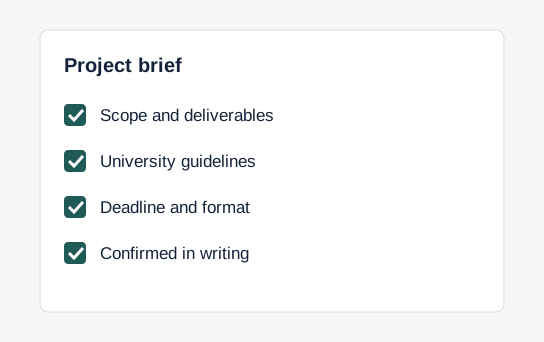
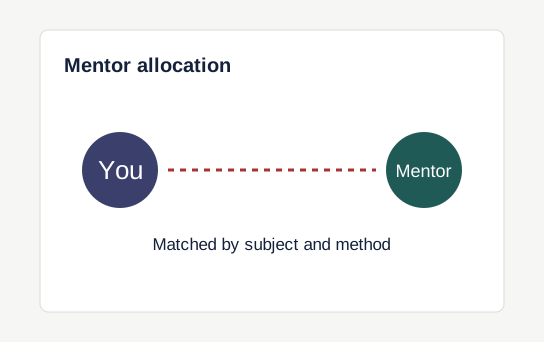
We have supported PhD projects for scholars around the world, and every task follows the same checks. These are real screens from our workflow.
Research design connects a conceptual research problem to an empirical study that is feasible. It sets out the data needed, how they will be collected and analysed, and how all of this will answer the research question. Its aim is to make sure the question can be answered in a credible and practical way, within the constraints of time, resources and feasibility.
Start from the purpose of your study and your research question. Then consider what data are available, how they could be collected, your logic of inquiry (for example exploratory, descriptive, explanatory or experimental) and your practical and ethical constraints. Your mentor helps you weigh the options and justify your choice.
A good design fits the purpose of the study and the nature of the research problem; minimises bias and error, so that findings are valid and reliable; collects enough relevant information to answer the question; is objective, efficient and economical in time and money; and is feasible given the participants and resources available. Your mentor reviews your design against these qualities and helps you strengthen it.
Yes. You can communicate with your mentor by email, WhatsApp, Skype or phone. Our project coordinators can also arrange a direct call with your mentor by appointment.
Prices depend on your discipline, degree, package and deadline, and every order starts with a free quote. Please contact our project coordinators about any current offers.
No. Revisions within your package's agreed rounds and scope are included at no extra charge. For details, contact our project coordinators, request a call back, or read our terms and conditions when you place an order.
Yes. Our mentors can teach you to break each stage of your dissertation into manageable parts, and our Academy offers courses in research methodology and statistics. Contact us or request a call back.
Prefer to do it yourself? Our Academy courses teach the same methods our mentors use, step by step.