PhD theoretical framework mentoring

PhD Theoretical Framework

Mentoring to choose, justify and connect the established theories that will guide your PhD research.

Unsure which theory should frame your dissertation? Your mentor works with you to select, refine and justify a theoretical framework that fits your research objectives, whether your field is management, the life sciences or the social sciences.

Why it matters

Why your theoretical framework matters

Many PhD researchers find the theoretical framework the hardest part of the dissertation to write. It needs a thorough understanding of the relevant theories and concepts, and a clear plan for how that theoretical grounding will be applied to your research problem.

Your theoretical framework shows that you understand the established theories in your field, explains how they align with your research aims, and sets out how they will guide your analysis and the interpretation of your findings. Depending on your university, it may be a section of the literature review or a chapter in its own right.

Missing theoretical justification, a vague choice of theory or a weak synthesis of the literature will weaken your dissertation, and even small problems here can lead to requests for revision. Examiners and supervisors read this part closely.

  1. 01

    Fit with your objectives

    How logically your chosen theories and concepts connect to your research objectives.

  2. 02

    Integration of theories

    Where you draw on more than one theory, how well you combine them to justify your hypotheses or propositions.

  3. 03

    Link to method

    How clearly the framework is articulated and connected to your methodology and research questions.

  4. 04

    Theoretical grounding

    How well the framework supports your research design and the interpretation of your data.

Our approach

How our mentors help you build your theoretical framework

Our team of subject-matter experts from the UK, the USA and other countries mentor, edit and review, so that you can build a theoretical framework that is rigorous, clearly argued and ready for critique.

01

Choosing suitable theories

Your mentor helps you identify and adapt established theories and concepts that address your research aims and questions, and helps you justify why you chose them over the alternatives.

02

An integrated framework

Together you develop a framework that places each theory and concept in context and supports your research ideas, so the parts work as one coherent whole.

03

Clear, persuasive foundations

We help you make your theoretical foundations clear, logical and persuasive, and connect them to your research design and methodology.

04

Trusted academic sources

Your framework draws on peer-reviewed journals and credible academic databases: Google Scholar and JSTOR for key theories and classic articles; PubMed and Embase for biomedical, clinical and pharmacological research; ProQuest for theses, dissertations and alternative views; Scopus and Web of Science for citation networks and multidisciplinary research; IEEE Xplore for engineering, technology and computer science; and SAGE Journals for the social sciences, business and education. Publisher platforms such as Springer and Elsevier are also used.

05

Support for every kind of researcher

We work with PhD scholars and doctoral researchers; universities, faculties and research committees; post-doctoral researchers, academics and authors; healthcare professionals studying patient outcomes, treatment efficacy and health systems; corporate R&D teams working on market research, product development and organisational studies; and international scholars in the UK, the USA, Australia, the UAE, India and Europe, with attention to each institution's regulations and discipline-specific practice.

06

Built to your university's guidelines

Every programme has its own formatting and academic requirements, and your framework is adapted to them, including formatting and in-text citations, whether you study at an IIT, Harvard, Oxford or elsewhere.

Approaches

Theoretical approaches we work with

A theoretical framework uses one or more established, tested theories as the lens for your study, for example the Technology Acceptance Model (Davis, 1989), the Theory of Planned Behaviour (Ajzen, 1991), the Resource-Based View (Barney, 1991) or Social Cognitive Theory (Bandura, 1986). Each theory brings its own assumptions, applications and limits. These are the approaches and related frameworks we most often help scholars work with.

  • 01

    Theory-based framework: testing cause and effect

    Built on an established theory that predicts how variables relate, this approach is common in quantitative studies that test hypotheses about whether one variable influences another. Causal claims themselves depend on the research design, such as an experiment or quasi-experiment, rather than on the framework alone.

  • 02

    Systems theory: analysing complex interactions

    Systems theory focuses on how the interdependent parts of a system interact. It is widely used to study organisations, healthcare and the environment, and to identify the critical features of the whole system.

  • 03

    Developmental theories: studying change over time

    Used most often in longitudinal and developmental research, developmental theories explain growth and change in individuals, organisations or societies, drawing on psychology, sociology and education.

  • 04

    Integrative framework: combining theories

    An integrative framework combines ideas from more than one theory to explain complex research problems. It is especially useful in interdisciplinary research, where several perspectives must be considered, but each theory included must be justified.

  • 05

    Constructivist theories: exploring meaning and experience

    Constructivist theories examine how individuals or groups use their experiences to construct understanding and meaning. They are often used in qualitative research, education and psychology.

  • 06

    Social theories: understanding social structures

    Established social theories explain patterns of behaviour within social structures over time, and are common in sociology, political science and anthropology.

  • 07

    Conceptual framework: your own map of the study

    A conceptual framework is different from a theoretical framework: it is the researcher's own map of the key concepts and variables in this particular study and how they relate, often drawing on the theoretical framework. It is common in the social sciences, education and business. See Conceptual framework for dedicated support.

  • 08

    Research paradigm: the philosophy behind your study

    Your research paradigm, such as positivist, interpretivist or critical, is not itself a theoretical framework but the philosophical position beneath it. It should be consistent with both your theoretical framework and your methodology, and your mentor helps you align them.

Sample work

Sample work

A selection of samples from our library, showing the range of topics and subject areas our mentors work across.

What you get

What's included in theoretical framework support

Here is what we need from you, what your theoretical framework support covers, and what sits outside this service.

What we need from you

Send these with your request.

  • Your research topic, aims and research questions
  • Any theories, models or concepts you want included or have already gathered
  • Your references or literature review so far, if any
  • Your degree, discipline and university
  • Your university's or supervisor's requirements, including referencing style

What's included

Part of every theoretical framework order.

  • Initial consultation and research discussion
  • Framework design
  • Theory mapping and integration
  • Literature gap identification
  • Model development and refinement
  • Hypothesis or proposition formulation
  • Visual representation of the framework
  • Cross-disciplinary framework development
  • Cultural and contextual adaptation
  • Data interpretation support
  • Access to subject-matter experts
  • PowerPoint presentation for your viva or defence

Not included

Available as add-ons or other services.

Also included with your order

Every theoretical framework order comes with added support: referencing, a plagiarism check, shared sources and guidance from a mentor in your research area.

Current referencing

Citations and the reference list follow the current edition of your required style, such as APA, MLA, Harvard, Chicago, Oxford or Vancouver, with reference management in Mendeley, Zotero or EndNote. Every reference is traceable and current.

Mentors in your field

Mentors are matched to your area, including computer science and AI, law and public policy, the social sciences, engineering, the life sciences, medicine and clinical research, management and finance, and philosophy and the humanities. Editors and proofreaders check language and consistency.

Sources shared with you

We share the sources behind your framework, such as journal articles, reports, datasets, lecture notes, translated works, academic videos, presentations and legal documents, to help you prepare for your viva, future publications or coursework.

Quality and plagiarism check

Before delivery, your document is checked for plagiarism using tools such as Turnitin, and you receive the report.

Word count to your guidelines

We work to the word count your university sets. References, appendices, tables and figures are not counted.

Find your starting point

Where are you with your theoretical framework?

Developing a theoretical framework can be arduous. Most scholars struggle not with their topic but with selecting, justifying and aligning the right theories with their research.

“I've gathered a bunch of theories and models, but I have no clue how to organise and structure them so that I can build my theoretical framework systematically.”
FrankPhD scholar
How we help Framework organisation and structure

Your mentor helps you organise and structure the theories and models you have gathered so they work together to meet your research aims.

Usually works best: Fixed price See packages
“I've collected a bunch of theories and models, but I don't have any idea which ones are relevant for my theoretical framework.”
DavidPhD scholar
How we help Theory selection and curation

We help you select the theories and models from your collection that are most relevant to your research, and justify the choice.

Usually works best: Fixed price See packages
“I have collected references, but I don't know how to select which of my references are most relevant to the theoretical framework I want to explore.”
JamesPhD scholar
How we help Reference selection and curation

Your mentor helps you find and select the references most relevant to your theoretical framework and check they fit your research objectives.

Usually works best: Hourly mentoring Hire a researcher by the hour
“I need to ensure that the theories and models I have reviewed are credible and academically reliable.”
AlexPhD scholar
How we help Evaluation of theoretical credibility

We work with you to evaluate the credibility and academic standing of the theories and models you have identified, so your framework rests on well-tested theory.

Usually works best: Hourly mentoring Hire a researcher by the hour

Scenarios are illustrative, based on requests we often receive from scholars.

Packages & pricing

Choose the support that fits your stage

We offer three levels of theoretical framework support, for a PhD thesis or dissertation, PhD admission, a synopsis or a journal article. Every package includes a plagiarism check, peer-reviewed sources (Scopus, PubMed, IEEE and others), systematic development of the framework and an assigned project coordinator. Prices depend on your discipline, degree and deadline, and every package starts with a free quote.

Prices for

Prices in USD, PhD level shown. Master's is 15% lower; postdoc and faculty 15% higher. Your exact price is confirmed in a free quote.

Basic

For early-stage PhD scholars and researchers writing a research proposal.

From$149
Delivered in 5 to 7 working daysChoose Basic
  • Analysis of your topic against your research goals
  • Key concepts and theories suited to your research
  • Development of a theoretical framework for your study
  • One mentoring session with a subject-matter expert
  • Visual map of theoretical links
  • Literature gap identification
  • Integration with methodology
Recommended

Standard

For researchers who have completed a research proposal or literature review.

From$299
Delivered in 7 to 10 working daysChoose Standard
  • Integration with methodology
  • Hypotheses or propositions from theory

Premium

For PhD scholars preparing a journal submission, a defence or an advanced dissertation.

From$499
Delivered in 10 to 14 working daysChoose Premium
  • Access to cited references and further resources

Add-ons

Add any of these to a package, now or later. Your mentor stays the same.

See full pricing →
Our process

How it works, from order to final framework

One single point of contact (SPOC) stays with you through every step, so you always know who to ask.

  1. 1Before we startSubmit your requirementsComplete the order form with your research goals, the theories, models or concepts you want included, and your requirements, then pay securely online.
  2. 2Day 1Confirmation and mentor matchYou receive an order confirmation, and we assign a mentor with practical experience of developing theoretical frameworks in your area.
  3. 3While we workFramework developmentYour mentor works with you on the main theories, concepts, hypotheses and visuals, links them to your methodology and research aims, and refines the draft to academic standards.
  4. 4While we workRegular updatesWe keep you informed by email about the theories being included, the model selected and how the framework is developing.
  5. 5Before deliveryReview and revisionsThe framework is checked for accuracy, relevance and theoretical justification, and revised in response to your feedback within the agreed scope.
  6. 6DeliveryFinal delivery and feedbackYou receive your final theoretical framework in the format you requested. We welcome your feedback.
Our guarantee

What we promise, we deliver

PhD Research Lab frames every theoretical framework to your university's guidelines. Our mentors have supported doctoral researchers at universities around the world, including the UK, the UAE, the USA, the Netherlands, Australia, Saudi Arabia, Kenya, Nigeria, Qatar and France, and they know the rules different institutions set.

Scholars we have supported study in
  • UK
  • USA
  • Netherlands
  • Germany
  • Ireland
  • Australia
  • UAE
  • Saudi Arabia
  • Qatar
  • Kenya
  • Nigeria
  • Russia
  • and more
  • Original workEvery document is checked for plagiarism before delivery.
  • On-time deliveryDelivered by the date we agree when you order.
  • Subject matter expertiseA mentor with doctoral-level knowledge of your field.
  • Talk to your mentorMessage your mentor directly through your single point of contact.
  • Ongoing supportQuestions answered at every step, before and after delivery.
  • Current academic sourcesBuilt on recent, peer-reviewed literature.
  • Research articles supplied*Copies of key articles used for your topics.
  • ConfidentialityYour details and work are never shared.

*Where access and copyright allow.

Quality and compliance

See how we keep every project on track

We have supported PhD projects for scholars around the world, and every task follows the same checks. These are real screens from our workflow.

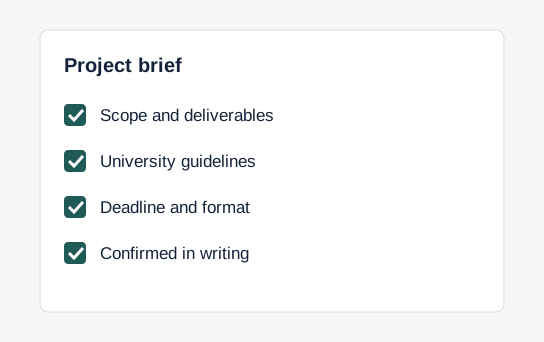
Project brief checklist showing scope, university guidelines and deadline
Step 1 · Project brief Requirements confirmed in writing You share your requirements, university guidelines and deadline, and your point of contact confirms the scope with you before work starts.
Subject-matched mentor allocation for your project
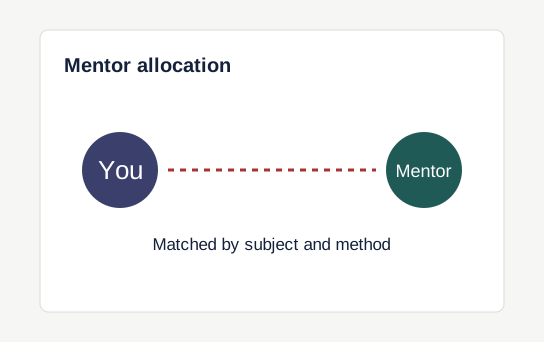
Step 2 · Mentor allocation A subject-matched mentor is assigned Your project is assigned to a mentor who knows your subject and method, and you are introduced before the work begins.
Email thread between a scholar and our project coordinator
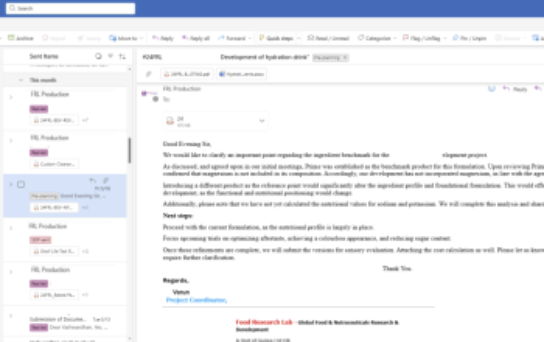
Step 3 · Regular updates Communication through email Updates, questions and changes from your supervisor go through your single point of contact, so you always have a written record.
Task record in our ERP system showing checklist items and quality-check status
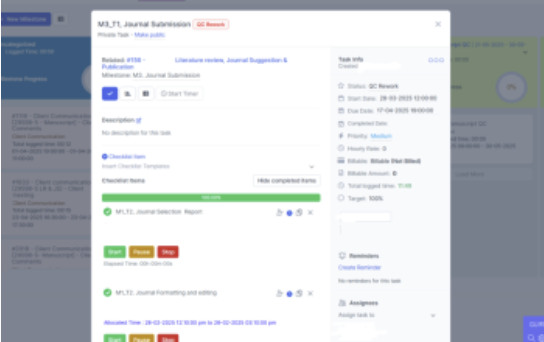
Step 4 · Quality check Quality check in our ERP system Every task is tracked in our project system, with checklists and a manager's quality check before the work moves on.
Plagiarism report showing a 2% overall match
Step 5 · Plagiarism check Plagiarism report Each document goes through a similarity check before delivery, so you can submit it with confidence.
FAQs

Frequently asked questions

Ask a mentor
What does theoretical framework support include?

Initial consultation and research discussion, framework design, theory mapping and integration, literature gap identification, model development and refinement, hypothesis formulation, visual representation, cross-disciplinary framework development, cultural and contextual adaptation, data interpretation support, access to subject-matter experts, and a PowerPoint presentation for your viva or defence. What you receive depends on the package you choose.

What is the role of a theoretical framework in my PhD study?

Your theoretical framework is the lens of your research. It draws on one or more established, tested theories to explain the problem you are investigating, shape your research questions or hypotheses, and give you a viewpoint for interpreting your results. A clearly stated framework also helps you justify your research design and methodology, making the study more coherent. It differs from a conceptual framework, which is your own map of the concepts and variables in this particular study.

What challenges do students face when developing a theoretical framework?

Common difficulties include choosing appropriate theories, connecting them to the research questions, combining them into one coherent framework, justifying why they were chosen, and keeping the framework consistent with the research aims throughout. Your mentor guides you through each of these so your framework is well argued and defensible.

How do I make sure my framework is aligned with my research objectives?

Your mentor guides you in choosing theories that are directly relevant to your research questions and objectives, and in linking the framework to your methodology, so that the theoretical foundations are clear and give direction to the whole study.

What makes your theoretical framework support different?

You work with an international team of experienced researchers who know their fields and current research trends, so your framework draws on recent academic literature. Every scholar receives individual mentoring focused on rigour and alignment with their research goals.

Which disciplines do you cover?

We support theoretical frameworks across the sciences, management, humanities and arts, including psychology, computer science, business and management, sociology, statistics and data science, architecture and design, food science, engineering, medicine and health sciences, life sciences, languages, linguistics and literature, economics, finance and accounting, pharmaceutical sciences, environmental studies, political science and international relations, sports and exercise science, theology, religion and philosophy, media and communication, education, social work, law and criminology, tourism and hospitality, and anthropology. Contact us to ask about your area.