
Why clinical studies should begin with the evidence
A literature review in clinical research is a structured examination and synthesis of existing evidence on a clinical question. Its purpose is practical: to establish what is already known about a condition, an intervention or a test, so that a new study asks a question that still needs answering and is designed well enough to answer it.
The cost of skipping this step is well documented. Chalmers and Glasziou (2009) identified the failure to design new studies in the light of systematic assessments of existing evidence as one source of avoidable waste in research, and estimated that, across the stages they examined, more than 85% of research investment was wasted. Clarke et al. (2010) argued that clinical trials should begin and end with systematic reviews of relevant evidence, and found that reports of trials still rarely did so. Robinson and Goodman (2011) examined 227 meta-analyses including 1,523 trials across 19 fields and found that trial reports cited fewer than a quarter of the relevant earlier trials that could have been cited. A trial that ignores earlier trials may repeat a question that has already been answered, or expose participants to an intervention whose harms are already known.
This guide focuses on clinical studies. For the general role of the review in a research proposal in any discipline, including how to structure it and turn it into a research question, see the companion guide The role of the literature review in a research proposal.

Choosing the right kind of review
Clinical questions differ, and so do the reviews that answer them. Munn et al. (2018) propose a typology of ten types of systematic review in the health sciences, each with its own question format and study designs. The table summarises the types most often used before a clinical study.
| Clinical question | Review type | Usual question framework | Typical included designs |
|---|---|---|---|
| Does the intervention work, and is it safe? | Effectiveness | PICO | Randomised trials; non-randomised studies for harms |
| How accurate is this test? | Diagnostic test accuracy | Population, index test, reference standard, target condition | Cross-sectional accuracy studies |
| How common is the condition? | Prevalence or incidence | Condition, context, population | Cross-sectional and cohort studies |
| What raises the risk? | Aetiology or risk | Population, exposure, outcome | Cohort and case-control studies |
| What predicts the outcome? | Prognostic | Population, prognostic factor, outcome | Cohort studies |
| How do patients experience it? | Experiential (qualitative) | Population, phenomenon of interest, context; or SPIDER | Qualitative studies |
PICO (population, intervention, comparison, outcome) remains the standard way to frame effectiveness questions, but it fits qualitative evidence poorly. Cooke et al. (2012) proposed the SPIDER tool (sample, phenomenon of interest, design, evaluation, research type) for qualitative and mixed-methods questions. When a clinical study concerns a complex intervention, quantitative and qualitative evidence can be synthesised together to explain not only whether an intervention works but why, for whom and in what circumstances (Noyes et al., 2019).
Appraising the studies you find
A review is only as trustworthy as the studies it includes, so each study must be appraised for risk of bias with a tool suited to its design. Appraisal tells you how much weight a finding can bear, and it reveals the design weaknesses that your own study should avoid.
| Study or review design | Tool | What it assesses |
|---|---|---|
| Randomised trials | RoB 2 | Five domains: randomisation, deviations from intended interventions, missing outcome data, outcome measurement, selection of the reported result |
| Non-randomised studies of interventions | ROBINS-I | Bias relative to a hypothetical target trial, including confounding and selection of participants |
| Diagnostic accuracy studies | QUADAS | Patient selection, index test, reference standard, flow and timing |
| Observational cohort and case-control studies | Newcastle-Ottawa Scale | Selection, comparability and outcome or exposure, scored with stars |
| Systematic reviews | AMSTAR 2 | Confidence in a review's results, with seven critical domains |
RoB 2 replaced the original Cochrane risk-of-bias tool for randomised trials (Sterne et al., 2019), and ROBINS-I judges non-randomised studies against the trial that would ideally have been run (Sterne et al., 2016). The QUADAS tool was developed from a systematic review of quality items for diagnostic accuracy studies (Whiting et al., 2004). The Newcastle-Ottawa Scale is widely used for observational studies, but Stang (2010) questioned its validity and warned that summary scores can be arbitrary, so judgements by domain are more informative than a total. When existing systematic reviews are your starting point, AMSTAR 2 helps you decide how far to trust them (Shea et al., 2017).
Synthesis, heterogeneity and publication bias
A systematic review follows a protocol set in advance to identify, select, appraise and synthesise studies; a meta-analysis adds a statistical combination of their results into a pooled estimate (Mathew, 2022). Pooling increases precision and can show effects that single small studies cannot detect, which is why Vetter (2019) describes meta-analysis as a case where bigger can be better, provided the included studies are similar enough to combine.
Studies rarely are identical. They differ in populations, doses, comparators, outcome definitions and follow-up, and these differences produce heterogeneity. It is quantified with statistics such as Cochran's Q and I squared, which estimates the percentage of total variation across studies that reflects real differences rather than chance (Higgins et al., 2003). Subgroup and sensitivity analyses are then used to explore where the variation comes from. For a doctoral researcher, heterogeneity is useful information: unexplained variation in effect between, say, older and younger patients may itself justify a new study.
Publication bias is the other main threat. In a Cochrane methodology review, published trials showed on average a 9% greater treatment effect than trials in the grey literature, such as conference abstracts and unpublished data (Hopewell et al., 2007). A review limited to published journal articles can therefore overstate an intervention's benefit and lead to a false-positive conclusion. Searching trial registries, conference proceedings, theses and regulatory documents reduces this risk, and PRISMA 2020 sets out how to report every source searched and every study excluded (Page et al., 2021).
From review to study protocol
The clearest test of a clinical literature review is whether it can be seen in the protocol. The SPIRIT 2025 statement, which sets out 34 minimum items for randomised trial protocols, asks for the scientific background and rationale, "including summary of relevant studies (published and unpublished) examining benefits and harms for each intervention" (Chan et al., 2025). The table shows how the review feeds specific protocol items.
| Protocol item (SPIRIT 2025) | What the review supplies |
|---|---|
| Background and rationale (item 9a) | What is known about benefits and harms, from published and unpublished studies, and the uncertainty the study will address |
| Choice of comparator (item 9b) | Current standard care and the evidence for it, so that the comparator is credible and ethical |
| Outcomes (item 16) | Outcomes used in previous trials, their measurement and timing, and any core outcome set |
| Sample size (item 19) | Plausible effect sizes, event rates and variability from earlier studies to support the assumptions |
| Eligibility and setting | Populations studied so far and those under-represented |
Outcome selection deserves particular care. Different trials in the same condition often measure different outcomes, which makes them hard to combine. Core outcome sets, agreed minimum sets of outcomes to measure and report in all trials in a condition, address this, and the COMET Handbook describes how they are developed (Williamson et al., 2017). A review that maps outcomes across previous trials will show whether a core outcome set exists and where measurement has been inconsistent.
An illustrative example
The following example is hypothetical. A doctoral researcher plans a trial of a supervised exercise programme after knee replacement. A systematic search finds eight earlier trials. Risk-of-bias assessment with RoB 2 shows that most had concerns about missing outcome data. The pooled effect on function is positive but heterogeneity is substantial, and a subgroup analysis suggests the benefit is smaller in patients over 75. Outcomes were measured at times ranging from six weeks to a year.
These findings shape the protocol directly. The rationale states that benefit in older patients is uncertain. Eligibility is set to include sufficient patients over 75. A plan to reduce and handle missing data is written in from the start. The primary outcome and its timing follow the most common choice in earlier trials, so that the new trial can be added to a future meta-analysis, and the sample size uses a conservative effect estimate from the review rather than the largest published effect.
Supporting guidelines and regulatory documents
Beyond the design of a single study, reviews underpin clinical practice guidelines, which depend on up-to-date syntheses of benefits and harms, and they support regulatory medical writing. Documents such as investigator brochures, clinical development plans and the background sections of regulatory submissions need to describe the unmet need: where existing drugs or devices are ineffective, poorly tolerated or untested in a population. That description must rest on an honest review of the evidence, including its limitations.
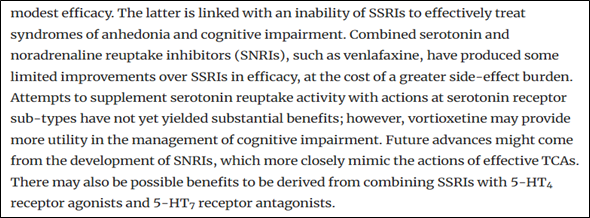
Depression offers an example. In a review of selective serotonin reuptake inhibitors, Cowen (2024) asks whether this class of drug has reached a pharmacological dead end. Gaps of this kind, documented through careful review, are what justify developing and testing new treatments.
Common mistakes
- Searching only one database and only published articles, which misses trials and inflates effects.
- Using a generic checklist instead of a design-specific risk-of-bias tool.
- Reporting a total quality score without explaining which domains were at risk and why it matters.
- Pooling studies that are too different, or ignoring substantial heterogeneity once found.
- Taking sample size assumptions from the single most favourable study rather than from the body of evidence.
- Choosing outcomes without checking what earlier trials measured or whether a core outcome set exists.
- Leaving the review out of the protocol, so that panels and ethics committees cannot see why the study is needed.
Avoiding these mistakes does not make a review perfect, but it ensures that the clinical study built on it is justified, ethical and able to add to the evidence rather than duplicate it.
Key takeaways
- Designing clinical studies without a systematic assessment of existing evidence is a recognised source of research waste (Chalmers & Glasziou, 2009; Robinson & Goodman, 2011).
- The review type, question framework and included designs should match the clinical question (Munn et al., 2018; Cooke et al., 2012).
- Risk of bias should be judged with design-specific tools such as RoB 2 and ROBINS-I (Sterne et al., 2019; Sterne et al., 2016).
- Heterogeneity and publication bias must be examined, because both change how far a pooled result can be trusted (Higgins et al., 2003; Hopewell et al., 2007).
- A good review is visible in the protocol: in the rationale, comparator, outcomes and sample size (Chan et al., 2025; Williamson et al., 2017).