Call for Papers: Malignant Wounds — From Assessment to Management and Multidimensional Care Implications
Introduction
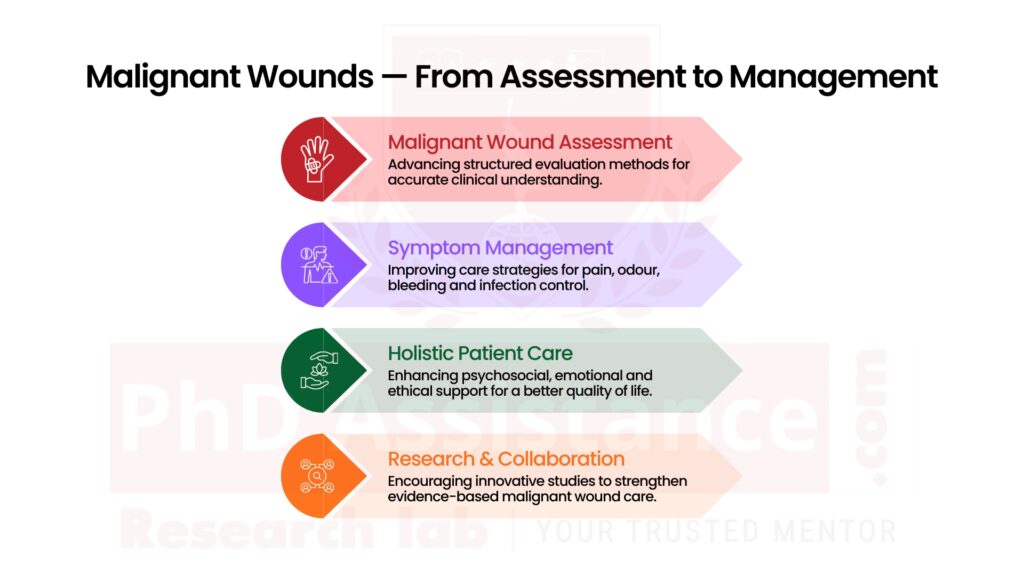
Malignant wounds develop as a serious medical complication that advanced cancer patients develop during their disease progression. The wounds produce severe physical symptoms, which include pain, malodour, bleeding, infection and excessive exudate drainage. The treatment of this condition requires more than clinical wound management because it needs dedicated and skilled health professionals who work together with the patient to deliver personalised treatment.
The call for papers on Malignant Wound Management aims to advance knowledge and practice by examining malignant wound care from comprehensive assessment to holistic management and broader care implications. This issue requires researchers from different fields to study clinical practice while examining how patient-focused approaches and scientific research findings combine to enhance the well-being of patients who suffer from malignant wounds.
Researchers, clinicians and scholars are invited to submit high-quality original manuscripts that contribute to advancing clinical practice, research and education in malignant wound management across diverse healthcare settings.
Scope
It welcomes original research articles, systematic and scoping reviews, qualitative and mixed-method studies, clinical practice papers, case-based analyses and service evaluations that explore malignant wounds in the context of advanced cancer and palliative care.
The submission must show actual research methods and relevant clinical applications and interdisciplinary research fields, together with the specific practical and ethical aspects of managing malignant wounds. The body of work needs nursing contributions together with Oncology wound care research, wound care, allied health, psychology and related fields.
The issue particularly encourages studies that explore innovative assessment frameworks and symptom management strategies, integrated care models and psychosocial support mechanisms to enhance patient-centred and evidence-informed care.
Know More About This Issue
Malignant wounds present multiple challenges that affect patients and their caregivers, and all healthcare workers who treat these patients. The treatment of these wounds requires complete and compassionate care because they cause physical symptoms and create psychological, social, and ethical issues. The literature on oncology and palliative care has insufficient research about Malignant wound assessment, which results in a lack of high-quality evidence that should guide medical procedures and patient services.
The special issue aims to achieve its goal through multidisciplinary approaches, which will establish evidence-based practices for malignant wound treatment. The issue provides research-based information and clinical expertise and operational assessments to help healthcare workers deliver complete medical services that focus on the individual needs of patients in all healthcare settings, including hospitals, community centres, hospital facilities and home health services.
The special issue demonstrates how interdisciplinary teamwork, effective communication and policy creation work together to enhance healthcare delivery and make medical services accessible to all patients while improving their treatment results for Multidimensional care in malignant wounds across the world.
Key Themes
The study examines how malignant wounds develop through their pathophysiological mechanisms and clinical manifestations in patients with advanced cancer.
How We Support Your Submission
Research studies that target publication in a high-impact special issue must demonstrate a strong research design while maintaining clear academic writing and following all journal requirements. The PhD Assistance Research Lab provides comprehensive support to help researchers prepare high-quality manuscripts that meet special issue requirements. Our services include:
Journal Guidelines:
Important Dates
Submission Deadline: 30 January 2027
To ensure successful and timely submission to the special issue “Malignant Wounds — From Assessment to Management,” researchers are encouraged to leverage the expert services of the, offering comprehensive support from conceptualisation to final manuscript submission within the specified deadline.
Free Guide: How to Write the Journal Manuscript
To support researchers, the PhD Assistance Research Lab offers a free comprehensive guide on writing and preparing a high-quality journal manuscript.
Reference
Yu, B., & Safaee Fakhr, B. (2026). Inhaled nitric oxide: Discoveries and potential new clinical indications — Special issue call for papers. Elsevier. Nitric Oxide | ScienceDirect.com by Elsevier – Nitric Oxide | ScienceDirect.com by Elsevier