
Call for Papers: Battery Safety for Future Electric Transportation
Introduction
The world is currently experiencing a rapid shift away from traditional transportation methods towards electric mobility solutions, which depend on batteries as the main element for achieving sustainable energy outcomes. The modern battery systems’ requirement for greater energy capacity creates a safety problem that organisations must now resolve. The present call for papers about battery safety in electric transportation needs advanced research, which will find solutions to safety problems facing future battery technology used in electric vehicles and other transportation systems.
The Call for paper on Battery Safety Electric Transportation Study, latest developments in Lithium-Ion Battery Research, together with new battery technologies, have provided better battery performance results, yet thermal runaway, internal short circuits and battery degradation continue to represent dangerous safety risks. Researchers need to solve these problems because they form the foundation for building secure and effective electric vehicle transportation systems of tomorrow. The special issue requests research papers about battery safety that present new methods and modelling approaches, and practical uses to improve battery safety and performance.
Scope
This special issue features research that connects different academic fields to improve electric vehicle safety and develop advanced battery technologies for use in transportation systems. Submissions are encouraged in the following areas:
Know More About This Issue
The future of electric mobility depends on the safe and efficient operation of battery systems. The current state of battery technology improvements leads to better energy capacity and performance enhancements, yet safety issues still create significant obstacles. The call for papers battery technology invites researchers, engineers, and industry experts to solve existing industry problems through their most recent research.
The special issue provides a platform for sharing insights on safety enhancement strategies, advanced modelling, and real-world applications that contribute to sustainable and safe transportation systems. The upcoming research contributions will advance future electric transportation studies while establishing more dependable energy storage systems for next-generation technology.
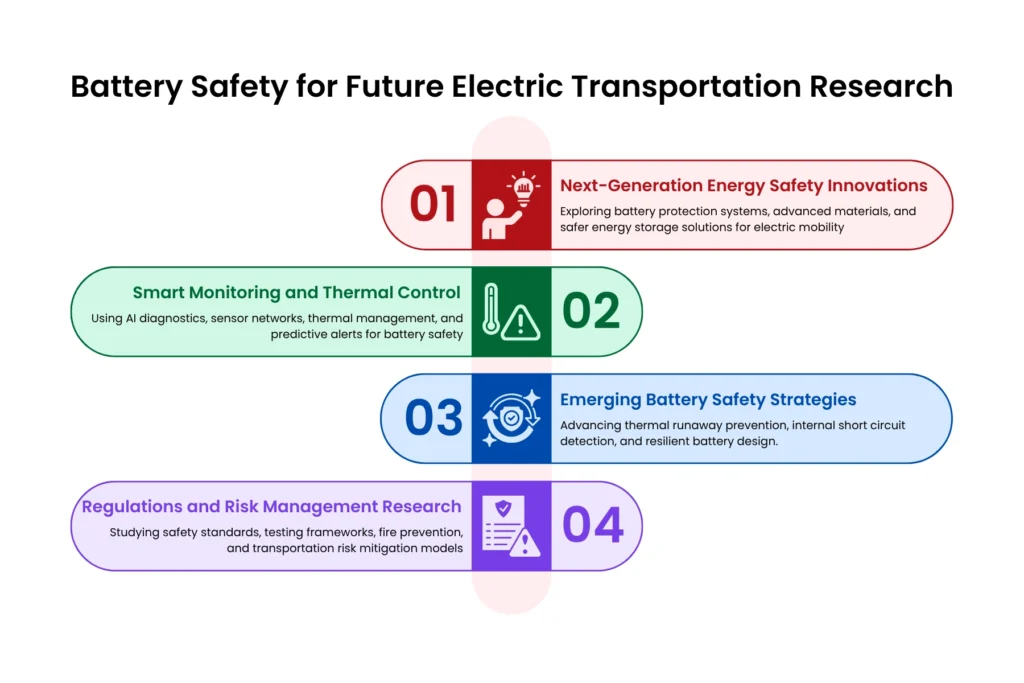
Key Themes
Authors are invited to submit manuscripts addressing, but not limited to, the following themes:
How We Support Your Submission
The publication process for high-impact Special Issues demands research work to demonstrate both scientific excellence and maintain methodological transparency while showing direct practical applications. The research support team offers complete manuscript development services for researchers who study Battery Safety for future electric transportation research.
The service offers academic editing services and structural support to help students create clear written work that follows a logical path. The service provides research and review writing guidance that meets academic standards. The authors increase their chances of getting published in journals by following the specific requirements that journals establish for their content. ,
The enhancement process uses language and technical improvements to create better clarity, quality and greater impact. The service provides data presentation support through the effective creation of tables and figures, and visual elements. The service uses plagiarism and quality checks to verify content originality and ensure compliance with standards.
The service assists researchers in responding to reviewer feedback while making necessary changes to their manuscripts. The service provides complete submission support to facilitate a seamless submission experience.
Journal Guidelines:
Important Dates
Submission Deadline: 31 October 2026
To ensure successful and timely submission to the special issue “Battery Safety for Future Electric Transportation,” researchers are encouraged to seek expert publication support from conceptualisation to final submission.
Free Guide: How to Write the Journal Manuscript
Book a free consultation to get guidance from the PhD assistance research lab for writing a credible research manuscript and submitting it in the high-quality journal.
Reference
eTransportation. (2026, March 31). Call for papers: Battery safety for future electric transportation (Special issue). Elsevier. eTransportation | ScienceDirect.com by Elsevier – eTransportation | ScienceDirect.com by Elsevier