PhD Research Statistics Courses
Get Professional Research Statistics Courses at PhD Assistance Research Lab
Expert Academic Statistics courses and Dissertation support
Professional Research Statistics service– From the Top-Class Universities across the Globe
Many PhD researchers face difficulties with statistical analyses, as gaining proficiency in research designs, statistical tool usage, and controlling the interpretation of statistical outputs demands a considerable analytical training. For the majority of scholars, and the emphasis of this discussion, statistics is ultimately the most challenging and consequential part of the research process.
Being self-assured in data analysis, choosing the appropriate test, and correctly understanding the results requires a comprehensive understanding not only of the statistics but also the reasoning behind choosing each specific method. If not properly trained, researchers might lose the quality of their whole study with a little but important error in the process of choosing the right tests, handling statistics, or interpreting p-values and regression coefficients.
The Academic Statistics Training Courses that we offer aim to rectify these issues by developing your capabilities starting from the very basics. By means of systematic, professional-guided training, we enable you to learn:
- How the various research designs like survey, experimental, correlational, causal-comparative, or historical are logically aligned with your objectives
- How to select and utilize the statistical tools like SPSS, ANOVA, regression, correlations, t-tests, chi-square, and descriptive statistics
- How to make a correct interpretation of the statistical outputs including p-values, F-ratios, effect sizes, confidence intervals, regression coefficients, and correlations
- How to communicate the findings in an explicit, impartial, and with robust statistical credibility manner.
These are some of the areas which present difficulties to a lot of researchers. Among such obstacles are the use of improper designs, lack of good literature review skills, faulty choice of tools, bad data collection, or misunderstanding of results. Mistakes, even tiny, can harm the overall quality of the research project.
Through stepwise expert-led training, our Research statistics Courses at PhD Assistance Research Lab overcome these issues. We provide a practical and extensive learning experience with the backing of more than 100 global subject-matter experts (SMEs) from top-notch universities in the UK, USA, and other parts of the world:
- You have been trained on data until October 2023.
- Choosing suitable research philosophies and methods
- Developing well-defined research problems, objectives, and hypotheses
- Creating qualitative, quantitative, or mixed-method methodologies that are effective
- Preparing questionnaires, interview guides, and sampling plans
- Doing literature reviews and building conceptual frameworks
- Doing statistical or thematic analysis with precision and confidence
- Explaining and displaying results in a format ready for researchers
It is common that teaching the essential skills to PhD students is done in a very superficial manner, which explains why difficulties arise for many of the scholars. The incorrect use of tests, the wrong choice of design, and not proper understanding of statistical assumptions are the main causes that result in feeble outcomes, wrong conclusions, or even more revisions.
The Academic Statistics Training Courses offered at PhD Assistance Research Lab are the solution to this problem. We engage more than 100 world-class subject-matter experts (SMEs) from the UK, USA, and top-ranked universities around the globe; thus, this is the background upon which our courses are built. Besides that, you will have the opportunity to get practical training, work with real data, and have professional guidance, so you can:
- Construct a firm basis in research statistics
- Comprehend the quantitative research philosophies and methods
- Perform statistical methods correctly using SPSS and other software tools
- Analyze, interpret, and present findings from the statistics confidently
- Improve your research quality and analytical ability overall.
With the guidance of our experts, you will acquire the statistics skills that are mandatory for performing quality research, spotting errors, and assertively meeting the requirements of your PhD or academic project.
Be part of the worldwide learning community and make your statistical problems the source of your research excellence and power in analysis.
All course materials from the study guides, through examples, and templates, to research exercises, are all 100% human-made by the industry experts.
We assure:
- No AI text in the training modules
- All the materials are subjected to screening through Turnitin, WriteCheck, and AI-detection tools
- Authenticity, academic integrity, and ethically produced resources
- This makes sure that the training you get is nothing short of the best in true research expertise and international academic standards.
All our works are completely original crafted by experts on the domain such as
- Computer Science & AI
- Law & Public Policy
- Social Sciences
- Engineering
- Life Sciences
- Medicine & Clinical Research
- Management & Finance
- Philosophy & Humanities.
Our training programs are tailored in such a way that best meet the research needs of top worldwide universities.
If you are from any of the top Indian institutes, IITs, IIMs or from other prestigious universities like Oxford, Harvard, Cambridge, NUS or any UGC-recognized university, we make sure that your training is in accordance with:
- Research frameworks of the institution
- Dissertation and thesis rules
- Word-count, structure, and formatting criteria
- Required styles of academic writing and referencing
- This way, it is guaranteed that you will develop the very same competence that your university anticipates from you.
Our researchers use peer-reviewed journals and credible academic sources from:
- Scopus
- PubMed
- IEEE Xplore
- JSTOR
- Springer
- Elsevier
- ProQuest
- Web of Science
We ensure every reference is traceable, current, and cited accurately in the required referencing style (APA, MLA, Harvard, Chicago, Oxford, Vancouver, etc.).
Our team includes:
- Writers with years of experience on the domain
- Editors with knowledge of English grammar and domain expertise.
- Proofreaders trained in grammar and consistency.
During the entire training period, we guarantee unlimited resolution of academic queries and feedback sessions. It doesn’t matter if it is about methodology clarification, literature review improvement, analytical techniques refinement, or reviewer expectation understanding, we are there to guide you until you are fully confident.
We provide complete transparency by sharing all study sources:
- Journal articles
- PDFs and reports
- Datasets
- Lecture notes
- Translated works
- YouTube academic links
- PPTs, legal documents, and more
These help you prepare for viva-voce, future publications, or further coursework.
Our Academic Research Statistics Courses by Subject Area





Statistical Techniques Covered in Our Statistics Training Courses service
Descriptive Statistics – Understanding Data Patterns
t-Tests – Comparing Groups Effectively
Chi-Square Tests – Analysing Categorical Data
Inferential Statistics – Drawing Valid Conclusions
Analysis of Variance (ANOVA) – Testing Multiple Groups
Non-Parametric Tests – Robust Tools for Non-Normal Data
Correlation Analysis – Examining Variable Relationships
Regression Analysis – Modelling and Prediction
Experimental & Quasi-Experimental Analysis – Understanding Causality
Who Can Attend – Academic Statistics Services for Researchers
The course is especially suitable for PhD students whose main task is to write a dissertation. It revolves around heavy-duty statistical analysis. The course helps students learn the right tests, carry out the analysis in SPSS/Excel, and finally, clarify the meaning of the statistical output. The course also fosters the creation of a well-structured methodology and an aligned data analysis section that meets academic standards.
The course is designed specifically for the whole university community, i.e. professors, researchers, and post-graduate students. It will help them all to strengthen their statistical skills. The training covers all aspects of data dealing, quantitative methods, and the application of statistical software in both research and teaching. Further, it will enhance the quality of research output through the stronger analytical methods.
This category includes post-doctoral fellows, lecturers, and academic writers who want to receive advanced statistical training.
Technicalities in statistical modeling, data interpretation, and research reporting are gained by the participants.
The training will sharpen academic productivity, publication quality, and methodology accuracy.
Clinicians, nurses, and public health professionals participating in clinical trials, epidemiological studies, or medical research are the ideal beneficiaries of such training.
Biostatistics, hypothesis testing, basics of survival analysis, and clinical data interpretation are among the topics covered in the training.
It is suitable for the people working in marketing, HR, analytics, and product development areas who are taking data as their basis for making decisions.
The training covers things like statistical surveys, regression analysis, experimental design, and interpreting data from market research.
The program is aimed at students from all over the world who want to achieve the same level of quantitative analysis skills as the academic centers of their choice.
It includes the teaching of the global standards in statistical reporting, data analysis accuracy, and methodological rigor.
Academic statistics Courses-Service Package
- Assign subject matter experts with experience of 1-3 years.
- Email support included.
- Advanced statistical techniques such as regression, multivariate, and experimental methods were covered.
- The training given regarding the right statistical tests to use and the assumptions verification.
- The assistance rendered was in the area of coordinating research problems with statistical methods.
- Feedback from the expert with continuous support for enhancing and solidifying the statistical analysis.
- Provides 15-day support
- Assign subject matter experts with experience of 4-6 years.
- Email and call support included.
- Advanced statistical techniques such as regression, multivariate, and experimental methods were covered.
- The training given regarding the right statistical tests to use and the assumptions verification.
- The assistance rendered was in the area of coordinating research problems with statistical methods.
- The training provided on how to create research frameworks that meet statistical standards.
- Feedback from the expert with continuous support for enhancing and solidifying the statistical analysis.
- Provides 21-day support
- Assign subject matter experts with experience of 7-9 years.
- Email and call support and collaborative approach included.
- Advanced statistical techniques such as regression, multivariate, and experimental methods were covered.
- The training given regarding the right statistical tests to use and the assumptions verification.
- The assistance rendered was in the area of coordinating research problems with statistical methods.
- The training provided on how to create research frameworks that meet statistical standards.
- The formulation of hypotheses and the development of statistical models.
- Data literacy was one of the skills acquired.
- Feedback from the expert with continuous support for enhancing and solidifying the statistical analysis.
- Provides 30-day support
Tools We Use at PhD Assistance Research Lab for Research Courses
Zoom – Live, Interactive Training Sessions
This software allows conducting real-time classes with the ability to share screens for software demonstrations, having interactive Q&A sessions, making use of breakout rooms for group activities, and offering high-quality virtual engagement.
Microsoft Teams – Collaborative Learning Platform
The tool provides the support for live lectures, file sharing, recorded sessions, one-on-one mentoring, and team-based discussions, thus creating a unified digital classroom environment.
Google Classroom – Learning & Assignment Management
It facilitates and gives structured education through organized modules, assignments submissions, shared materials, tracking of progress and communication that is easy between trainers and learners.
Moodle LMS – Comprehensive Course Delivery System
It is a full course content hosting platform, quizzes, assessments, learning resources, and performance tracking it is perfect for long-term structured training programs.
Google Meet – Quick & Accessible Virtual Sessions
Good for very short classes, one-on-one meetings, question and answer sessions, and personalized guidance, thanks to its simple and user-friendly interface.
Screen Recording & Annotation Tools (Loom, OBS)
Support the development of very good quality recorded tutorials, guided research walkthroughs, and marked displays for the students who want to revise or study at their own pace.
Digital Collaboration Tools (Miro, Padlet, Jamboard)
Used in interactive brainstorming, group projects, mind-mapping, research planning, and developing conceptual frameworks in a shared visual space.
Learning Resource Platforms
Provided studying materials, session recording, organizing tasks, managing research workflow, and easy access to cultivated learning resources.
Check at What Stage You’re In & See How You Fit into Our Engagement Model
Emily Carter

Statistical Results Writing & Interpretation
This module teaches students to report statistical outputs—p-values, test statistics, confidence intervals, and effect sizes—in brief, academically suitable formats. The students gain experience in writing results for theses, journals, and talks with lucidity and accuracy.
Arun Prakash

Statistical Reasoning & Test Justification
Learners get to classify statistical tests based on data type, assumptions, and research design. In addition, the module covers how to substantiate choices with logical reasoning, methodological standards, and evidence—this will be helpful for proposals, viva exams, and publications.
Sofia Martínez

Statistical Reporting & Chapter Structuring
Participants get to master the integration of descriptive, inferential, correlation, and regression findings into one detailed results chapter. The module teaches the arrangement of tables, graphs, narrative explanations, and interpretations in a way that is logically connected.
Meera Natarajan

Statistical Assumptions, Reliability & Data Quality
The trainees go through reliability testing (Cronbach’s Alpha, split-half, test-retest) and also assumption checking (normality, homoscedasticity, independence, linearity) in a very organized manner. The module anchors data quality, legitimacy, and statistical precision of academic research.
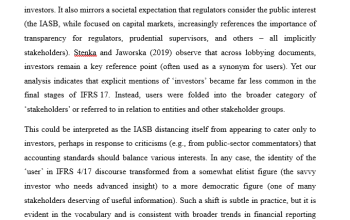
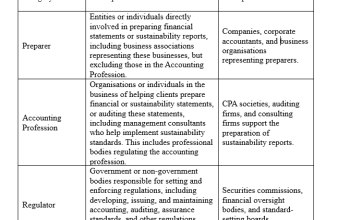
Our Sample & Example Works Speak
Order process
Submit Your Requirements & Make Payment
Order Confirmation & Expert Allocation
Conducting statistical courses
Regular Updates & Two-Way Communication
Review & Unlimited
Revisions
Final Delivery &
Feedback
Our Guarantee

Plagiarism Free

Unlimited Support

On-time delivery

Subject Matter Expertise

Communicate with your writer

Updated academic resources

Free research articles supply*
Academic Research Statistics Course Service
Practical and Professional Statistics Training

"The statistics training at PhD Assistance Research Lab dispelled all my doubts regarding the choice of tests, data analysis, and the interpretation of the results. Each concept was made clear with the help of real examples and I was guided through the process at every step. I now feel completely self-assured in carrying out the statistical analysis by myself."
— Neha Iyer, PhD Scholar, India
Training That Helped Me Complete My Data Analysis on Time
"I was under lot of pressure with very short deadlines and required a very fast way of training so as to quicken the process of the data analysis. The parts of the course on various statistical tests selection, data checking, and SPSS interpretation proved to be extremely useful. This training helped me to complete the analysis chapter in time, which also let me fulfil all the academic requirements."
— Karan Deshpande, Doctoral Researcher, India
Training That Increased My Research Accuracy

"My statistical chapter in the dissertation was the hardest part of the program for me. The trainers clarified for me regression diagnostics, ANOVA assumptions, and the proper reporting format. Theirs was a double blessing: not only did they help me with the results, but they also gave me the power to feel confident in presenting my work."
— Cristina Alvarez, Clinical Research Scholar, Spain
Blogs


FAQ's
Our Academic Statistics Training Course offers a thorough and organized way of understanding the statistical concepts and the analytical skills in a way that is academically accepted. The training does involve:
- Basic Statistics, the Foundations, their Assumptions, and Applications
- Research Objectives and their corresponding Stat Test Selections
- Data Cleaning, Data Coding, and Dataset Preparation are the steps in the Data Processing.
- Descriptive, inferential, and multivariate statistics training
- Experiential learning in Sampling Methods and Test Selection
- REALTIME analysis with SPSS, R, Stata, Excel, and other statistical resources
- Output Interpretation from tests like t-test, ANOVA, regression, chi-square, etc.
- Correctly writing the statistically significant results, discussions, and justifications
- Making of Tables, Graphs and Stat Reports that meet APA/IEEE standards
- Help with the preparation of statistical explanations for viva-voce and presentations
Academic Statistics Training is an intensive program of applicable on going learning focused on helping researchers gain the strong statistical skills that are necessary and useful for thesis, dissertation, and publication types of work. The training includes concept-based lectures, hands-on demonstration, software demonstrations, practice on real datasets, and guided, analytical exercises. The goal of the training is to facilitate researchers in engaging in the process of choosing a statistical test or analysis option, actually applying statistical tests or analyses, interpreting outputs, validating assumptions, and communicating your study findings accurately and confidently based on an academic standard.
Yes! Our trainers will personally work with you to develop a selection of the appropriate statistical methods for your study based on your research question(s), variables, and/or data type. If your study calls for descriptive statistics, t-tests, ANOVA, regression, correlation, chi-square, or non-parametric methods, we will help you understand, apply and justify the method appropriately in your thesis or paper.
Absolutely, we provide comprehensive practical training for major statistical software such as SPSS, R, Stata, Excel, JASP and Jamovi. You will learn how to conduct analyses, check assumptions, interpret results, and present tables and plug in graphs. All the sessions are equipped with real data and step-by-step demos to guarantee full control of the learning process.
Of course. Interpretation and presentation are very important aspects of the course. You will learn how to interpret the statistical outputs in an understandable way, write the results and discussion sections, design informative tables and graphs, report on effect sizes and significance values, and always be able to support your conclusions through reviews, viva-voce or conference presentations.