Basic
For a short 2D, whiteboard or motion-graphics explainer of one idea or process.
From$399
Delivered in 10 to 14 working daysChoose Basic- 3D modelling
- Professional voice-over

Accurate, accessible animations that explain your research to examiners, peers and the public, built from your own findings and checked by a subject expert.
PhD Research Lab acts as an external mentor: we help you turn your idea, model or findings into a clear visual story, and our animators build it in 2D, 3D, whiteboard or motion graphics, with a subject specialist checking that every frame stays true to your research.
Some ideas are hard to grasp from text and static figures alone: a molecular mechanism, a manufacturing process, a building in use, a data pipeline or how a theoretical model unfolds over time. A short, well-planned animation can show movement, sequence, scale and cause and effect directly, which helps examiners, reviewers, students and the public follow your work.
Academic animation is not ordinary design work. It must be technically correct and conceptually clear as well as attractive, because it puts your research in front of reviewers, supervisors and audiences. Small errors in scale, sequence or labelling can mislead viewers and undermine your credibility, so accuracy comes before visual effects.
Animation is a communication tool, not evidence. It should simplify honestly, show where it is schematic or illustrative rather than measured, and never suggest results, precision or certainty that your data do not support.
A subject specialist reviews the script, storyboard and final animation against your sources and data.
One message per scene, a logical sequence and a narration that matches what is on screen.
Captions, readable text, colour-blind-safe palettes and no flashing content, so more people can watch it.
Only original, licensed or openly licensed images, models, fonts and music, credited correctly.
Length, format and resolution matched to where it will be shown: a viva, a conference, a journal, a repository or social media.
Every project starts with your research, not with software. Your mentor helps you decide what the animation needs to show and to whom, then our animators and a subject specialist work from a script and storyboard that you approve before production begins.
2D animation suits diagrams, flowcharts, processes and data stories. 3D animation suits structures, anatomy, molecules, machines and buildings, where depth and rotation help understanding. Whiteboard animation, where the drawing appears as the narration explains, suits conceptual and theoretical work and teaching. Motion graphics, animated text, icons and charts, suit summaries of methods and results. We recommend a style for your message and audience and explain why, so you can justify it to your supervisor.
We help you define the audience, the single main message and the length, then draft a narration script in plain language from your own text and a storyboard of each scene. You and your supervisor can check the science before any animation is produced, which is far cheaper than correcting a finished video.
Animators build the scenes in tools suited to the project, such as Blender, Autodesk Maya or 3ds Max for 3D work, Adobe After Effects for motion graphics, Adobe Illustrator for vector artwork, and CAD files from AutoCAD or SolidWorks where you already have engineering models.
A specialist in your field checks structures, proportions, sequences, units, labels and terminology against your data and sources at the storyboard stage and again on the final cut. Where something is simplified or illustrative, such as a schematic cell or an idealised flow, we say so on screen or in the narration.
Where an animation shows results, such as a growing curve, a simulation or a map, it is built from your actual data or simulation output, with axes, units and scales shown, rather than drawn to look right.
We edit, colour-correct, add narration or music and sync sound, using tools such as Adobe Premiere Pro and After Effects. You can record your own narration, which many audiences find more engaging, or we arrange a voice-over.
We supply closed captions (usually as an SRT or WebVTT file) and can provide a transcript. Accessibility guidelines such as WCAG treat captions for pre-recorded video with sound as a basic requirement. We also keep on-screen text large and on screen long enough to read, use colour-blind-safe palettes and avoid rapid flashing.
We use original artwork or assets with a clear licence, such as stock under a commercial licence or Creative Commons material used on its terms, and credit them. Figures from published papers, including your own, may belong to the publisher; reusing or adapting them usually needs permission unless the article is openly licensed, for example under CC BY. We keep a record of every source so you can answer any question from a journal or institution.
If the animation will accompany an article, we check your journal's instructions for supplementary or video files, such as accepted formats, maximum length and file size, and whether captions are required. For conferences and social media, we prepare versions in the right aspect ratio and length.
We support PhD scholars and researchers in engineering, the life and health sciences, architecture, computer science, the social sciences and other fields.
Mechanisms, pathways, anatomy and clinical procedures, reviewed for accuracy by a specialist and suitable for teaching, conferences and patient education.
Machines, assemblies, processes and simulations, built from your CAD models where available.
Walkthroughs and fly-throughs of buildings and spaces from your drawings and models.
Theories, conceptual frameworks and research processes explained step by step, well suited to the social sciences, education and management research.
Animated charts, maps and infographics that present your results accurately, for talks and research promotion.
Short summaries of a published article in video or single-image form. See video and graphical abstracts.
Mentoring and training if you want to make your own animations, covering storyboarding, 2D and 3D modelling, rendering, motion graphics and editing.
Here is what we need from you, what your project covers, and what sits outside this service.
Send these with your request.
Part of every research animation order.
Available as add-ons or other services.
Every research animation project comes with added support from specialists in your field.
Your project is reviewed by a specialist with research experience in your discipline, from engineering, computer science and the life sciences to medicine, management, the social sciences and the humanities.
Advice on which tools and workflow suit your project if you want to edit or extend the animation yourself later.
Unpublished data and designs are kept confidential, and patient images or identifiable people appear only with consent.
We offer research animation support at three levels. Prices depend on length, style, complexity and deadline, and every package starts with a free quote.
Prices in USD, PhD level shown. Master's is 15% lower; postdoc and faculty 15% higher. Your exact price is confirmed in a free quote.
For a short 2D, whiteboard or motion-graphics explainer of one idea or process.
For PhD candidates and researchers presenting a complex process, model or set of results.
For multi-part projects, public engagement campaigns or researchers who also want to learn the tools.
One single point of contact (SPOC) stays with you through every step, so you always know who to ask.
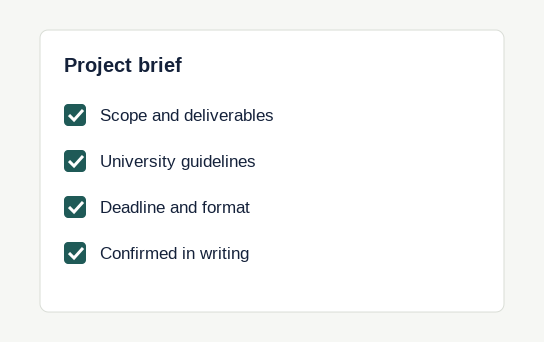
PhD Research Lab frames every research animation to your university's guidelines and, where the animation accompanies a publication, to your target journal's or conference's media requirements. Our team has supported doctoral researchers at universities around the world, including the UK, the Netherlands, the USA, Australia, the UAE, Kenya, Nigeria, China and Russia. The science in an animation is yours: we visualise it faithfully, and you approve the script, storyboard and final cut.
*Where access and copyright allow.
We have supported PhD projects for scholars around the world, and every task follows the same checks. These are real screens from our workflow.
2D for processes and diagrams, 3D for structures and spatial relationships, whiteboard for concepts and theory, and motion graphics for summaries of methods and results. Your mentor recommends a style based on your message, audience and budget, and explains the reasons so you can justify the choice.
The animation is based on your own research, data and sources. A subject specialist checks the script and storyboard before production and the final animation before delivery, and you and your supervisor approve both. Simplified or illustrative scenes are labelled as such.
Yes. We supply a closed captions file, such as SRT or WebVTT, which most platforms accept, and can provide a transcript. Captions help viewers who are deaf or hard of hearing, non-native speakers and people watching without sound.
Only if you have the right to. Figures in published articles are usually under the publisher's copyright, even in your own papers, unless the article is openly licensed, for example under CC BY. We can help you check the licence or request permission, and we credit every source.
Many journals accept video or animation as supplementary material, and some publish video abstracts. Requirements for format, length, file size and captions differ, so we check your journal's instructions before production.
Yes. We offer training in storyboarding, 2D and 3D modelling, rendering, motion graphics and editing, using tools such as Blender, Maya, After Effects and Premiere Pro, with practical exercises on your own project.
Prefer to do it yourself? Our Academy courses teach the same methods our mentors use, step by step.