Call for Papers: Plant-Derived By-Products for Drug Delivery
Introduction
The growing need for pharmaceutical technologies that provide better safety and effectiveness while protecting the environment has created a requirement to develop new drug delivery systems. Plant-derived by-products for drug delivery are emerging as a transformative resource in pharmaceutical sciences through their current use in drug delivery systems. The waste materials which result from processing fruits, vegetables and grains together with their seeds and medicinal plants produce peels, husks, pomace and fibres which contain bioactive compounds and structural polymers that have essential pharmaceutical applications.
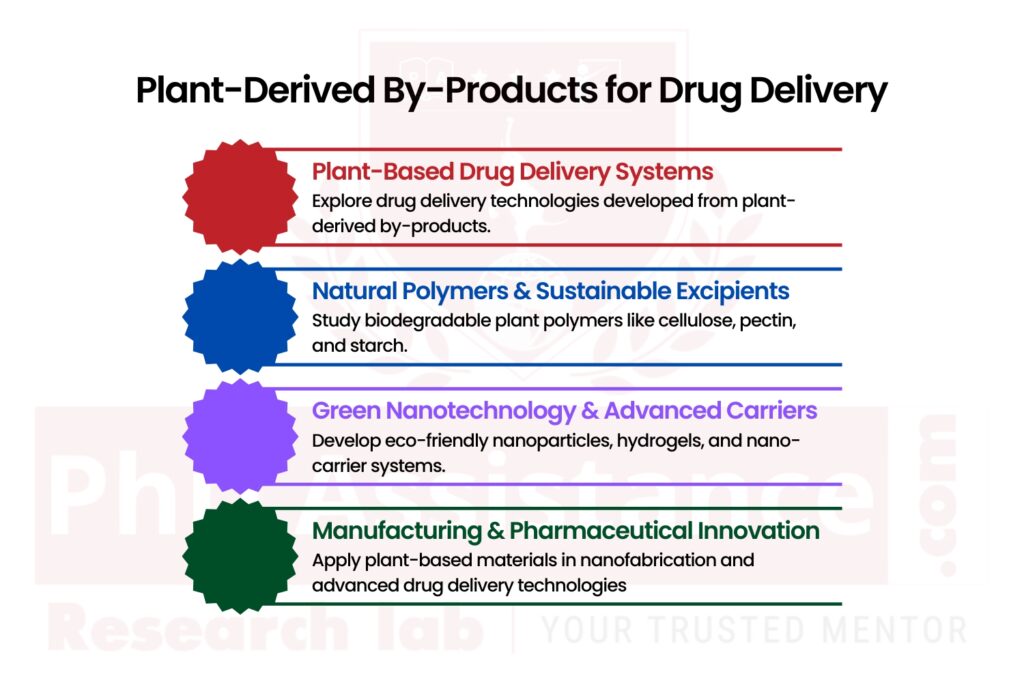
The research demonstrates potential for developing plant-based drug delivery systems through these materials because they possess biocompatible, biodegradable and abundantly available natural properties. Research in sustainable carrier systems has gained momentum through the rising interest in polymers for drug delivery, which includes cellulose, pectin, starch and plant gums. Drug carriers that provide both therapeutic effects and carrier capabilities can be made from bioactive compounds that originate from plant waste streams.
The European Journal of Pharmaceutical Sciences Special Issue requests research studies that provide high-quality empirical evidence and review findings to investigate new methods for drug delivery using plant-derived by-products within sustainable and advanced technological systems.
Scope
This Special Issue seeks original research articles and comprehensive reviews that examine advanced Plant-based drug delivery systems through their design and development and their subsequent characterisation. Contributors to the project must demonstrate innovative capacity by transforming agricultural and plant-processing residue materials into functional pharmaceutical products.
The submission process accepts research papers that evaluate hydrogel and nanoparticle, film, micro-carrier and nano-carrier, microneedle and plant-based printer technologies. Research exploring Natural polymers for drug delivery and their physicochemical modification for enhanced drug encapsulation and controlled release is highly encouraged. The research studies that examine plant waste-based compounds as sustainable excipients that meet regulatory and pharmaceutical-grade requirements receive special consideration.
This issue focuses on Green nanotechnology, which enables drug delivery through eco-friendly synthesis methods, additive manufacturing and bioprocessing technologies.
Know More About This Issue
Sustainability principles, which include reuse, recycle and renew, have become the main driving force behind pharmaceutical sciences. The use of Plant-derived by-products in drug delivery systems directly supports these sustainability principles while decreasing environmental impact and enhancing cost-effectiveness. The new extraction techniques, together with bio-refinement methods, now enable the extraction of functional biomolecules and structural polymers from plant materials, which serve as the base for creating advanced Plant-based drug delivery systems.
Your training data extends until the month of October in the year 2023. The combination of nanotechnology and additive manufacturing, together with plant-based materials, will create precise drug delivery systems through Green nanotechnology, which Green nanotechnology in drug delivery now offers to pharmaceutical formulation systems. The developed technologies create intelligent systems that can respond to changes and naturally decompose while they enhance medical results and reduce harm to the environment.
The Special Issue brings together multiple academic fields, which include pharmaceutics, materials science, nanotechnology, biotechnology and green chemistry to create sustainable pharmaceutical excipients and environmentally friendly drug delivery systems.
Key Themes
Researchers may submit their manuscripts for evaluation, which will cover their chosen research areas from the following list of research areas.
How We Support Your Submission
The process of publishing in a high-impact international journal requires researchers to maintain methodological standards, present their scientific findings with complete transparency, and follow all requirements established by the journal. Our research support services assist authors in preparing publication-ready manuscripts in alignment with the European Journal of Pharmaceutical Sciences guidelines.
Journal Guidelines:
Important Dates
Submission Deadline: 31 December 2026
To ensure successful and timely submission to the special issue “Plant derived by-products for drug delivery,” researchers are encouraged to seek expert publication support from conceptualisation to final submission.
Free Guide: How to Write the Journal Manuscript
Book a free consultation to get guidance from the PhD assistance research lab for writing a credible research manuscript and submitting it in the high-quality journal.
Reference
European Journal of Pharmaceutical Sciences. (2026, February 25). Call for papers: Plant-derived by-products for drug delivery. Elsevier. https://www.sciencedirect.com/journal/european-journal-of-pharmaceutical-sciences/call-for-papers