
Call for Papers: Food Authentication and Traceability in High-Risk Products: Analytical Approaches for Regulatory Control
Introduction
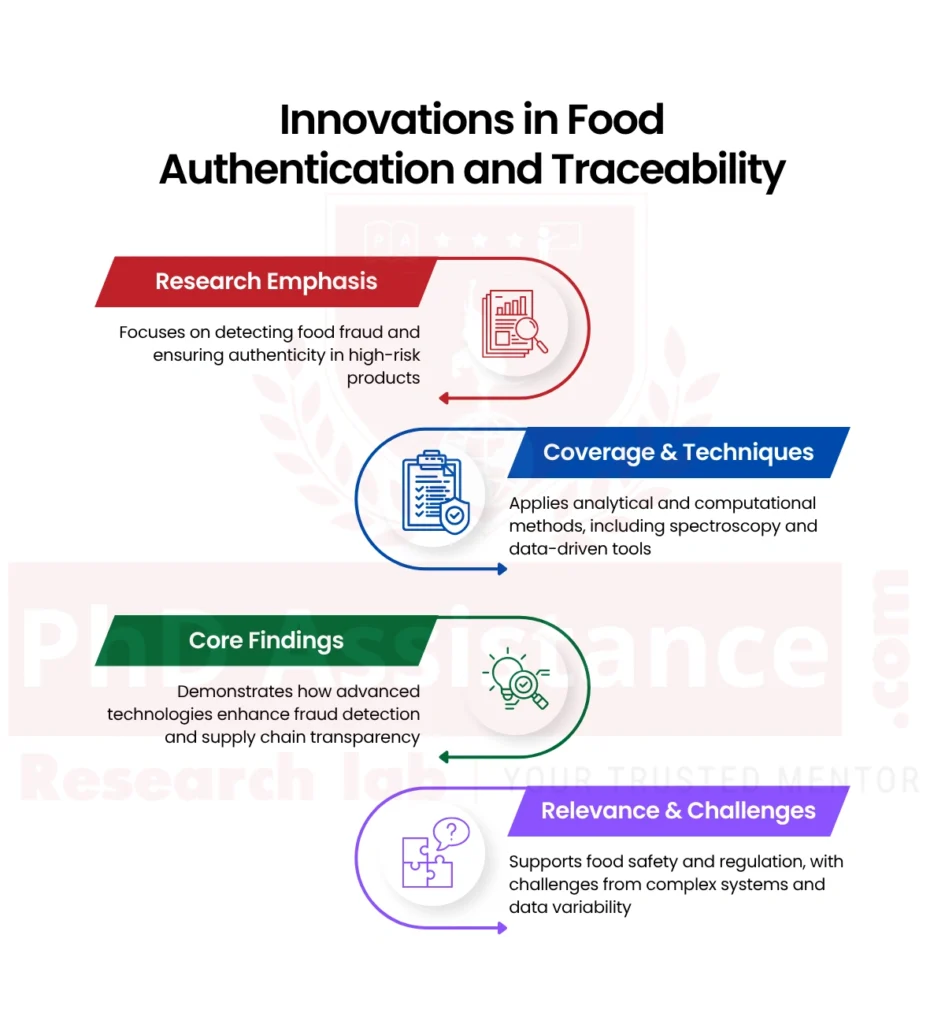
The world faces serious food safety problems because food fraud and food adulteration continue to exist as significant worldwide challenges that damage consumer confidence and disrupt fair trading activities. Food products classified as high-risk, including honey and fruit juices, powdered milk, jams, olive oil, coffee, tea, wine, and spices, face a high threat of fraudulent activities, which use methods like dilution and substitution and deceptive origin or quality labelling. The two problems create a situation that undermines public trust in food supply systems while demonstrating the immediate requirement for powerful methods that combine analysis and regulatory enforcement.
The Food authentication analytical approaches need additional methodological evaluation, together with international pharmacological research comparison, because its current methodology and study context do not meet international research standards. Future studies could incorporate qualitative evaluations of thesis quality, institutional factors and the long-term academic careers of doctoral graduates.
The PhD Assistance Research Lab offers dedicated support to researchers who need assistance in creating their academic publications and research reviews, especially to doctoral students and researchers who are just starting their careers.
Scope
The study requires additional methodological assessment, together with international pharmacological research comparison, because its existing research methods and study environment fail to meet global research standards. Future studies could use qualitative methods to assess thesis quality and institutional factors and the academic career development of doctoral graduates.
Know More About This Issue
Food authentication has become a key priority in global food safety governance. The international trade expansion, together with more complex food supply chains, has created challenges for regulatory agencies to identify fraudulent activities and authenticate product origins. The food authentication field requires advanced analytical methods that deliver precise results within a short time frame and at affordable costs.
Recent technological advances in spectroscopy and chemometrics, together with machine learning, have created new detection methods for food fraud and product authenticity verification. Scientists and regulators can use these tools to identify adulteration patterns while tracking raw material origins and creating advanced systems that improve food traceability in food safety.
The special issue aims to present research findings that demonstrate innovative methods for combining contemporary analytical technologies with established regulatory systems. Researchers who develop better fraud detection methods, together with improved traceability systems, will create better tools for monitoring food safety and enforcing regulations throughout the world.
The current issue provides a crucial forum to examine new scientific methods together with existing research gaps and the policy difficulties that face High-risk food product authentication processes, thus enhancing global food safety measures and consumer protection efforts.
Key Themes
Researchers are invited to submit manuscripts addressing, but not limited to, the following themes:
How We Support Your Submission
Successful publication in international journals with high impact demands researchers to deliver an optimal research design together with their complete research methods and their ability to communicate scientific findings effectively. Our expert research support services help authors prepare high-quality manuscripts suitable for submission to the Food Control journal.
Journal Guidelines:
Important Dates
Submission Deadline: 20 March 2027
To ensure successful and timely submission to the special issue “Food Authentication and Traceability in High-Risk Products,” researchers are encouraged to seek expert publication support from conceptualisation to final submission.
Free Guide: How to Write the Journal Manuscript
Book a free consultation to get guidance from the PhD assistance research lab for writing a credible research manuscript and submitting it in the high-quality journal.
Reference
Elsevier. (2026, March 13). Food authentication and traceability in high-risk products: Analytical approaches for regulatory control (Call for papers). Food Control. https://www.editorialmanager.com