
Call for papers: Corporal Punishment, School Discipline, and Children’s Rights in the History of Education
Introduction
The combination of robotics and artificial intelligence (AI) technologies changes modern workplaces because these technologies alter both work execution methods and employee work experiences and understanding of their jobs. Technological advancements have historically changed labour methods, but current AI and robotics developments create new challenges for human work assessment because these technologies now enable machines to handle creative tasks and emotional work and make decisions.
The implementation of AI systems and robots throughout various industries creates complicated employment changes because these technologies affect worker independence and professional responsibilities, mental workload, emotional states, and company frameworks. The Special Issue “People, Robots and AI at Work” calls for interdisciplinary research that investigates the effects of automation and robotisation and AI technologies on worker health and job creation, worker engagement and workplace social dynamics and organisational behaviour patterns.
Scope
The Special Issue requires research that investigates corporal punishment and school discipline through historical research methods and comparative research methods and policy research methods. The study should examine how disciplinary methods developed over different time periods and geographical locations while studying the impact of religious traditions and legal systems and cultural elements and political structures on their development and how children’s rights movements developed in response to educational methods that enforced discipline through coercive means.
The issue welcomes research from historians of education, social historians, education policy scholars, legal historians, sociologists, and researchers in childhood studies. The research should examine educational systems from local to national to imperial to transnational levels while showing how these systems maintain power over students and their fundamental rights.
Researchers should conduct both theoretical and empirical investigations through various methods which include archival research, historical case studies, comparative analyses, policy histories, and theoretically informed historical interpretations.
Know More About This Issue
The introduction of new technologies through generative AI and social robots, combined with automated decision-making systems, has created new opportunities for businesses to adopt smart technologies into their daily operations. The introduction of artificial intelligence to creative fields, healthcare work and research environments has created situations where human abilities and machine abilities now interact with one another. The current changes require people to rethink how they understand employment freedom and work fulfilment and the mental and emotional challenges of their jobs, and the position of their work being observed and their protection against job loss.
The Special Issue investigates how technological advancements bring about operational changes that affect both personal and organisational workplace dynamics. The issue collects various viewpoints to create a framework that supports responsible AI work environment design while informing theoretical development, organisational procedures and policy debates.
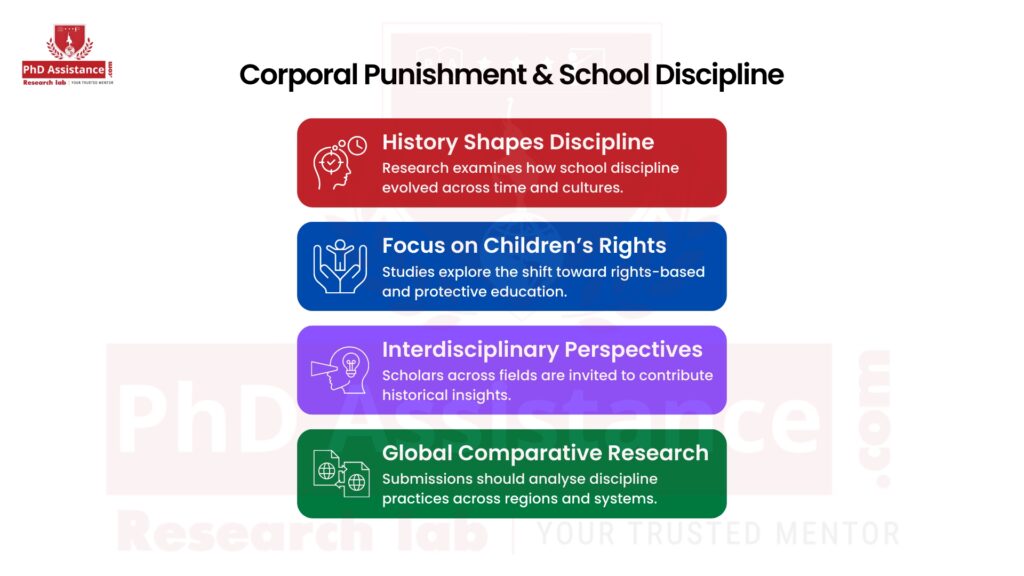
Key Themes
The submission process accepts papers that will cover all themes that follow this list of topics.
How We Support Your Submission
To publish in a top journal like History of Education Review, authors must demonstrate their historical expertise, maintain theoretical precision and execute their research using proper methodological techniques. The submission process receives support from research support services, which offer authors various types of assistance throughout their work.
The study of school discipline requires researchers to examine both comparative methods and international disciplinary practices across different countries.
Journal Guidelines:
Important Dates
Submission Deadline: 31 December 2026
To ensure successful and timely submission to the special issue “Corporal Punishment, School Discipline, and Children’s Rights in the History of Education,” researchers are encouraged to leverage the expert services of the PhD Assistance Research Lab, offering comprehensive support from conceptualisation to final manuscript submission within the specified deadline.
Reference
Emerald Group Publishing. (n.d.). Corporal punishment, school discipline and children’s rights. https://www.emeraldgrouppublishing.com/calls-for-papers/corporal-punishment-school-discipline-and-childrens-rights-history-education