

Generative Artificial Intelligence and Clinical Decision Intelligence in Healthcare Transformation
July 1, 2026
Extended Reality and Interactive Digital Preservation in Cultural Heritage Studies
July 2, 2026Why UK PhD Students Lose Months Choosing the Wrong Research Methodology
- July 02, 2026
- PhD Research Methodology
Introduction
Selection of a good research methodology is among the crucial aspects during the PhD process. It is the basis for all processes involved in research, ranging from formulating research questions to gathering and analysing data, and coming up with conclusions. During a PhD in British universities, students must defend their selection of the methodologies with literature evidence. Poor selection of research methodologies will lead to delays and rejection of research proposals.
The reason why most PhD students take months to rewrite the methodology chapter is that they choose methodologies that are not connected with the objectives of the study, the philosophical framework and the data needed for the research. Scholars often misunderstand that research methodology is the same as research methods, and there are some who use methodologies that are popular but are not right for their research.
In the PhD Assistance Research Lab, we offer continuous help to doctoral students in choosing the right methodologies for their research as per the standards maintained by universities. By availing PhD Methodology Writing Services in UK, academics can get expert support to create an effective methodology framework for their doctoral research work.
What you will learn from this blog?
- Why selecting the right research methodology is essential for PhD success.
- Common methodology mistakes made by UK doctoral students.
- Practical strategies for choosing an appropriate research methodology.
- How expert guidance can reduce research delays and dissertation revisions.
Understanding PhD Dissertation Methodology Support in UK
Methodology is not just about choosing either a qualitative method or a quantitative one. The methodology of PhD research is an overall approach to how the research is done. A good methodology should show reasons why specific research methods have been selected and how they help in achieving the research objectives.
University of the UK expects PhD candidates to be knowledgeable about various aspects of research, such as philosophy, methodology, sampling, techniques used in collecting data, ethics of research, and analysis techniques. Supervisors expect that methodologies adopted should be based on the academic literature.
Most of the doctoral researchers experience problems as they concentrate only on the techniques used for gathering data without properly developing a suitable methodological framework first. In addition to this, some PhD students find it hard to explain why the methodology that they have selected is appropriate for meeting their research needs. Professional PhD Dissertation Methodology Support in UK helps researchers to avoid these dissertation issues with research methodology.
Why UK PhD Students Lose Months Choosing the Wrong Research Methodology
1. Choosing a Research Methodology Before Defining Clear Research Questions
One reason why PhD research can sometimes take longer than expected is if a research methodology is determined before properly formatted research questions have been finalised.
Plenty of academics opting for qualitative interviews, quantitative surveys or mixed methods simply know that’s the typical methodology of their area. Nevertheless, methodology must be driven by the problem. If methodology and questions don’t match, supervisors have frequently had to tell them that they’re going to have to change things by at least 6 months.
For instance, research that explores human experience may involve qualitative research methods while research seeking to test cause-and-effect relationships or a hypothesis may benefit from quantitative research methods. The use of the wrong method at the outset will affect all the other stages of the research process.
Example: Saunders et al. (2023) highlight the importance of having research questions dictate the methodology. The combination of research objectives and appropriate methodology greatly enhances the validity of research and methodological consistency.
Tips
- Define research aims before selecting a methodology.
- Ensure research questions clearly reflect the purpose of the study.
- Match methodological choices with the nature of the research problem.
- Discuss methodological decisions with supervisors before preparing the proposal.
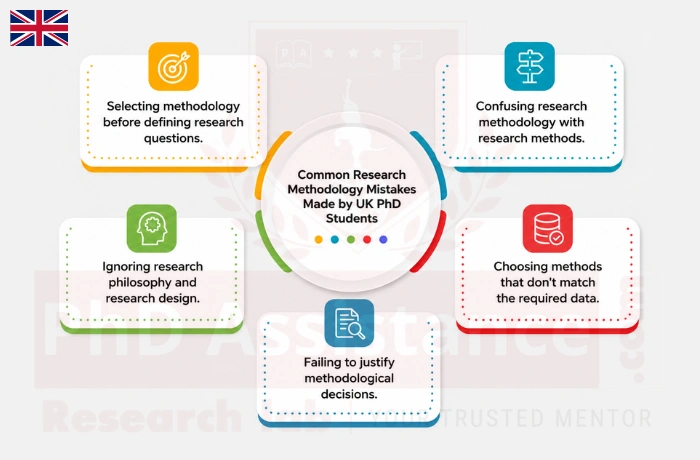
2. Confusing Research Methodology with Research Methods and AI Dissertation Methodology Help in UK
One common misconception among many PhD students is that methodology and research methods mean the same thing. Methods of research can take any form, ranging from interviews, questionnaires, experiments, or observations, while research methodology offers an elaborate explanation for why these methods should be employed.
This misconception ends up leading to poorly written chapters on methodology, whereby the researcher describes the methodology without offering the philosophical assumptions or rationale behind them. In the UK, this will often attract requests for major modifications. Consider AI Dissertation Methodology Help in UK to avoid this confusion and get clarity on research methodology selection with AI support.
A good methodology chapter should highlight the research philosophy, methodology used, research design, sampling method, data collection methods, data analysis techniques, ethical issues, and limitations of the research method used.
Example: “Research methodology encompasses philosophy of research with research design and research methods which provide the justification or the reasoning that underlies the whole research” (Bryman, 2021).
Tips:
- Clearly distinguish methodology from research methods.
- Explain why selected methods answer the research questions.
- Include research philosophy and design within the methodology chapter.
- Support methodological choices using recognised methodological literature.
3. Ignoring Research Philosophy and Research Design
Many doctoral students pay a lot of consideration to the methods used in collecting the data but ignore the research philosophy and research design. Research philosophy plays a vital role in the generation, interpretation, and evaluation of the research done.
Positivist research employs quantitative research methodology that seeks to maintain objectivity and test hypotheses. On the other hand, interpretivist research uses qualitative research methodology in analysing human experiences and social settings. Methods that contradict the underlying philosophy of the research will make the research less credible.
Similarly, the selection of an irrelevant research design – for example, adopting a cross-sectional design where a longitudinal design should be used – could hinder answering the research questions. All these aspects often lead to many changes in the proposal prior to getting ethical approval or starting data collection.
What research shows:
According to Flick (2022), research philosophy, research design, and methodology should be seen as an interconnected system. The alignment of the components results in better quality, clarity, and consistency in research findings.
Tips:
- Select the research philosophy compatible with the research goals.
- Ensure the research design is compatible with the methodology.
- Justify philosophical assumptions within the methodology chapter.
- Review similar doctoral studies within your discipline before finalising the research design.
4. Selecting a Methodology That Does Not Match the Data
Another reason why UK PhD students spend more time is choosing the wrong methodology to use for the research in relation to the kind of data they want to obtain. For instance, some students are supposed to collect quantitative data, but they choose a qualitative research method, and some collect interview data although they need statistical analysis.
When choosing a methodology, always consider factors including type of data, sampling, methods of analysis and potential outcomes of research. For example, while carrying out research that investigates connections between variables, one should necessarily apply quantitative methodology.
In contrast, while researching the experience, perceptions or behaviour of participants, it is better to apply qualitative methodology.
What research shows:
According to Babbie (2020), methodological choices ought to be made about the research problem, nature of data, and methods of analysis that can help address the questions posed by the researcher. This increases the credibility of the research.
Tips:
- Identify the type of data required before selecting a methodology.
- Ensure analytical techniques align with the proposed methodology.
- Consider sampling requirements during research design.
- Validate methodological decisions with your supervisor before data collection.
Get the pricing details for the PhD research methodology service at PhD Assistance Research Lab, designed to assist researchers in selecting suitable research methodology.
5. Failing to Justify Methodological Choices
Selecting a correct methodology is just half of the process, as the researcher needs to justify their choice and show why it is the best option to use. Many dissertations receive plenty of feedback from the supervisor due to the lack of academic rationale for the chosen methodology. It is not enough to simply say what type of methodology will be used.
UK universities require that the methodologies be justified by relating them to the goals of the research, the philosophy, design, and methods for collecting and analysing data. A strong methodology makes the research stronger and gives the confidence to the supervisor.
Example: Yin (2018) noted that each methodology choice must be accompanied by a good reason indicating its appropriateness in the research context. Good reasons make research methodologies more transparent, valid and replicable.
Tips:
- Justify every methodological decision using recognised academic sources.
- Explain why alternative methodologies were not selected.
- Justify how the objective aligned with the methodology.
- State the strengths and weaknesses of your approach.
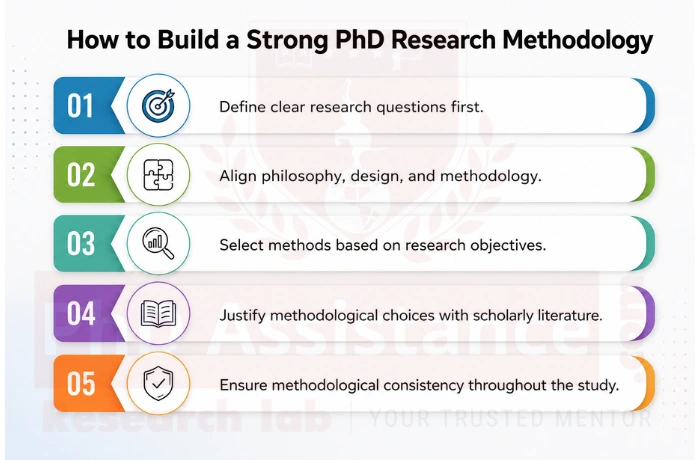
How UK PhD Students Can Choose the Right Research Methodology
- Define research questions before selecting a methodology.
- Align research philosophy, design, methodology, and methods.
- Select methodologies that match the type of data being collected.
- Support methodological decisions with recognised academic literature.
- Discuss methodological choices with supervisors during the proposal stage.
- Develop conceptual maps to visualise relationships between studies.
Conclusion
The selection of an inappropriate methodology has been the major reason for the delay in their doctoral degrees. Errors such as choosing a methodology prior to formulation of research questions, confusion between research methods and methodology, neglecting research philosophy, inappropriate selection of methodology based on type of data, and lack of justification for methodology selection cause delayed research progress.
Constructing a good methodology requires time and effort from the researcher. Selecting the right methodology from the beginning contributes greatly to making research more credible and gives a higher probability of successfully finishing the dissertation. It is always easier to invest time in this aspect from the very beginning than to fix mistakes later.
PhD Assistance Research Lab provides structured PhD Dissertation Methodology Services in UK to ensure your selected research methodology is aligned with the research aim and objectives.
Book a Free Expert Consultation to choose a relevant research methodology and avoid rejection of your dissertation.
References
- Research Methods for Business Students
Saunders, M., Lewis, P., & Thornhill, A. (2023). Research Methods for Business Students (9th ed.). Pearson. - Research Design
Flick, U. (2022). Research Design (4th ed.). Sage Publications. - Social Research Methods
Bryman, A. (2021). Social Research Methods (6th ed.). Oxford University Press. - The Practice of Social Research
Babbie, E. (2020). The Practice of Social Research (15th ed.). Cengage Learning. - Case Study Research and Applications
Yin, R. K. (2018). Case Study Research and Applications: Design and Methods (6th ed.). Sage Publications.
