
How to Construct Theorems from Axioms: A Practical Roadmap for Doctoral Researchers
- Home
- Academy
- Data Analytics
- How to Construct Theorems from Axioms
A Practical Roadmap for Doctoral Researchers
- 2. From Logical Deduction to Formal Proof Systems
- 3. Modern Automation in Theorem Generation
- 4. Expanding the Axiomatic Framework: Constructive Set Theories
- 5. Logic-First Thinking and Ethical Transparency in Proof Development
- 6. Proof Automation and the LISA Framework
- 7. Practical Roadmap for PhD Researchers
- Conclusion
Recent Post
Introduction
The development of a theorem from explicit axioms is at the heart of mathematical thought and scientific abstraction. To doctoral students in mathematics and engineering, developing a theorem is more than symbolic manipulation of the symbolic mathematical language- it is recognizing the ability to deduce, formalize, and then logically and rigorously prove our understanding of some concepts. Cantu (2022) suggests that axiomatics is the “backbone of mathematical thought” that creates connections between abstract reasoning and verifiable truth.
The process of theorem development incorporates three connected meaning-making purposes: establishing axioms to begin with, formalizing the specific steps in your deduction, and verifying your result either manually or through your computer. As a result of advances in formal logic, artificial intelligence (AI), and deductive proof systems such as Coq and LISA, the process for doctoral-level scholars of developing theorems has changed drastically, providing an immensely powerful system to introduce rigor and consistency, and directly automate their processes of theorem development.
1. Understanding the Role of Axiomatics in Research
An axiom is an assumed truth or premise that all propositions ultimately rely on. Cantu (2022) describes the axiomatic approach as a philosophical position and logical structure in support of the “epistemic legitimacy of mathematical systems.” For example, in Euclidean geometry, the parallel postulate gives foundation to prove theorems, such as the Pythagorean theorem.
In a Ph.D. study, an axiomatic system is established by balancing necessity and sufficiency. Necessary for the axioms are that they are the least amount of assumptions; but those assumptions must also be strong enough to reach the conclusion. In applied fields, such as computer science and engineering, the axiomatic system may specify state transitions, probability measures, or relationships between data. When establishing the foundation for a reproducible and logically consistent dissertation, it is important to clearly articulate the axioms.
2. From Logical Deduction to Formal Proof Systems
In theorem building, we deductively interpret axioms into definitions, propositions, lemmas, and then theorems. Guo and Yu (2023) propose a holistic methodology for formalizing propositional logic in Coq, a proof assistant designed for human–machine collaboration to determine the validity of theorems with informal logical form and formal models.
They show how the methodology defines meta-theorems, logic identification, and automation tactics that ensure all inference steps are verified. For example, Coq’s Curry–Howard correspondence allows a proof to be viewed as a program; thus, to prove a theorem is the same as to run a verified computation.
This gives progression with reflection a systematic and reproducible route for Ph.D.ers who want to study their theorems in reference to (syntactic) correctness (logical form) and (semantic) soundness (truth in a model). For PhD scholars, formal methods software offers the potential of correctness and recording the proof structure so that reviewers can track every dependency in logic back to the axiomatic foundations.
3. Modern Automation in Theorem Generation
Of late, automation has altered how the process of developing theorems is practiced. Lin et al. (2024) introduced ATG (Automated Theorem Generation) as a benchmarking framework that evaluates the degree to which large language models (LLMs) can syntactically create and reason on mathematical proofs.
Generative AI models are novel in the fact that they can create new conjectures, prove the conjectures, and create counterexamples, unlike symbolic systems. For example, in combinatorial optimization, AI-assisted systems generated new lemmas by recognizing structural patterns to prove them.
Lin et al. (2024) note that LLM-based theorem generation is not a replacement for insight from a human but an accelerant that extends hypothesis generation (before formal proof is put to the test) to the mathematical domain. For PhD candidates, this is noteworthy that utilising AI tools, like Coq, Lean, and LISA proof may lead to an interactive and iterative process that will lead to discovery and verification.
4. Expanding the Axiomatic Framework: Constructive Set Theories
Traditional mathematics is often done from classical logic, including axioms such as the Law of Excluded Middle. However, Jeon and Matthews (2022) address the expansion of very large set axioms over constructive set theories, ultimately changing what may be assumed axiomatically. This expands the conceptual possibilities that allow researchers to utilize much more agency in reasoning—this is especially prominent in computer-assisted and constructive mathematics, where proofs coincide with algorithms.
For example, on both contrasts—computational topology or category theory—constructive axioms allow theorems to be constructed through algorithmic realizability rather than through abstract existence. They also provide the possibility for doctoral researchers to think about their theorems using alternative logical foundations depending on the philosophical stance or the computational stance of their research.
5. Logic-First Thinking and Ethical Transparency in Proof Development
Alpay and Alakkad (2025) add a philosophical layer to theorem construction when analyzing Fixed-Point Theorems via “radical transparency”. They argue that reasoning from logic first clarifies every step of the proof while endorsing intellectual honesty in mathematical writing.
Similarly, for doctoral researchers, this applies to ethical theorem construction – namely, clearly distinguishing assumptions, citing predecessors, and separating conjectures from established results. Transparency in writing a proof reinforces reproducibility while avoiding a “black box” scenario where the intermediate logical steps are either obscured or left without justification.
An example of this is in a constructive manner towards Gödel’s fixed-point lemma, whereby each logical step in the proof is made explicit and validated by a proof system, such as Coq or Isabelle, thus allowing for a peer review at each logical step.
6. Proof Automation and the LISA Framework
Recent proof systems such as LISA (Logical Inference System Architecture) have created a common space between human intelligibility and computational certainty. Guilloud, Gambhir, and Kunčak (2025) define LISA as a contemporary proof infrastructure meant to couple symbolic reasoning in a programmatic fashion. Unlike earlier computational systems, LISA accepts natural-language inputs providing researchers with an opportunity to describe a theorem in conventional mathematical syntax, only to have it transformed into a proof based on a formal structure. From a technical perspective, then, principled doctoral researchers may use tools like LISA to:
- Preventatively check for inconsistency amongst the lemma dependence.
- Create proof outlines for a given presentation of axioms.
- Assess logical equivalence amongst differing axiom systems.
This set of circumstances promotes a modular, engineering-level approach to theorem construction—creating theorems that can be pre-emptively “tested,” “debugged,” and “verified.”
7. Practical Roadmap for PhD Researchers
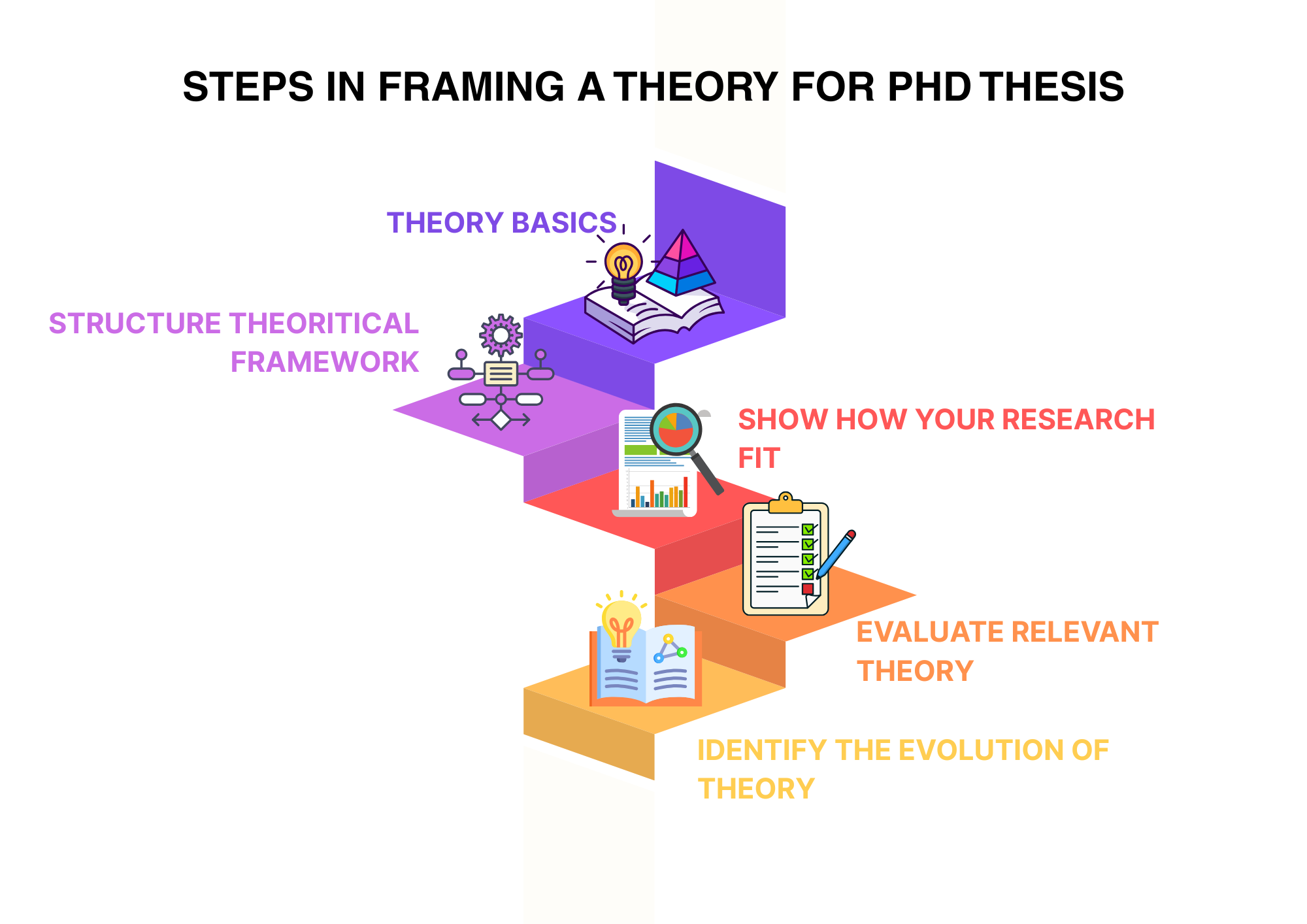
According to the results of these studies, doctoral students can use this six-step guide to deduce theorems from axioms:
- Define Your Axiomatic Basis – Start with minimal and independent assumptions (Cantu, 2022).
- Map Logical Dependencies – Identify the lemmas and propositions required to build toward the theorem.
- Formalize in a Proof System – Use Coq or LISA to ensure syntactic and semantic correctness (Guo & Yu, 2023; Guilloud et al., 2025).
- Leverage AI Tools – Employ systems like ATG for exploring potential theorems or testing conjectures (Lin et al., 2024).
- Consider Alternative Logics – Explore constructive or intuitionistic frameworks when applicable (Jeon & Matthews, 2022).
- Ensure Ethical and Transparent Documentation – Record assumptions and proofs clearly (Alpay & Alakkad, 2025).
This process brings validity to mathematics research and academic work, aligns with contemporary notions of reproducibility, and creates a machine-verifiable field of study.
Conclusion
Developing theorems from axioms is both an art of intellect and a method of science. As the nature of proof systems continually develops and changes, doctoral researchers must work to merge classical logical reasoning with computational ingenuity. On the one hand, the philosophical implications offered by Cantu (2022), to the automation frameworks suggested by Guo and Yu (2023), Lin et al. (2024), and Guilloud et al. (2025), the theorem development mode no not offer a human dimension along with formal logical and mathematical reasoning coupled with machine intelligence.
The theorem development is, of course, more than deriving truths- it is a question of expressing their truth clearly, verifying their truth carefully, and embedding them within the continual evolving relationship of mathematics and logic. This conceptual roadmap that scholars in a PhD program face offers a conceptual orientation and technical tool kit for building mathematical knowledge in an ethical, rigorous, and innovative manner.
Do you find it difficult to develop a theorem for your doctoral research?
At the PhD Assistance Research Lab, we specialize in guiding PhD scholars and researchers through every stage of this process. Our experts will guide you in constructing a strong theorem that perfectly reflects your research statement.
Contact the PhD Assistance Research Lab to complete your PhD research successfully.
References
- Ganesha, H. R., & Aithal, P. S. (2022). How to choose an appropriate research data collection method and method choice among various research data collection methods and method choices during a PhD program in India. International Journal of Management, Technology, and Social Sciences, 7(2), 455–489. https://doi.org/10.5281/zenodo.710211
- Mazhar, S. A., Anjum, R., Anwar, A. I., & Khan, A. A. (2021). Methods of data collection: A fundamental tool of research. Journal of Integrated Community Health, 10(1), 6–10.
- Mueller, C., Herrmann, P., Cichos, S., Remes, B., Junker, E., Hastenteufel, T., & Mundhenke, M. (2023). Automated electronic health record to electronic data capture transfer in clinical studies in the German health care system: Feasibility study and gap analysis. Journal of Medical Internet Research, 25, e47958. https://doi.org/10.2196/47958
- Nii Laryeafio, M., & Ogbewe, O. C. (2023). Ethical consideration dilemma: Systematic review of ethics in qualitative data collection through interviews. Journal of Ethics in Entrepreneurship and Technology, 3(2), 94–110.