
Call for Papers: Insights into Redox and Inflammatory Pathways in CNS Diseases
Introduction
Scientists have established through scientific research during the last ten years that oxidative stress and chronic inflammatory responses serve as primary mechanisms which lead to neuronal injury and synaptic dysfunction and progressive neurodegeneration. This Call for papers CNS diseases 2026 invites researchers, academicians, clinicians, and industry experts to contribute high-quality research which demonstrates how oxidative stress and neuroinflammation impact central nervous system disorders.
The disturbances in redox homeostasis together with the initiation of complex neuroinflammatory pathways directly impact both the development of diseases and their subsequent progression and treatment results. The special issue intends to establish a complete research platform which will enable scientists to study the various interrelated processes between molecular biology and neuropharmacology and clinical neuroscience and therapeutic development. The issue aims to foster interdisciplinary collaboration which will enhance our comprehension of CNS pathology while also discovering new therapeutic targets.
Scope
The special issue accepts original research articles and systematic reviews and short communications and methodological papers which study redox signaling in neurological disorders and related mechanisms. Researchers from various fields are invited to submit their work which includes basic science and translational research and clinical studies. The following subjects will be covered in this research study although the study will also consider other topics.
Researchers are encouraged to submit studies that:
Know More About This Issue
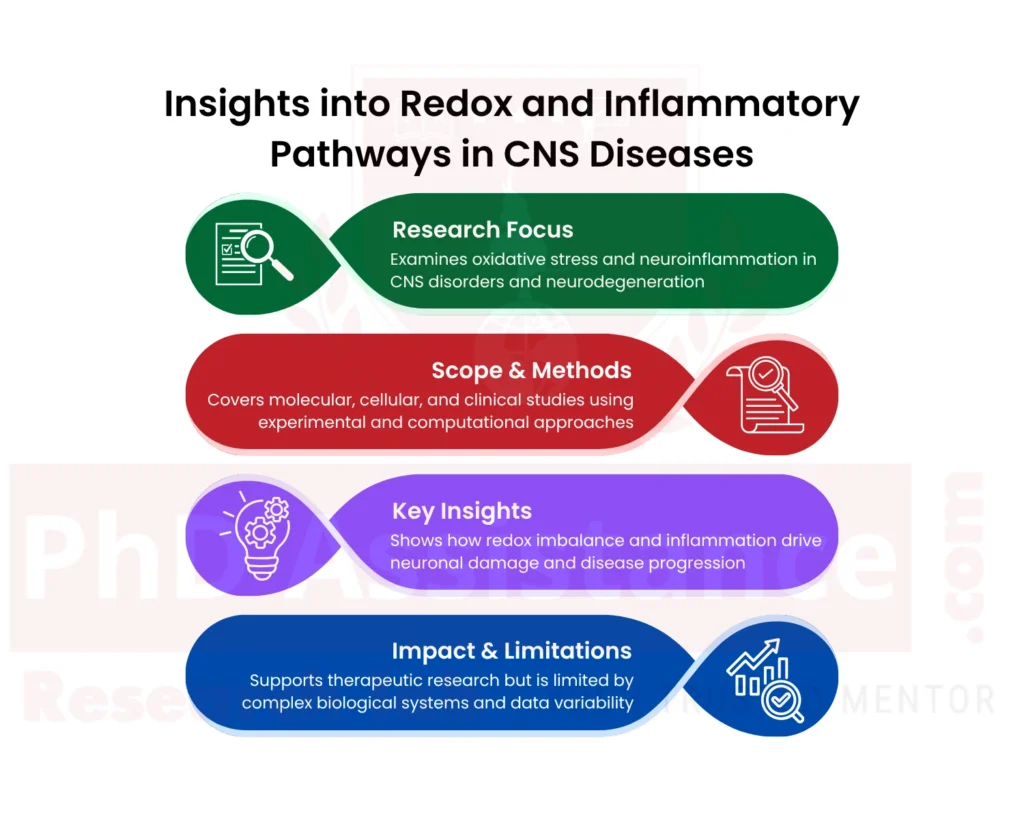
Oxidative stress and neuroinflammation serve as primary characteristics which define multiple inflammatory pathways in CNS disorders that include epilepsy and Alzheimer’s disease and Parkinson’s disease and multiple sclerosis and traumatic brain injury. The conditions display two distinct features which include broken cellular equilibrium and high levels of reactive oxygen species and continuous activation of inflammatory signal transmission networks.
Neuronal death and synaptic plasticity difficulties and disease advancement result from how redox imbalance interacts with immune system activity. The development of precise treatments which can delay or stop neurodegeneration requires knowledge about these relationships.
This special issue aims to integrate insights from molecular, cellular, and clinical research to provide a holistic understanding of CNS diseases. The issue combines different research perspectives to accelerate the discovery of new therapeutic strategies which are based on scientific mechanisms and to enhance patient outcomes.
Key Themes
The submission process requires candidates to submit their work, which may address the following research areas.
How We Support Your Submission
The first service provides help with improving manuscript structure and manuscript clarity and academic writing standards.
Journal Guidelines:
Important Dates
Submission Deadline: 31 March 2027
To ensure successful and timely submission to the special issue “Insights into Redox and neuroinflammation pathways in CNS Diseases,” researchers are encouraged to seek expert publication support from conceptualisation to final submission.
Free Guide: How to Write the Journal Manuscript
Book a free consultation to get guidance from the PhD assistance research lab for writing a credible research manuscript and submitting it to a high-quality journal.
Reference
JouElsevier. (2026, March 26). Insights into redox and inflammatory pathways in CNS diseases (Call for papers). Neuropharmacology. https://www.sciencedirect.com/journal/neuropharmacology