
Call for Papers: The Role of Law in Sustainability Transitions
Introduction
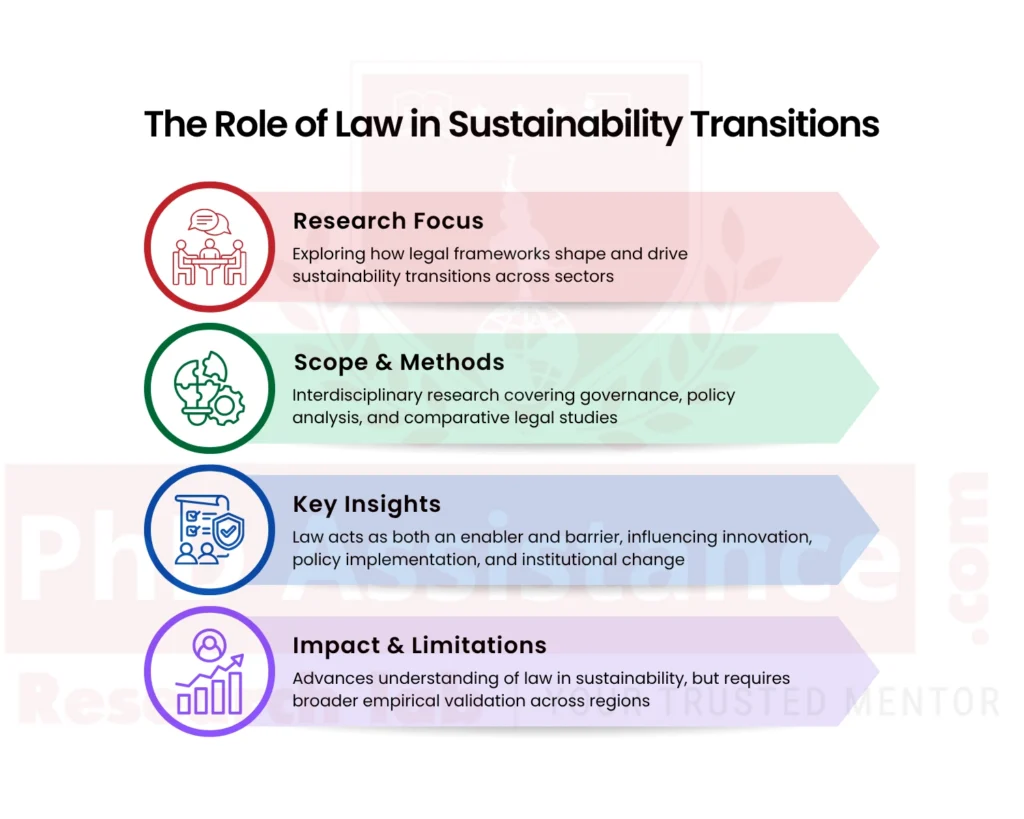
Sustainability transitions need complete system changes that affect technical, economic, and institutional systems. Existing research concentrates on socio-technical systems because the legal framework has not received sufficient study as a factor in sustainability transitions. People commonly view legal systems as tools that either support or prevent progress, yet this basic understanding fails to recognise how legal systems develop together with wider societal changes.
The relationship between law and markets and governance structures and cultural systems establishes the framework that governs transition processes throughout time. The relationship of Law in sustainability transitions establishes a connection that drives innovation, development, institutional actions and the development of regulatory frameworks. Legal frameworks operate as more than rule systems because they actively drive transition processes through their impact on institutional structures and their development of policy and regulatory systems.
The Special Issue seeks to receive both theoretical research and empirical studies that demonstrate how legal systems impact sustainability transitions across multiple sectors and different levels of governance.
Scope
This Special Issue welcomes research from multiple fields that study how legal systems develop sustainability practices in different areas of the world. The research will examine how Sustainability transitions law functions through various sectors and their associated governance systems and institutional frameworks, which demonstrate its ongoing development and situational dependency.
Know More About This Issue
Recent research shows that sustainability transitions develop through complex processes that organisations must manage using different systems for technology, economy and institutional frameworks. Law establishes essential functions for sustainability transitions because it determines the method through which organisations create, execute and modify their policies during times of changing governance systems.
The legal frameworks of today do not remain fixed but rather develop with both technological progress and changes in economic conditions, which create new possibilities and obstacles for sustainable development. Sustainability legal frameworks function as innovation drivers because they create new market opportunities, which help businesses develop new technologies, and direct changes in consumer behaviour. The existing system contains two types of regulations, which stem from its strict structure and outdated rules, which prevent progress because they cannot keep up with the fast changes in current conditions.
The multiple stakeholders who participate in sustainability transitions include government entities, business organizations non-profit groups and global institutions. The study of how legal systems allocate power and establish policies in different governance levels requires gaining insight into how Governance functions in sustainability transitions.
Key Themes
Researchers can submit their manuscripts to study the following topics and additional areas of research:
How We Support Your Submission
Publishing in a high-impact Special Issue requires strong academic quality, methodological rigour, and adherence to journal standards. The research support team provides complete support to authors for creating detailed and effective sustainability transition and legal framework research papers.
Journal Guidelines:
Important Dates
Submission Deadline: 26 February 2027
To ensure successful and timely submission to the special issue “The Role of Law in Sustainability,” researchers are encouraged to seek expert publication support from conceptualisation to final submission.
Free Guide: How to Write the Journal Manuscript
Book a free consultation to get guidance from the PhD assistance research lab for writing a credible research manuscript and submitting it to a high-quality journal.
Reference
Environmental Innovation and Societal Transitions. (2026, March 13). Call for papers: The role of law in sustainability transitions. Elsevier. Environmental Innovation and Societal Transitions | ScienceDirect.com by Elsevier – Environmental Innovation and Societal Transitions | ScienceDirect.com by Elsevier