
Critical Review of “A Decade of Medical Pharmacology Speciality and PhD Theses in Turkey: A Comparative Study”
Introduction
The research field of medical pharmacology develops new drugs that create better treatment methods and produce new biomedical research findings. Academic theses produced in postgraduate programs represent a critical component of scientific knowledge generation and training for future researchers. The assessment of thesis trends allows researchers to track changing research priorities within pharmacology while measuring the research output of graduate programs.
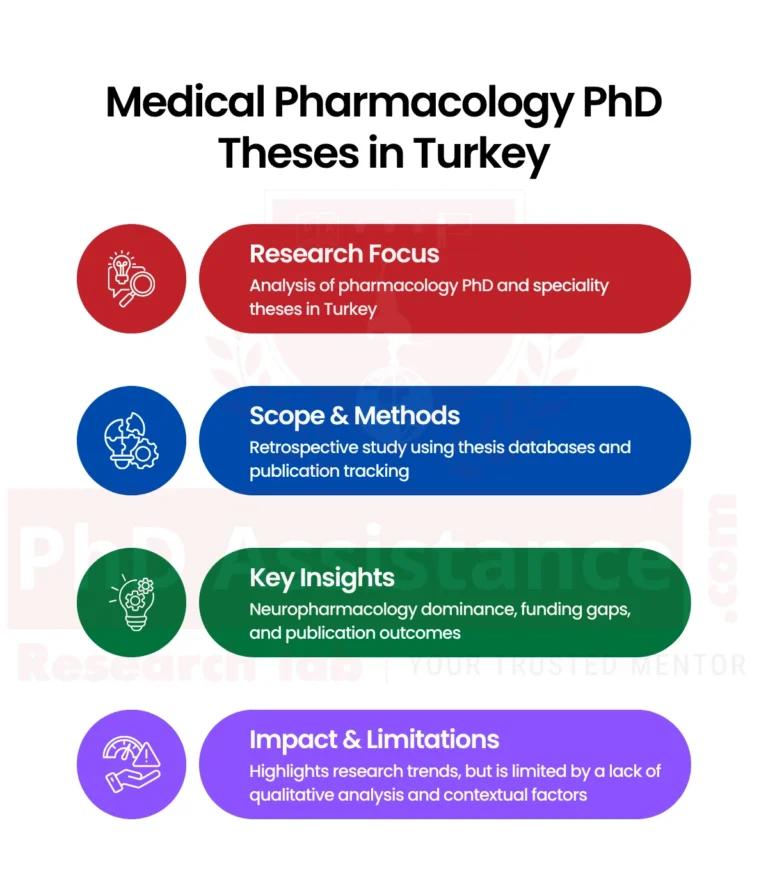
The research project “A Decade of Medical Pharmacology Speciality and PhD Theses in Turkey: A Comparative Study” examines the characteristics, funding status and publication outcomes of Medical pharmacology PhD theses in Turkey that researchers produced between 2010 and 2020. The authors conduct research to discover how Turkish doctoral research in medical pharmacology PhD theses differ from the theses that students write for their degree programs.
This critical review evaluates the methodology, findings and academic contribution of the study while examining its implications for pharmacology research trends in Turkey and postgraduate research development.
Summary of the article
The study analyses the research findings of pharmacology theses that Turkish students completed between 2010 and 2020. The researchers extracted data from the National Thesis Centre’s online archive to study medical pharmacology theses that were completed between 2010 and 2020.
The authors evaluated different elements of the theses through their study of research subjects, their financial backing and their results in publication. The researchers conducted a follow-up search through major academic databases, which included Web of Science and PubMed, Google Scholar and TR-Dizin, to verify whether the theses achieved publication in academic journals.
The research results show that more speciality theses in Turkey received no research funding than Pharmacology doctoral dissertations Turkey. Almost 50 per cent of speciality theses received no financial funding, while PhD theses exhibited higher funding rates.
The study discovered important research topics that Turkish pharmacology theses had studied. Neuropharmacology emerged as the most common topic for both specialty and doctoral theses, followed by cardiovascular pharmacology. However, clinical pharmacology research in Turkey appeared more frequently in speciality theses than in PhD dissertations.
Critique
Significance and contribution of the field
The research study delivers an efficient summary of the academic research conducted by medical pharmacology postgraduate programs in Turkish universities. The researchers studied ten years of these to reveal Turkish pharmacology research trends while identifying neuropharmacology and cardiovascular pharmacology as the main research fields.
The study presents its primary findings through a comparison between specialised theses and doctoral theses. The comparison shows how research funding and Pharmacology academic publications Turkey differ between the two types of academic work, which helps policymakers, academic institutions and research supervisors to make better decisions.
The extensive number of research articles published in SCI-E indexed journals shows that Turkish pharmacology doctoral programs produce research work that makes a substantial impact on worldwide scientific knowledge. The research results show that Turkish pharmacology studies have worldwide research importance.
The research investigates only present statistical data without studying the underlying reasons that drive academic output. The thesis results and publication results will be affected by institutional differences between research facilities and the research knowledge of supervisors. The research analysis of pharmacology development would have benefited from these additional variables.
Methodology and research design
The researchers used a retrospective analytical approach based on data obtained from the National Thesis Centre database. This design allowed them to examine many theses across ten years and identify patterns in research topics and publication outcomes.
The methodology enables researchers to identify general trends that exist in Turkish medical pharmacology PhD theses because it allows them to assess all relevant data. The authors achieved a complete assessment of academic thesis research through their database record and publication search, which they conducted across various indexing platforms.
The study contains multiple methodological restrictions that affect its research results. The research study depends on secondary data sources, which prevent researchers from evaluating the qualitative attributes of theses which include methodological evaluation and original work, and scientific value.
The study fails to investigate the factors that cause funding differences between speciality theses and doctoral theses. The research study required a more comprehensive investigation, which should have included surveys and interviews with researchers and supervisors to achieve a better understanding of funding accessibility and research support systems.
Argumentation and Use of Evidence
The article presents its findings through two methods, which include statistical comparisons and descriptive data. The authors effectively demonstrate doctoral thesis funding status and research topics, and publication rates by comparing them to speciality thesis funding status and research topics and publication rates.
The evidence provided supports the argument that postgraduate pharmacology research in Turkey has maintained consistent thematic priorities over the past decade. The strong emphasis on neuropharmacology demonstrates worldwide research activities that focus on both neurological disorders and drug development.
The Comparative pharmacology research study trends in other countries would have improved the discussion because it would show which patterns are specific to Turkey and which ones exist worldwide in pharmacological research.
The article examines scientific work through its analysis of publication rates and funding information, which serve as quantitative research metrics. The research would have benefited from additional metrics because citation impact, journal quality and research collaboration networks offer a comprehensive view of Turkish academic pharmacology research.
Ethical considerations and omissions
The research study maintains its ethical standards because it uses publicly accessible thesis information without conducting experiments on human subjects.
The research fails to address some contextual elements that impact thesis results. The study fails to acknowledge the regional university differences, institutional resource variations and research infrastructure disparities that exist throughout Turkey.
The study lacks assessment of how these affected the career paths of students who completed their theses. The research provides essential information about the enduring effects of doctoral training programs when it assesses whether doctoral graduates persist in their pharmacology research work.
Writing Style and Structure
The article presents its content through a systematic framework, which helps readers who seek knowledge about pharmacology research and postgraduate studies to understand the material. The study findings become more understandable through the systematic section organization which starts with methodology and ends with results and discussion.
The statistical presentation of data effectively highlights key differences between speciality and doctoral theses. The discussion section needs additional theoretical analysis and extensive contextualization, which connects to international pharmacology research developments.
The article needs more discussion about clinical pharmacology research because clinical studies play a vital role in drug development and therapeutic innovation.
Conclusion
The article presents a comprehensive summary of medical pharmacology PhD theses from Turkish universities while showing how pharmacology research has changed between 2010 and 2020. The research demonstrates that there exist major variations in funding patterns, research topics and publication results between specialities and doctoral theses.
The study confirms that neuropharmacology and cardiovascular pharmacology remain dominant research areas, while clinical pharmacology research in Turkey continues to receive increasing attention. The high publication rates in SCI-E indexed journals show that Turkish pharmacology research has achieved international recognition.
The study needs additional methodological evaluation, together with international pharmacological research comparison, because its current methodology and study context do not meet international research standards. Future studies could incorporate qualitative evaluations of thesis quality, institutional factors and the long-term academic careers of doctoral graduates.
The PhD Assistance Research Lab offers dedicated support to researchers who need assistance in creating their academic publications and research reviews, especially to doctoral students and researchers who are just starting their careers.
Reference
Matheka, H. M., Jansen, E. P. W. A., Suhre, C. J. M., & Hofman, A. W. H. (2025). The influence of supervisors and peers on PhD students’ sense of belonging and their success at Kenyan universities. Studies in Graduate and Postdoctoral Education, 16(1), 25–39. https://doi.org/10.1108/SGPE-09-2022-0059