
Call for Papers: Global Perspectives on Parent Wellbeing, Support, and Prevention
Introduction
Parents and caregivers play a fundamental role in supporting the healthy development and emotional well-being of children. The mental health prevention research and policy development process suffers from insufficient consideration of parental experiences and perspectives. Contemporary families face economic pressures, social isolation and digital influences, and evolving caregiving expectations as their primary challenges. The challenges that parents face today demonstrate the need for research about their well-being and evidence-based methods that enhance their capacity to manage parental responsibilities.
The special issue “Global Perspectives on Parent Wellbeing Research” in Mental Health Prevention invites researchers, practitioners and policymakers to submit scholarly works that analyse parental experiences in different cultural and social environments.
The study should focus on methods that support parental wellbeing together with innovative approaches that enhance family unity. The special issue intends to create preventive solutions for current parenting issues, which will lead to worldwide improvements in parental well-being and family outcomes that last for many years.
The issue aims to advance knowledge in parent mental health research, which examines how parental wellbeing affects family dynamics and child development.
Scope
The special issue accepts interdisciplinary research that studies how parents and caregivers from different cultural and social backgrounds experience their needs and strengths. The research scope includes studies that show how prevention methods and parenting support can enhance well-being for both parents and their children.
The submission process allows researchers to investigate various topics that impact family wellbeing through their studies of social, psychological and economic factors that shape parenting behaviour and parental health.
Know More About This Issue
The development of mental health prevention programs needs to understand how parents experience their roles as caregivers. Recent studies on parent mental health show that parental stress and social isolation, combined with restricted access to support services, create negative effects on both parent mental health and child development.
The research on parent wellbeing shows that supportive family environments lead to better developmental, emotional and behavioural outcomes in children. The prevention science field now emphasises parental resilience development through community engagement and social support networks and evidence-based interventions.
The special issue requires authors to submit research that examines how parental wellbeing support programs, together with prevention strategies, can solve current challenges faced by parents today. The goal is to establish a more robust evidence foundation that will guide academic research and policy development for family well-being.
Researchers should investigate how prevention-based methods, together with parenting programs, strengthen family bonds while enhancing parent mental health and delivering enduring benefits to both parents and their children.
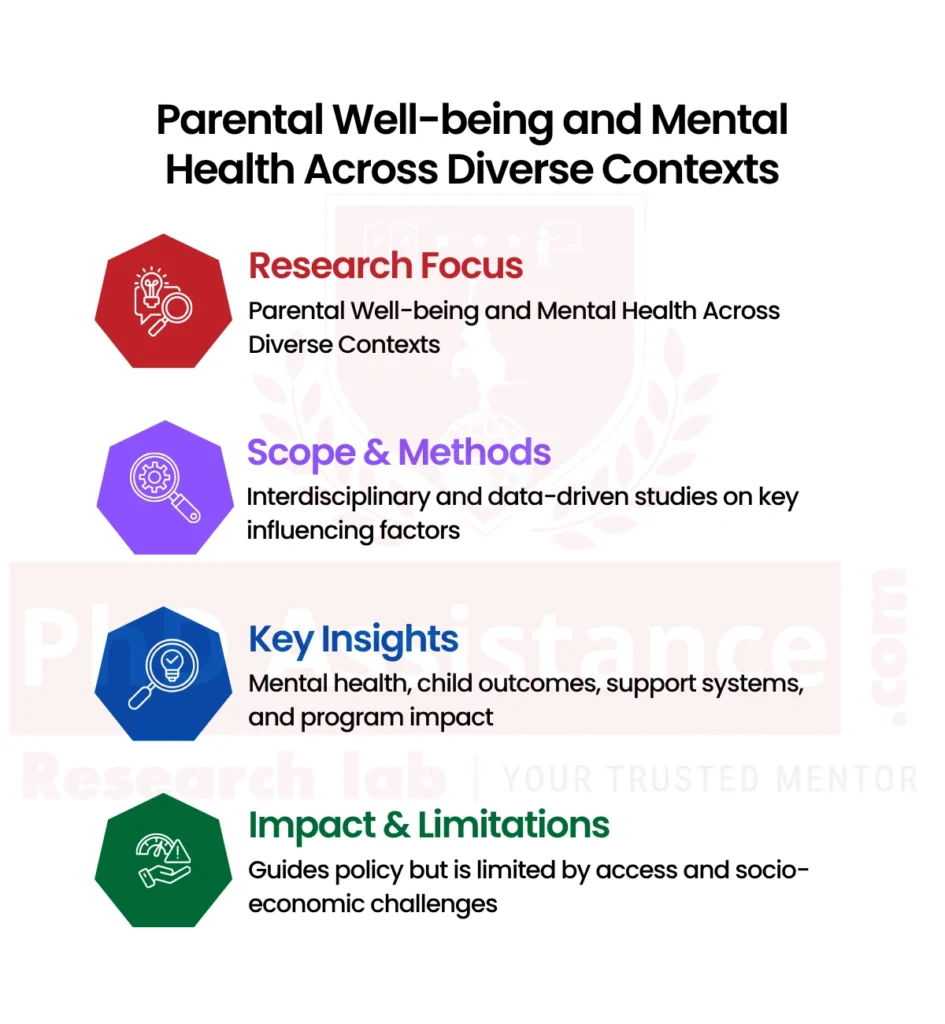
Key Themes
How We Support Your Submission
Publishing in international special issues requires researchers to develop high-quality study designs, which must include clear research methods and effective scientific communication skills. The research support services we provide help researchers develop manuscripts that adhere to the publication standards of Mental Health & Prevention.
Journal Guidelines:
Important Dates
Submission Deadline: 23 September 2026
To ensure successful and timely submission to the special issue “Global Perspectives on Parent Wellbeing, Support, and Prevention,” researchers are encouraged to seek expert publication support from conceptualisation to final submission.
Free Guide: How to Write the Journal Manuscript
Book a free consultation to get guidance from the PhD assistance research lab for writing a credible research manuscript and submitting it in the high-quality journal.
Reference
Elsevier. (2026, March 11). Global perspectives on parent wellbeing, support, and prevention (Call for papers). Mental Health & Prevention. https://www.journals.elsevier.com