
PhD Journal Manuscript writing Courses
Get Professional Journal Manuscript writing Courses at PhD Assistance Research Lab
Expert Manuscript Writing Courses and Dissertation support
Professional Manuscript Writing Training Service– From the Top-Class Universities across the Globe
PhD researchers struggle with writing manuscripts, as the publication process for journals has made clear structure, strong arguments, methodological precision and high quality academic writing the basic requirement of this whole research cycle which is thus also the most complicated one.
In contrast to theses or reports, journal manuscripts are subjected to a stringent peer-review process during which the evaluators judge the writer's skill to make his or her study comprehensible, logically connected, and new while remaining within the boundaries of academic integrity.
The reviewers scrutinize if the manuscript shows:
- An evidently structured IMRaD format (Introduction, Methods, Results, and Discussion) with a logical flow and clarity.
- A strong argument which is backed up by relevant scholarly literature and critical reasoning.
- Precise reporting of methods, data, and interpretations that come along with journal standards.
- Clarity, coherence, and the quality of academic writing that is expected by international publications.
- Correct referencing, citation style, and following of journal formatting guidelines.
Most researchers encounter this situation and even get rejected in the process. The reasons that typically cause rejection are: improper organization of the manuscript, lack of clarity in the arguments presented, poor synthesis of the literature, inconsistent formatting, poor data presentation, non-compliance with the journal's requirements, etc. Sometimes, even minor mistakes can result in the paper being rejected or the authors going through several rounds of revision.
The Journal Manuscript Writing Training Courses offered at PhD Assistance Research Lab are the main area of our expertise through which we can help you with the above-mentioned problems. A globally distributed team of over 100 SME (subject-matter experts) at world-class universities in the UK, US, and elsewhere is the source of our structured and hands-on training for the researchers to help them create publications-ready manuscripts.
The training that is guided by our experts gives you the opportunity to:
- Create a robust IMRaD layout along with narrative storytelling that is lucid academically.
- Combine the literature efficiently and create arguments that are captivating.
- Compose methods, results, and discussions parts of very high quality that correspond with journal requirements.
- Style papers in accordance with the norms of the particular journals (APA, MLA, Vancouver, Harvard, etc.).
- Display tables, figures, and data in a manner that is clear, correct, and scholarly precise.
- Get ready for peer review, which also entails knowing how to politely reply to reviewers' comments.
The training we offer helps to make your manuscript clear, publishable and in line with international standards by solving the major issues mentioned above, thus making it easier for you to get it published in high-quality peer-reviewed journals.
Our international team of academic experts supports the researchers in their writing, originality, and the confidence needed to win the scholarly publishing battle. This guidance turns the process of manuscript preparation from a difficult task into a successful research outcome.
All course materials from the study guides, through examples, and templates, to research exercises, are all 100% human-made by the industry experts.
We assure:
- No AI text in the training modules
- All the materials are subjected to screening through Turnitin, WriteCheck, and AI-detection tools
- Authenticity, academic integrity, and ethically produced resources
- This makes sure that the training you get is nothing short of the best in true research expertise and international academic standards.
All our works are completely original crafted by experts on the domain such as
- Computer Science & AI
- Law & Public Policy
- Social Sciences
- Engineering
- Life Sciences
- Medicine & Clinical Research
- Management & Finance
- Philosophy & Humanities.
Our training programs are tailored in such a way that best meet the research needs of top worldwide universities.
If you are from any of the top Indian institutes, IITs, IIMs or from other prestigious universities like Oxford, Harvard, Cambridge, NUS or any UGC-recognized university, we make sure that your training is in accordance with:
- Research frameworks of the institution
- Dissertation and thesis rules
- Word-count, structure, and formatting criteria
- Required styles of academic writing and referencing
- This way, it is guaranteed that you will develop the very same competence that your university anticipates from you.
Our researchers use peer-reviewed journals and credible academic sources from:
- Scopus
- PubMed
- IEEE Xplore
- JSTOR
- Springer
- Elsevier
- ProQuest
- Web of Science
We ensure every reference is traceable, current, and cited accurately in the required referencing style (APA, MLA, Harvard, Chicago, Oxford, Vancouver, etc.).
Our team includes:
- Writers with years of experience on the domain
- Editors with knowledge of English grammar and domain expertise.
- Proofreaders trained in grammar and consistency.
During the entire training period, we guarantee unlimited resolution of academic queries and feedback sessions. It doesn’t matter if it is about methodology clarification, literature review improvement, analytical techniques refinement, or reviewer expectation understanding, we are there to guide you until you are fully confident.
We provide complete transparency by sharing all study sources:
- Journal articles
- PDFs and reports
- Datasets
- Lecture notes
- Translated works
- YouTube academic links
- PPTs, legal documents, and more
These help you prepare for viva-voce, future publications, or further coursework.
Our Journal Manuscript Writing Courses by Subject Area



Writing Modules Covered in Our Journal Manuscript Writing Course
Understanding Journal Requirements & Publication Standards
Writing the Methodology Section – Ensuring Transparency & Replicability
Academic Writing Style & Language Precision
Structuring the IMRaD Format – Writing with Clarity and Logic
Presenting Results – Crafting Clear Tables, Figures & Narratives
Citation, Referencing & Avoiding Academic Misconduct
Literature Synthesis & Critical Review – Building Strong Arguments
Writing Discussion & Conclusion – Interpreting Findings Effectively
Manuscript Formatting, Journal Templates & Submission Preparation
Who Can Attend – Journal Manuscript Writing Courses for Researchers
These courses have been designed specifically for doctoral students who are simultaneously writing journal articles and their dissertations. During the course, attendees acquire the knowledge to organize the manuscript, the literature in the background of the study, the results and their respective discussions, and finally to follow the journal requirements for the layout and reply to the reviewers’ remarks effectively.
Our program aims at the professors, researchers, and the postgraduate students who want to improve their academic writing and publication skills. The training encompasses the manuscript structure, the academic style, the research reporting, and the journal submission process. Institutions will see the quality of their research output getting better, the number of publications going up getting improved.
post-docs, lecturers, and academic writers are trained in writing, critical analysis, and literature integration but mainly preparing papers for peer-reviewed journals. The training refines writing precision, increases publication success, and raises the total research productivity.
Doctors, nurses, and public health workers who take part in clinical trials or research based on medical evidence, are significantly, if not entirely, benefitting from the training focused on manuscript preparation. The writing of clinical manuscripts, data presentation, and structuring of research findings are the main aspects of the course.
The workers in the fields of corporate research, healthcare analytics, marketing insights, or product development are the ones who can benefit from the course the most as they will be able to publish their results in either industry or academic journals. The training consists of drafting applied research manuscripts, reporting empirical outcomes and giving case study presentations.
The program is open to students from every nation who want to reach the global standards of academic writing and research publication. The training will provide assistance in navigating international authorship guidelines, academic writing conventions, plagiarism-free writing, and the use of clarity in research reporting.
Journal Manuscript Writing Courses-Service Package
- Assign subject matter experts with experience of 1-3 years.
- Email support included.
- Training for carrying out a narrative review.
- Help for finding and judging pertinent academic sources.
- Assistance in pinpointing and polishing a relevant research area.
- Teaching how to make a simple proposal template with specified variables.
- Training to word hypotheses or propositions clearly.
- Provides 15-day support
- Assign subject matter experts with experience of 4-6 years.
- Email and call support included.
- Training for carrying out a narrative review.
- Help for finding and judging pertinent academic sources.
- Assistance in pinpointing and polishing a relevant research area.
- Teaching how to make a simple proposal template with specified variables.
- Training to word hypotheses or propositions clearly.
- Development of skills to make an annotated bibliography.
- Regular feedback with chances for rework and betterment.
- Provides 21-day support
- Assign subject matter experts with experience of 7-9 years.
- Email and call support and collaborative approach included.
- Comprehensive training in doing difficult narrative reviews.
- Thorough guidance in picking, judging, and integrating the best academic sources.
- Help from experts in finding, perfecting, and reducing to size advanced research areas.
- Teaching on how to make detailed proposal templates with variables and frameworks clearly defined.
- Advanced training in coming up with strong hypotheses or propositions.
- Sculpting the ability to develop analytically rich and academically sound annotated bibliographies.
- Continuous expert feedback with the possibility of refining the work and making advanced-level improvements.
- Provides 30-day support
Tools We Use at PhD Assistance Research Lab for Research Courses
Zoom – Live, Interactive Training Sessions
This software allows conducting real-time classes with the ability to share screens for software demonstrations, having interactive Q&A sessions, making use of breakout rooms for group activities, and offering high-quality virtual engagement.
Microsoft Teams – Collaborative Learning Platform
The tool provides the support for live lectures, file sharing, recorded sessions, one-on-one mentoring, and team-based discussions, thus creating a unified digital classroom environment.
Google Classroom – Learning & Assignment Management
It facilitates and gives structured education through organized modules, assignments submissions, shared materials, tracking of progress and communication that is easy between trainers and learners.
Moodle LMS – Comprehensive Course Delivery System
It is a full course content hosting platform, quizzes, assessments, learning resources, and performance tracking it is perfect for long-term structured training programs.
Google Meet – Quick & Accessible Virtual Sessions
Good for very short classes, one-on-one meetings, question and answer sessions, and personalized guidance, thanks to its simple and user-friendly interface.
Screen Recording & Annotation Tools (Loom, OBS)
Support the development of very good quality recorded tutorials, guided research walkthroughs, and marked displays for the students who want to revise or study at their own pace.
Digital Collaboration Tools (Miro, Padlet, Jamboard)
Used in interactive brainstorming, group projects, mind-mapping, research planning, and developing conceptual frameworks in a shared visual space.
Learning Resource Platforms
Provided studying materials, session recording, organizing tasks, managing research workflow, and easy access to cultivated learning resources.
Check at What Stage You’re In & See How You Fit into Our Engagement Model
Hannah Lewis

Literature Synthesis & Academic Argument Development
This module leads the participants to acquire the skills to combine sources, create strong academic arguments and produce publication-ready introductions and literature reviews with perfect clarity and coherence.
Omar Siddiqui

Methodology Writing & Justification for Journals
The participants are trained to state the research design, sampling, instruments and data collection procedures. The module focuses on strong justification, clarity, transparency and alignment with journal expectations.
Clara Jensen

Results Presentation & Discussion Writing
The module teaches a researcher to tell his findings by applying narrative explanation, tabular and graphical representations, and so on. Also, the students will be able to create a discussion section where the findings will be linked to the theory, literature, and implications in a coherent way.
David Chen

Formatting, Referencing & Peer-Review Preparation for Journals
The trainees are taught how to use specific formatting styles for each journal (APA, MLA, Chicago, Vancouver), how to conduct citing accurately, how to enhance the structure of the manuscript and how to create powerful replies for the peer-review process.
Our Sample & Example Works Speak
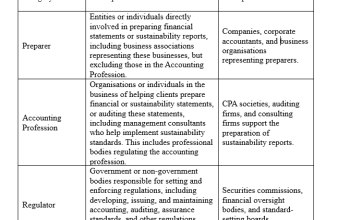
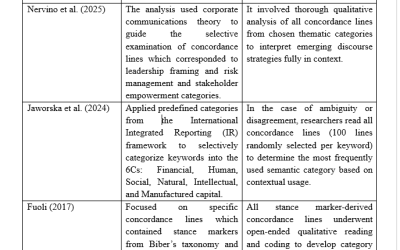
Order process
Submit Your Requirements & Make Payment
Order Confirmation & Expert Allocation
Conducting manuscript writing courses
Regular Updates & Two-Way Communication
Review & Unlimited
Revisions
Final Delivery &
Feedback
Our Guarantee

Plagiarism Free

Unlimited Support

On-time delivery

Subject Matter Expertise

Communicate with your writer

Updated academic resources

Free research articles supply*
Journal Manuscript Writing Course Service
Gained Confidence in Structuring My Research Manuscript

"It was always a struggle for me to put my research into a proper format for a journal manuscript. The Manuscript Writing Training Course taught me step-by-step how to build each part—from the introduction to the conclusion. The practical training sessions gave me a chance to write more clearly and with more intent."
— Emma Clarke, Doctoral Student, United Kingdom
Improved Academic Writing Skills for Publication

"An academic style and precision were missing in my writing. The training course was a real eye-opener in terms of argumentation, clarity, and the proper way of abiding by the journal's standards. When I first tried out these skills, my manuscript was already way more polished and professional."
— Carlos Mendoza, Research Assistant, Spain
Stronger Literature Review and Discussion Sections

"One of my greatest difficulties was to systematically review the literature and create an interesting discussion. The workshops simplified the whole process and provided illustrations from the literature. Now I am able to confidently deliver logical reviews and link my findings to the current research."
— Meera Iyer, PhD Researcher, India
You might also be interested in these

The scientific rigor of the journal’s research papers is an important measure of journal


Frequently Asked Question
The Manuscript Writing Training Course of ours entails all the steps needed in making a journal manuscript that can get published. The stages at which this process goes through are:
- Knowing the structure of the manuscript (IMRaD format)
- Developing powerful introductions and problem statements
- Methodology writing skills
- Writing and interpreting of results
- Literature review and discussion development
- Adapting to academic writing style, coherence, and argument building
- Formatting for the journal, referencing and being plagiarism compliant
- Manuscript submission for peer review and revision preparation
The process of manuscript writing is the organized way of presenting research results in the form of a scholarly article that is suitable for submission to peer-reviewed journals. One must exhibit the characteristics of clarity, coherence, and academic tone, among others, in the presentation of the research arguments. The writing of a strong manuscript not only increases the chances of publication but also the impact of the research and helps researchers convey their contributions to the academic community effectively.
Certainly. The training we provide clearly and in detail reveals how to properly develop the components of every section—title, abstract, introduction, methods, results, discussion, conclusion, and references. We present frameworks, supply templates, and give examples from high-impact journals which facilitate the mastery of each part by the participants with confidence.
Yes, we do. The course covers academic tone, coherence, argument clarity, and formal writing conventions training. We also assist you in customizing manuscripts for individual journal requirements such as formatting, citing, word count limit, and ethical guidelines.
Absolutely! The paper-writing procedure consists of outlining the reviewers' responses, tackling their blow-ups, and arguing in support of changes by using strong evidence still without hitting the roadblocks that may cause the paper to be rejected. Writers must make the structure, rationale, and scholarly input of their articles more apparent and robust prior to the submission.