
Call for Papers: Plant Diversity in Asia: From Past to Present
Introduction
Biodiversity hotspots in Asia represent crucial environmental areas that have developed through complex geological processes and experience diverse climatic conditions. Ecosystem research needs interdisciplinary methods that combine historical plant data with current ecological research to achieve its goals. Research on Asian plant diversity provides valuable insights into Plant Biodiversity in Asia, ecosystem resilience and environmental change across geological and contemporary timescales.
The Call for Paper on Plant Diversity in Asia: From Past to Present” aims to provide a comprehensive overview of plant diversity evolution across Asia from geological time periods until the present day. This issue encourages multidisciplinary research that integrates paleobotanical evidence, molecular phylogeny and ecological studies to understand the development and resilience of Flora Diversity Research Asia. Researchers and scholars are invited to submit high-quality original manuscripts that contribute to advancing knowledge of plant diversity and evolutionary processes across the Asian continent.
Scope
The special issue invites original research articles, review articles and interdisciplinary research studies that investigate the process of assembling and transforming Asian Plant Diversity Research throughout different locations and historical periods. The research must show strong research methods and theoretical importance, with its results showing how plant species development and environmental sustainability research patterns.
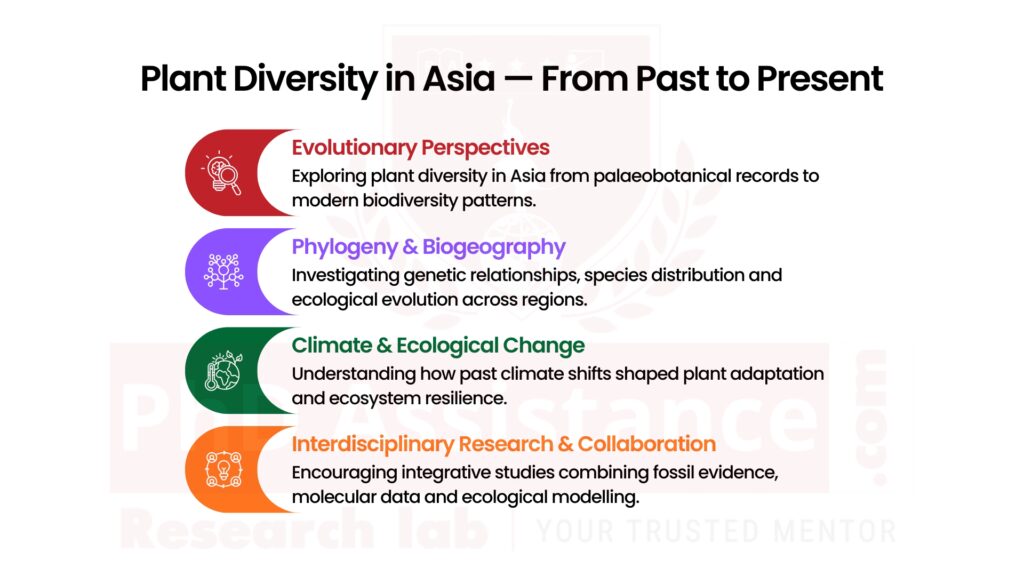
The research can investigate palaeobotany, phylogenetics, systematics, ecological modelling and paleoclimate reconstruction. The issue particularly encourages studies that combine fossil evidence with molecular phylogenetic data and ecological research to investigate how species evolved and reacted to environmental changes. The research needs to support collaborative studies that unite experts in botany, ecology, evolutionary biology and climate science.
Know More About This Issue
Asian ecosystems show diverse evolutionary paths that developed through tectonic movements, climate changes and the interactions between living organisms. This special issue encourages researchers to study plant diversity evolution through geological time periods while using present-day biodiversity patterns to forecast future environmental changes.
Researchers use macrofossil and palynological evidence together with contemporary phylogenetic and ecological data to reconstruct evolutionary pathways that show how species have adapted and developed their resilience. The issue aims to support interdisciplinary research that provides essential context for predicting biodiversity responses to ongoing climate change and environmental pressures.
Key Themes
Researchers are invited to submit manuscripts addressing, but not limited to, the following themes:
How We Support Your Submission
The process of publishing in a high-impact special issue requires researchers to complete three requirements, which include developing proper research designs, writing their work in academic language and following the specific rules of the journal. The PhD Assistance Research Lab provides complete publication services, which enable researchers to create high-quality Botanical Research Papers Asia that meet special issue submission standards. The support services we provide include
Journal Guidelines:
Important Dates
Submission Deadline: 31 October 2026
To ensure successful and timely submission to the special issue “Plant Diversity in Asia: From Past to Present,” researchers are encouraged to leverage the expert services of the PhD Assistance Research Lab, offering comprehensive support from conceptualisation to final manuscript submission within the specified deadline.
Free Guide: How to Write the Journal Manuscript
To support researchers, the PhD Assistance Research Lab offers a free comprehensive guide on writing and preparing a high-quality journal manuscript.
Reference
Elsevier. (2026, February 16). Call for papers: Plant diversity in Asia—From past to present. Earth History and Biodiversity. ScienceDirect. https://www.sciencedirect.com/special-issue/330573/plant-diversity-in-asia-from-past-to-present