
Call for Papers: Molecular Imaging for Uncovering Mechanisms Behind Disease
Call for Papers on Molecular Imaging
The study of biological disease mechanisms provides vital information that scientists use to develop personalised medicine treatments and discover new medications. The conventional pharmacological methods, which include biochemical tests and histological assessments, deliver fixed point-in-time data about complex disease mechanisms, thus preventing researchers from observing how cells interact under actual living conditions.
Molecular Imaging methods were used to identify disease research by allowing scientists to visually study and measure biological activities at both molecular and cellular dimensions without needing invasive procedures. The systems deliver immediate information about how diseases start and develop while showing how treatments work and how patients develop resistance.
This Special Issue invites high-quality review articles that use molecular imaging methods to investigate how diseases develop and research which drugs can effectively treat those diseases. The research should show how imaging techniques help identify targets and pathways, assess drug occupancy and develop precise treatment solutions.
Scope
The Special Issue invites research papers which highlight how imaging techniques enable better understanding of disease pathways in cancer, cardiovascular diseases and infectious diseases, and other complex medical conditions.
The issue also supports research that combines translational biology with personalised treatment methods and biomarker-based decision processes, which are used throughout different disease stages. Interdisciplinary contributions that connect molecular biology with pathology and immunology and clinical oncology will help advance innovative precision oncology frameworks for upper gastrointestinal cancers.
Know More About This Issue
The dynamic and heterogeneous nature of diseases emerges from the diverse cellular makeup of organisms and their ability to adapt to environmental changes and treatment effects. Molecular imaging enables researchers to non-destructively observe and measure biological activities that occur within living organisms.
Current imaging technology enables researchers to observe molecular targets while assessing drug interaction and tracking pathway activation in real-time. These innovations support mechanism-based therapeutic development and improve clinical translation.
This Special Issue provides researchers, together with clinicians, a complete framework that they can use to apply molecular imaging for research purposes on disease mechanisms and drug development studies.
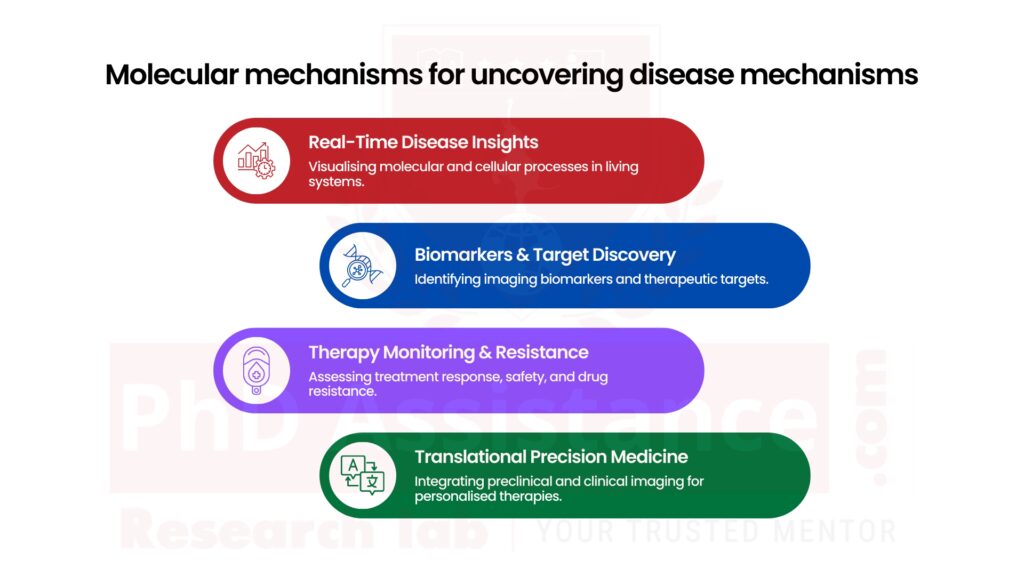
Key Themes
Researchers are invited to submit manuscripts addressing, but not limited to, the following themes:
How We Support Your Submission
Scientific publishing in high-impact Special Issues demands two essential requirements, which include scientific rigour and methodological clarity together with strong translational relevance. The PhD Assistance Research Lab provides complete manuscript development assistance to scientists who conduct research in molecular imaging and disease mechanisms.
Journal Guidelines:
Important Dates
Submission Deadline: 06 September 2026
To ensure successful and timely submission to the special issue “Molecular Imaging for Uncovering Mechanisms Behind Disease,” researchers are encouraged to seek expert publication support from conceptualisation to final submission.
Free Guide: How to Write the Journal Manuscript
Book a free consultation to get guidance from the PhD assistance research lab for writing a credible research manuscript and submitting it in the high-quality journal.
Reference
Lou, L., & Cheng, Z. (Guest Eds.). (2026). Call for papers: Molecular imaging for uncovering mechanisms behind disease (Special issue). ScienceDirect/Elsevier. Submission deadline: September 6, 2026. Pharmacological Research | ScienceDirect.com by Elsevier – Pharmacological Research | ScienceDirect.com by Elsevier