Call for Papers: Heavy Metal Contamination in Soils and Vegetables: Ecological and Health Risks Assessment, and Sustainable Mitigation
Introduction
Soil heavy metal exposure has become one of the important environmental and agricultural problems around the world due to food security, ecosystem degradation and sustainable agriculture. Accelerated urbanisation, industrial development, wastewater irrigation, mineral mining and overuse of agrochemicals have been the main causes that resulted in the accumulation of heavy metals like Cd, Pb, As, Hg and Cr in agricultural soil.
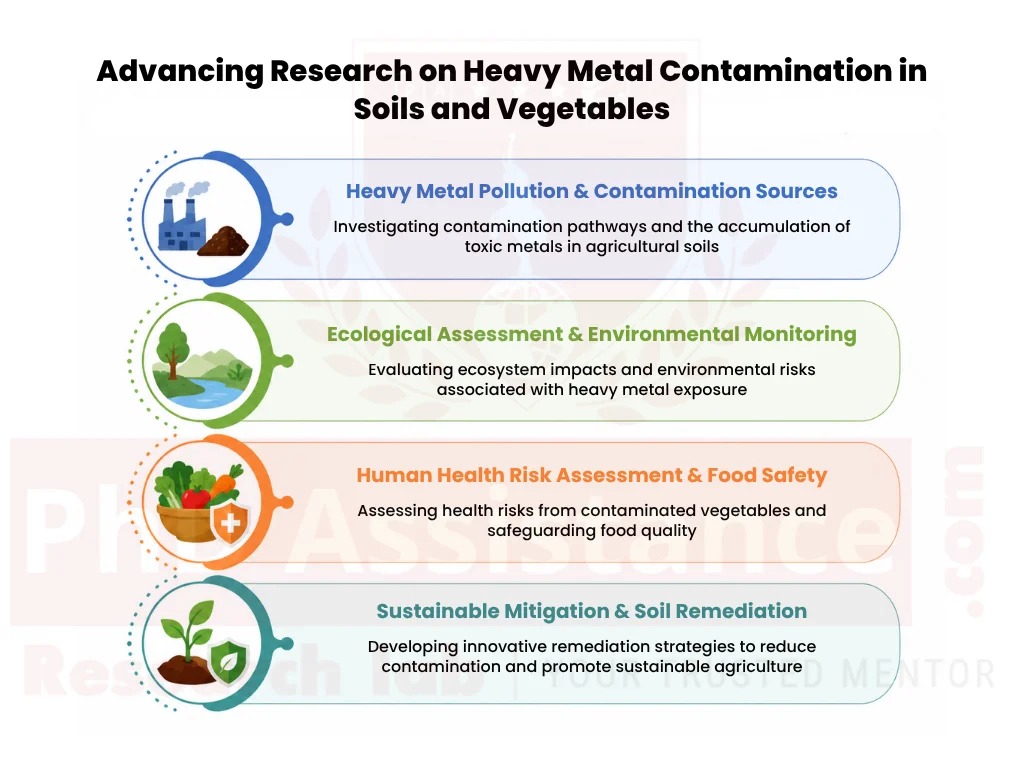
This process-movement from soil to vegetable-is a major source of human exposure. Therefore, Heavy Metal Contamination in Soils and Vegetables is one of the important research subjects that needs thorough research to clarify the transport process, biological accumulation process, environmental effects and food security problems. Heavy metal exposure control, Ecological Risk Analysis, Human Health Risk analysis, and Soil Contamination Assessment are key to controlling the contamination effectively.
Why publish in this issue?
This Special Issue offers an opportunity for scientists in agricultural research, environmental science, agronomy, soil science, ecology, and policy to address one of the critical environmental issues impacting global food systems. All articles accepted and published will appear in the high-impact international Journal of Food Composition and Analysis and highlight the cutting-edge of science impacting food quality, food safety and human and environmental health.
Key advantages:
Scope
The research scopes covered by this issue of special topics include original research articles, reviews, short communications, and case studies on heavy metals contamination, environmental sustainability, ecological impacts, and risk assessment in the soil-plant system. Topics of special interest include, but are not limited to:
Contact PhD Assistance Research Lab today to publish your research papers in Scopus and PubMed-indexed journals!
Know More About This Issue
The accumulation of heavy metals in agricultural soils is rising steadily due to different contamination pathways, leading to potential threats to environmental sustainability and food safety.
As heavy metals can persist for decades and years, their persistence may affect ecosystems by accumulating in the soils and ultimately contaminating the human food chain via ingestion of contaminated edible crops (food chain. Plants, particularly leafy vegetables, absorb these elements at a very fast rate and can be passed to humans via food, with longer-term serious illnesses like neurologic damage and cancer.
The focus of this Special Issue will be the compilation of articles addressing pollution processes, environmental impact, risk assessment methods, and sustainable mitigation of contamination problems in agricultural landscapes. Interdisciplinary contributions from environmental science, agriculture, ecology, food safety and public health will strengthen the scientific knowledge on contaminated agricultural environments.
Key factors
How We Support Your Submission
We are offering end-to-end publication support to enable scientists/academicians to prepare manuscripts suitable for top journals of international repute and Special Issues of leading journals.
Our services include:
We will assist you in meeting the criteria set by the Special Issue on Heavy Metal Contamination in Soils: Ecological and Health Risks Assessment, and Sustainable Mitigation.
Journal Guidelines:
If you are a researcher who wants to publish research work in Heavy Metal Contamination in Vegetables: Ecological and Health Risks Assessment, and Sustainable Mitigation, PhD Assistance Research Lab can offer guidance and assist you in successfully publishing the manuscript.
Free Guide: How to Write the Journal Manuscript
Book a free consultation to get guidance from the PhD assistance research lab for writing a credible research manuscript and submitting it in a high-quality journal.
Reference
China Economic Review. (2026). *Income and wealth distribution, labor market, and subjective well-being in China – In honor of Professor John Knight* (Special issue call for papers). Elsevier.