
phdassistance

Call for Papers: Geologic Storage Systems and Decarbonization

Introduction

The world tries to reach sustainable energy systems that produce no emissions, which makes underground technologies vital for both permanent carbon storage solutions and maintaining energy supply security. The development of Geologic carbon storage research now allows safe storage of carbon dioxide, hydrogen and natural gas at large scales, which helps the world transition to lower carbon energy systems.

The existing climate targets require more than traditional decarbonization methods, which focus only on surface-level emissions reduction. Research on geologic carbon storage and underground energy storage technologies offers solutions that maintain their ability to reduce emissions while boosting grid reliability for an extended period. The systems provide real-time data about subsurface operations and storage system security and environmental effects, which last over time to support current research in carbon capture and storage and worldwide efforts toward decarbonization.

This Special Issue invites high-quality research and review papers that explore innovative technologies, modelling approaches, and field applications supporting CO₂ storage systems research, sequestration research, and broader net-zero emissions research initiatives. The contributions need to show how geologic storage assists with energy transition pathways while it strengthens Decarbonization research papers, which span scientific, engineering, and policy fields.

Scope

This Special Issue seeks manuscripts that examine the scientific, technological, environmental, and policy dimensions of geologic storage systems and their role in decarbonization. The research requires interdisciplinary submissions that support both carbon storage research and integrated carbon management solutions.

  • Subsurface storage of CO₂, hydrogen, natural gas, and alternative carbon/hydrogen carriers
  • Research progress in carbon capture and storage technologies together with integrated CCUS systems
  • Geomechanical testing, geochemical analysis, and reservoir integrity testing
  • Storage capacity estimation together with site screening and selection methods
  • The storage system requires monitoring procedures and verification methods, and needs assessment of associated risks
  • The research includes both techno-economic assessment and lifecycle evaluation of storage technology
  • The study examines three main components, which include policy frameworks and regulatory hurdles, and environmental factors
  • CO2 storage systems research through AI and machine learning technologies, which they use to enhance system performance and research capabilities
  • Know More About This Issue

    The global energy systems require sustainable solutions that can efficiently store carbon and energy resources for extended time periods. Geologic storage technologies enable safe containment of CO₂ and hydrogen through their ability to store large quantities of gas.

    Research on geologic carbon storage demonstrates that underground formations can deliver energy security for power grids while supporting industrial decarbonization efforts. Researchers use advanced modelling tools together with monitoring technologies and interdisciplinary partnerships to investigate subsurface processes that enhance storage efficiency.

    The Special Issue enables scientists, engineers and policy experts to present their research findings, which help achieve large-scale decarbonization and sustainable energy infrastructure development. The document aims to develop better research integration between decarbonization studies and engineering applications, economic assessments, and regulatory frameworks.
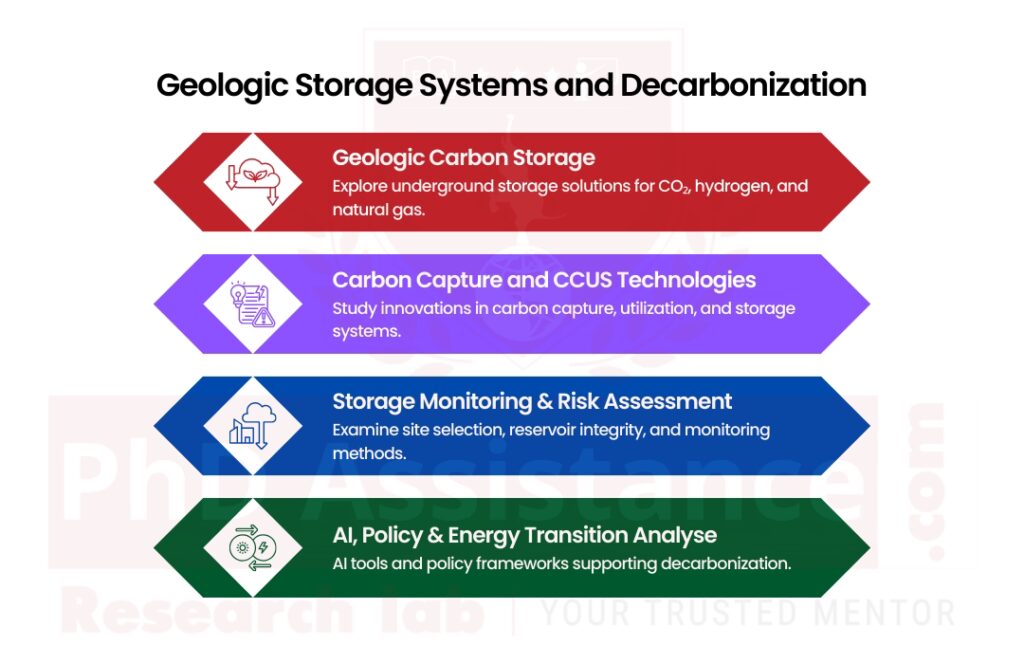
    Decarbonization

    Key Themes

  • Researchers are invited to submit manuscripts addressing, but not limited to, the following themes:
  • Geologic storage research and underground energy storage research have achieved new innovative breakthroughs.
  • Carbon capture and storage research has developed new technologies that enable industrial facilities to reduce their carbon dioxide emissions.
  • Researchers have developed and tested methodologies that they use to study CO₂ storage systems.
  • The site selection process requires both reservoir characterisation techniques and capacity modelling methods.
  • Underground storage systems use monitoring technologies together with risk mitigation strategies to ensure operational safety.
  • Researchers use geologic storage methods to develop their approaches for achieving Net Zero Emissions research
  • Storage technologies undergo evaluation through two assessment methods, which include techno-economic analysis and lifecycle assessment.
  • The practice of carbon storage produces environmental effects that lead to regulatory changes and social consequences.
  • Storage optimisation uses artificial intelligence together with digital modelling techniques.
  • The Carbon sequestration research, combined with climate mitigation efforts, is being advanced by new emerging scientific research.
  • How We Support Your Submission

    The publication process for high-impact Special Issues demands research work to demonstrate both scientific excellence and maintain methodological transparency while showing direct practical applications. The research support team offers complete manuscript development services for researchers who study geologic storage and decarbonization.

  • The service provides academic editing together with manuscript improvement
  • The service offers guidance on how to structure both review papers and research articles
  • The service assists in combining technical information with economic data and policy analysis
  • The service helps authors improve their work to meet international publication standards through language and structural improvements
  • The service helps researchers prepare their work according to journal requirements and submission guidelines
  • The service assists researchers in preparing their work through reviewer feedback responses and document revisions
  • The process involves expert evaluation to determine the research work’s potential for strong academic influence.
  • Journal Guidelines:

  • Research manuscripts should present original studies or review articles that have not been submitted to other platforms for evaluation.
  • The final submission requires approval from all authors, who must also reveal their potential conflicts of interest.
  • The journal requires authors to adhere to its Guide for Authors when submitting their work.
  • Authors must use the Editorial Manager system to submit their manuscripts.
  • The article type should be selected as “VSI: Geologic Storage.”
  • All submissions will undergo rigorous peer review by at least two independent experts.
  • Important Dates

    Submission Deadline: 01 October 2026

    To ensure successful and timely submission to the special issue “Geologic Storage Systems and Decarbonization,” researchers are encouraged to seek expert publication support from conceptualisation to final submission.

    Free Guide: How to Write the Journal Manuscript

    Book a free consultation to get guidance from the PhD assistance research lab for writing a credible research manuscript and submitting it in the high-quality journal.

    Reference

    Gas Science and Engineering. (2026, February 24). Call for papers: Geologic storage systems and decarbonization (Special issue). Gas Science and Engineering | ScienceDirect.com by Elsevier – Gas Science and Engineering | ScienceDirect.com by Elsevier

    Call For paper
    Generative AI on Educational Divide
    Call For paper
    Manuscript Call on TinyML advancements in Intelligent Systems
    Call For paper
    Abstract Submission Call on Big Data at IEEE international conference 2024
    Call For paper
    IEEE Annual Congress on Artificial Intelligence of Things (AIoT)
    We offer our Greatness in Various Parts of Research, and we help you with any phase of your Process. Make a Smart Decision and get your Paper Published.