
Call for Papers: Contributions of Eye tracking to Cognitive Neuroscience
Introduction
The development of new eye-tracking techniques has revolutionised research methods used to study how cognitive processes and brain activity relate to each other. Contemporary eye movement studies enable researchers to track visual attention patterns and study decision-making and cognitive control processes with exceptional temporal accuracy. Eye-tracking technologies have become critical instruments for researchers studying visual attention in neuroscience and various cognitive science fields.
The Call for Papers on eye-tracking seeks empirical studies and review studies about eye-tracking research that explains cognitive functions and neural system functions. The researchers of these studies combine gaze tracking with neuroimaging and EEG and computational modelling to investigate neural circuitry and cognitive processes.
This Special Issue aims to advance knowledge on how eye-tracking methods help explain cognitive functioning, neural mechanisms, and behavioural outcomes. The upcoming cognitive neuroscience publication expects contributors to deliver research work that combines both original research techniques and different academic disciplines.
Scope
The Special Issue invites researchers to submit both empirical studies and review articles that investigate how eye-tracking technology contributes to cognitive neuroscience research. Researchers from psychology, neuroscience, neurology, cognitive science, and computational modelling fields are invited to submit their work.
Know More About This Issue
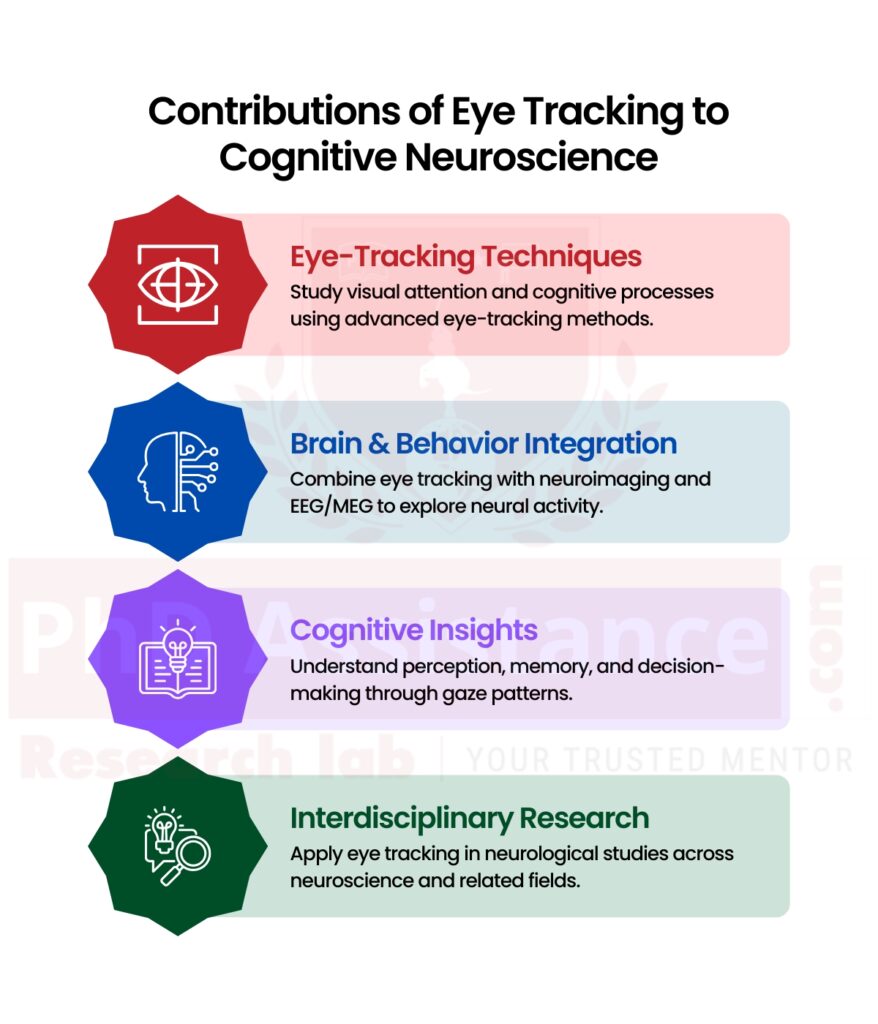
Eye-tracking technology delivers precise information about how people direct their visual focus and handle cognitive tasks. The measurements enable researchers to trace attention patterns together with memory retrieval and decision-making processes, which are directly associated with brain activity.
Researchers can now study cognitive control and brain function through integrated eye-tracking and neural recording methods, which represent recent progress in eye-tracking research. Gaze tracking research uncovers visual information processing across various neural pathways when it is combined with either neuroimaging or electrophysiological methods or computational modelling.
The Special Issue demonstrates how eye movement research has become essential for studying cognitive processes that occur in different contexts of ageing, neurodegenerative diseases, and neurological disorders. The issue brings together different research methods to create a platform that enables various fields to work together while advancing new cognitive neuroscience research studies.
Key Themes
Researchers can submit their manuscripts to study the following topics and additional areas of research:
How We Support Your Submission
High-impact journal publications demand research papers that exhibit methodological precision and conceptual understanding and present substantial empirical proof. Our research support services assist scholars preparing submissions for these papers on eye-tracking.
Journal Guidelines:
Important Dates
Submission Deadline: 31 August 2026
To ensure successful and timely submission to the special issue “Contributions of Eye tracking to Cognitive Neuroscience,” researchers are encouraged to seek expert publication support from conceptualisation to final submission.
Free Guide: How to Write the Journal Manuscript
Book a free consultation to get guidance from the PhD assistance research lab for writing a credible research manuscript and submitting it in the high-quality journal.
Reference
Neuropsychologia. (2026, March 2). Call for papers: Contributions of eyetracking to cognitive neuroscience. Elsevier. https://www.sciencedirect.com/journal/neuropsychologia/call-for-papers