

SUMMARY:
The content explains how to structure a Management PhD dissertation for UK REF readiness, ensuring that the research demonstrates academic contribution, methodological rigour, and potential relevance beyond academia.
It covers the key dissertation chapters, from defining a meaningful research problem and critically reviewing the literature to justifying research methods, presenting transparent findings, and discussing practical implications. It also explains how researchers can identify potential beneficiaries, document engagement activities, and maintain evidence of research use without overstating real-world impact.
The article emphasises that REF readiness is a preparation strategy, not a guarantee of impact recognition. It concludes that a well-structured dissertation should connect research questions, theoretical contributions, reliable evidence, and potential pathways to practical application while following current REF guidance.
A strong Management PhD dissertation should make a clear contribution to knowledge, demonstrate methodological rigour, and explain why its findings matter beyond the thesis itself. For researchers working in the United Kingdom, it can also be useful to understand how research may eventually contribute to wider institutional discussions of impact under the Research Excellence Framework (REF). This does not mean that a doctoral dissertation should be written as though it were an impact case study. REF assesses research at institutional and unit-of-assessment level, while a PhD is an individual research qualification. A dissertation can, however, be structured to make its contribution, beneficiaries, engagement opportunities, and potential pathways to real-world use easier to identify.
REF 2029 guidance describes impact as wider benefits beyond academia and continues to use impact case studies to assess reach and significance. It also emphasises explaining how underpinning research contributed to impact and supporting claims with appropriate external corroboration (Research Excellence Framework, 2025). Because guidance may be updated, doctoral researchers should check the current REF materials and their university’s research-impact policies before making specific claims about eligibility.
Chapter 1 should establish the management problem, explain why it matters, and define a focused research question. A topic such as employee retention, responsible AI adoption, supply-chain resilience, or small-business innovation becomes more convincing when the dissertation identifies who experiences the problem and what decisions the research may inform. The chapter should distinguish the academic problem from the practical challenge: a gap in theory is not automatically evidence of a real-world benefit, and an organisational concern is not automatically a research gap.
State the aim, objectives, research questions, scope, and expected contribution in plain language. Where relevant, identify potential users such as managers, professional bodies, public agencies, employees, or community organisations without promising impact before findings exist. This early framing gives the later chapters a shared direction.
Chapter 2 needs to combine literature on the topic rather than enumerate studies one after another. Examine conflicting views, critically analyze the strengths and weaknesses of the research evidence, and determine what exactly is not clear. With a person having a PhD in Management, it is possible to make a contribution to the field of management science either by using a known theory in a new context, refuting an assumption, finding a link between two unrelated concepts or revealing something that has not been researched before.
A good example of that would be research on algorithmic decision-making in hiring that is related to the issues of fairness and governance as well as HR practice.
Treat this as a plausible pathway, not a claim that the research has already changed policy or practice. Cite the research that genuinely supports the gap and avoid describing a gap as established unless the review provides evidence for it.
Chapter 3 needs to justify the research methodology and explain how this methodology addresses the research questions. This includes the discussion of sampling procedures, access, data collection, data analysis, limitations, and the ways that have been done to ensure credibility/validity. For research in the management field, different methodologies can be used, such as interviews, surveys, experimental studies, case studies, archival research, or mixed methodologies. Justification here is about fit between the research question and methodology, not about supremacy of one particular methodology.
Ethics becomes especially important if employees, organizations, commercial documents or vulnerable participants are involved in research. Explain how consent, confidentiality, data storage, conflict of interests, etc., were taken care of. If there was any organization or participant’s participation in the research process, describe what kind of it was and if there are any restrictions regarding its disclosure.
Chapter 4 should organise findings around the research questions and provide a transparent account of the evidence. Use tables, figures, quotations, or statistical results where they clarify the analysis. Distinguish observed results from interpretation, and report contradictory or null findings rather than selecting only results that support the preferred argument. For quantitative work, explain the meaning and uncertainty of estimates; for qualitative work, show how themes were developed and support them with suitable evidence.
A potential impact pathway must not be confused with a proven impact. Findings may be relevant to a managerial decision, but the dissertation should not claim that a policy, process, or outcome changed unless there is evidence of that change. This discipline is important both academically and when research is later considered for institutional impact reporting.
Chapter 5 should interpret the findings in relation to the literature, explain the original contribution, and identify practical implications that follow from the evidence. Specify which groups might use the findings, what decision or practice they could inform, and what further steps would be needed for adoption. Potential routes include practitioner briefings, professional workshops, policy dialogue, management tools, public engagement, or collaboration with organisations. Engagement can help research become useful, but activity alone is not proof of impact.
REF 2029 guidance asks impact case studies to explain the underpinning research, the route through which research contributed to impact, who benefited, the nature and extent of the benefit, and supporting evidence. It also recognises that pathways can be indirect or non-linear (Research Excellence Framework, 2025). Doctoral researchers can prepare for responsible knowledge exchange by keeping dated records of presentations, stakeholder feedback, adoption decisions, policy references, or documented changes where these exist and where collection is ethically appropriate.
Dissertation section | Primary purpose | Potential contribution to an impact narrative |
Introduction | Define the problem, aims, questions, and context | Identifies the issue and groups potentially affected |
Literature review | Establish the research gap and theoretical contribution | Explains what it is new and why matters |
Methodology | Demonstrate methodological rigour and ethical practice | Builds confidence in the evidence and its limitations |
Findings | Report results transparently | Provides evidence for potential applications |
Discussion and conclusion | Explain contributions and implications | Identifies potential users, routes to impact, and further evidence needed |
Note. This table is a planning aid for dissertation coherence. It is not an official REF chapter structure, and a thesis chapter does not establish itself that a future impact case study will be eligible or successful.
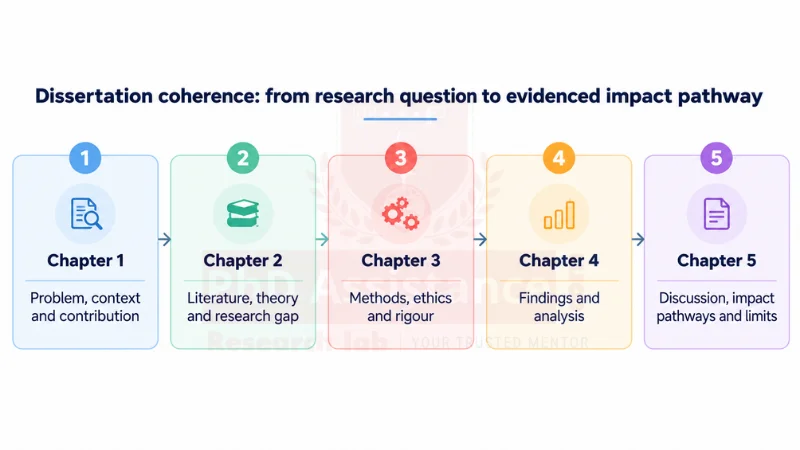
Figure 1. A coherent route from research questions to possible impact pathway
Source: Author-created planning diagram. It illustrates a general dissertation logic, not an official REF process.
A useful final check is to ask whether every major claim can be traced to data, analysis, literature, or a clearly labelled inference. Separate outputs (such as a thesis, article, report, or workshop) from outcomes (such as a decision informed or a practice changed) and from impact (a demonstrable benefit beyond academia). Record dates, partners, intended audiences, and evidence of use where available. Do not manufacture metrics or assume that attendance, downloads, or positive feedback prove significant change.
For REF-related planning, consult the latest official guidance and work with the university’s research office or impact team. They can advise on institutional priorities, evidence standards, permissions, and whether a proposed case study fits the relevant unit of assessment. REF readiness is best understood as clear research, responsible engagement, and traceable evidence
not as a promise that an individual dissertation will become an impact case study.
A Management PhD dissertation can be structured to make its academic contribution and potential relevance beyond academia visible. A clear problem, critical literature review, defensible methods, transparent findings, and evidence-led discussion provide a coherent foundation. Researchers should identify possible beneficiaries and routes to engagement without overstating outcomes. Since REF impact case studies are institutional submissions and guidance can evolve, alignment should be treated as informed preparation rather than a formal dissertation requirement or guarantee of REF recognition.
Looking for expert support with your Management PhD dissertation? PhD Assistance provides research guidance, literature review support, methodology development, and dissertation editing to help strengthen your academic work.
Connect with our experts to refine your research, improve clarity, and develop a well-structured dissertation.