
How to Identify Research Gaps in Receptor Pharmacology: A Guide for PhD Researchers
- Home
- Academy
- Research-Methodology
- A Guide for PhD Researchers
Addressing Research Gaps and Innovation
- 2. Perform Systematic Literature Mapping
- 3. Detect Conceptual Gaps in Receptor Mechanisms
- 4. Identify Methodological Gaps
- 5. Use Computational Tools to Reveal Hidden Gaps
- 6. Explore Translational and Clinical Gaps
- 7. Formulate Testable Research Questions
- 8. Validate Novelty and Feasibility
- Conclusion
- Reference
Recent Post
Introduction
1. Define Your Receptor Domain and Narrow the Scope
Select a receptor class (for example, GPCRs, ionotropic glutamate receptors, purinergic receptors) and biological context (for example, cardiovascular regulation, neuroinflammation, cancer signaling). This will help to narrow your scope of interest down enough that you can identify under-appreciated potential mechanistic insight (Liu et al., 2025).
Example: if you do not just study “GPCR signaling” itself, but go even further to become focused on “biased agonism in β-adrenergic receptors in cardiac myocytes.” At the same time, with a combination of bibliometric mapping, you might find there is a lot readily available regarding GPCR signaling with a pulmonary tissue biological context in general, but likely less GPCR signaling associated with a cardiovascular biological context — this is the gap within the context.
2. Perform Systematic Literature Mapping
A systematic literature review with bibliometric trend analysis provides an empirical framework for gap detection. Software programs such as VOSviewer or Bibliometrix can help identify research clusters or areas that have not been investigated.
Complete systematic keyword searches (for example, the keywords “GPCR bias,” “allosteric modulation,” or “P2X7 neurodegeneration”) on databases such as PubMed or Scopus, and then track research using receptor subtype, methodology, and disease focus as key categorizations.
Example: Liu et al. (2025) showed that mapping the last five decades of kainate receptor research showed emerging hotspots and unexplored frontiers — this is a great model for locating possible research gaps.
3. Detect Conceptual Gaps in Receptor Mechanisms
Conceptual gaps may arise if current theories/a theoretical framework cannot fully explain a receptor behavior or if they produce conflicting results. For example, biased agonism (preferential activation of certain signaling pathways by ligands) is still mechanistically unclear for many families of GPCRs (Eiger et al., 2022), and ligand-free (constitutive) GPCR activity subverts pharmacology as we know it and has yet to be investigated for its underlying physiological relevance (Sadee, 2023).
4. Identify Methodological Gaps
Methodological gaps could indicate technological limitations or shortcomings based on how analyses were conducted in a given literature. Some caution should be taken to compare the techniques employed in current literature with contemporary sophisticated methodologies and technologies to identify limitations or methodological space in unanswered research questions.
Example: Traditional radioligand binding studies cannot assess 3-dimensional dynamic conformational states of receptors. Noonan and colleagues (2022) utilized 3D pharmacophore imaging and artificial intelligence methodologies to find concealed mechanistic features in GPCR pharmacology, signifying effectively methodological gaps in older receptor studies.
Merlin and colleagues (2022) pointed out that the large majority of GPCR assays only utilize and identify single signaling endpoints. Ramsden and colleagues (2022) advanced the notion of multipathway profiling because it highlights an ecosystem of pharmacology. Therefore, the sheer absence of this technology for your receptor class could suggest a methodological gap and a clear actionable research opportunity.
5. Use Computational Tools to Reveal Hidden Gaps
Computational pharmacology serves as a conduit from big data to addressing hypotheses in the scientific literature. The use of artificial intelligence (AI) and machine learning (ML) can lead to inferences about ligand-receptor interaction characteristics that may not have been traditionally determined.
For example, Singh et al. (2023) explained how AI algorithms can mine pharmacology databases to pinpoint receptor-ligand interactions that have not received any previous scrutiny in the literature, thus providing previously unexplored pathways for research.
Anurogo (2025) described how the use of molecular modeling and docking studies can provide insights into predicting novel, untested allosteric sites in receptor structures. When a prognostic output of an in silico analysis is compared to a biological observation, this serves as an indicator that in silico prediction has not yet been corroborated with the biology and thus highlights the first opportunity to test a computationally driven hypothesis.
6. Explore Translational and Clinical Gaps
Connecting receptor-level mechanisms to clinical outcomes is still a substantial challenge facing the field. Many translational gaps exist between receptor occupancy and functional or therapeutic response.
Example: Liu and colleagues demonstrated the pharmacology of the P2X7 receptor in neurodegenerative diseases, and what they exposed was a large translational gap between receptor engagement and actual T-cell function. The identification of these translational disconnects will allow clinically meaningful hypotheses to be explored, such as assessing whether receptor polymorphism affects the therapeutic response of individual patients.
7. Formulate Testable Research Questions
If you have articulated gaps in the conceptual, methodological, and translational domains, develop those gaps into focused and testable hypotheses. Each gap can be amended into a specific aim with an associated rationale based on the literature and feasibility of methods.
Template example:
- Gap: There is no multipathway characterization of orphan GPCR X’s role in neuroinflammation.
- Research Question– Does the ligand Y bias GPCR X activity to the propensity toward anti-inflammatory pathways in human microglia?
- Methodology: AI-based ligand screening (Noonan et al., 2022), multipathway in vitro assays (Merlin et al., 2022), computational receptor modeling (Anurogo, 2025).
- Expectation: Biased ligands that may be developed as therapeutics for neurodegeneration-driven inflammation. focused, testable hypotheses. Each gap should translate into a specific aim supported by a literature rationale and methodological feasibility.
8. Validate Novelty and Feasibility
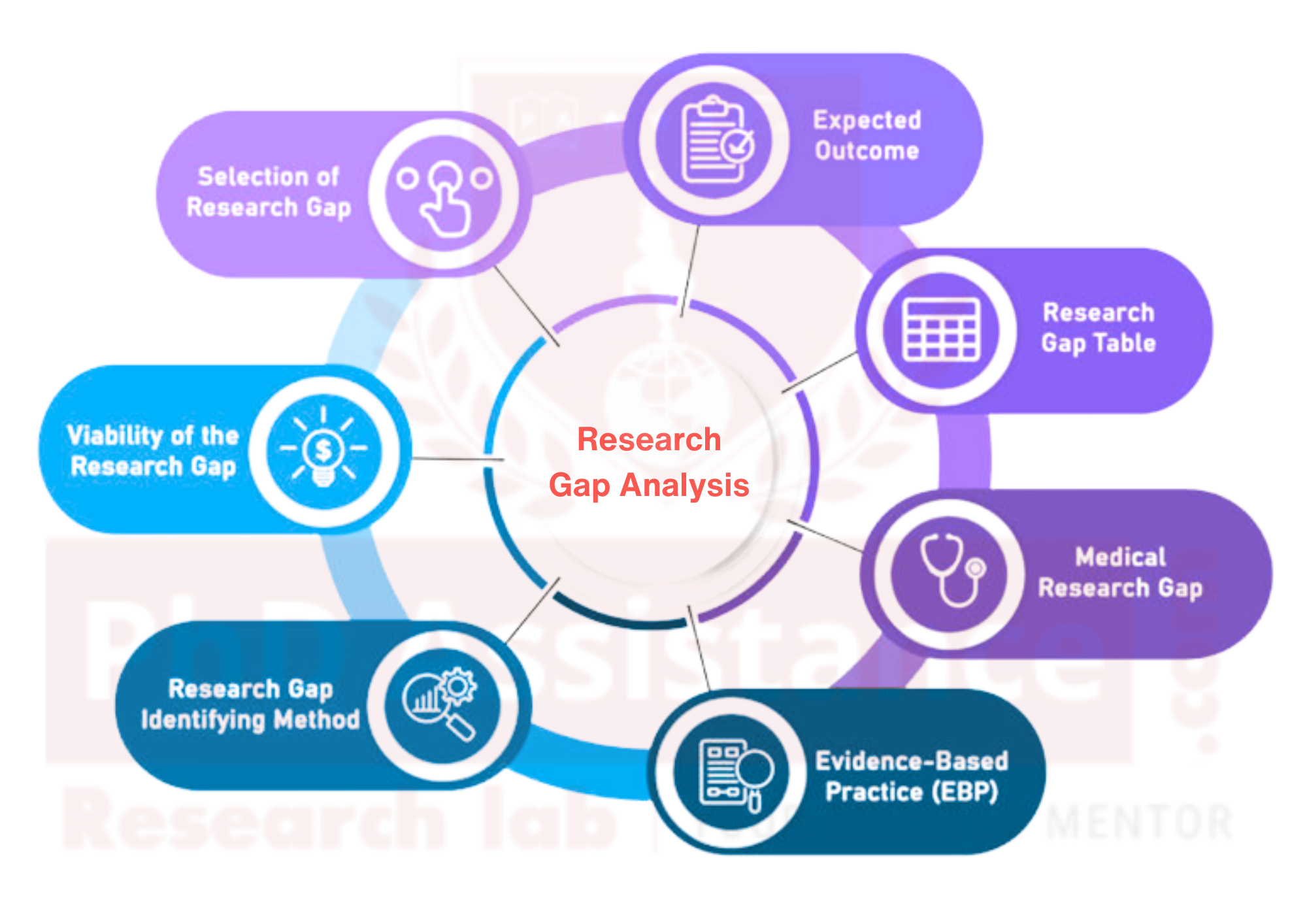
Prior to concluding your research proposal, you’ll want to do one last validation step. Perform updated literature searches to confirm that none of the recent publications dealt with your proposed gap for your inquiry. As well, you can use bibliometric indicators (e.g., publication frequency, citation trajectory) to indicate novelty (Liu et al., 2025).
Feasibility should be considered— a balance must be struck between novelty and the resources (e.g., infrastructure, experimental expertise, ethical concerns) available to you in your program.
Conclusion
Identifying research gaps within receptor pharmacology is both a conceptual and strategic activity. It integrates conceptual thinking, a systematized map of evidence, computational modelling, and translational awareness.
A consistent stepwise framework of defining receptor boundaries to assessing feasibility provides researchers the ability to define the uncovered ground of significant academic and therapeutic awareness.
The more recent advances highlighted in AI-driven modelling (Noonan et al. 2022; Singh et al., 2023), multipathway GPCR profiling (Merlin et al., 2022), and ligand-free receptor mechanisms (Sadee, 2023) highlight that receptor pharmacology remains an emergent, and not well-worn, research area for hidden gaps.
For PhD scholars, learning the methodology of discerning gaps ultimately transitions a broader inquiry into a focused, novel, and publishable contribution that reflects the relationship between basic receptor biology and clinical applications.
Are you ready to identtify the research gap for your PhD dissertation?
At the PhD Assistance Research Lab, we specialize in guiding PhD scholars and researchers through every stage of this process. Our expert pharmacology researchers will guide you in the identification of a valid and strong research gap for your dissertation.
Contact PhD Assistance Research Lab to complete your PhD research successfully.
References
- Noonan, T., Denzinger, K., Talagayev, V., Chen, Y., Puls, K., Wolf, C. A., … & Wolber, G. (2022). Mind the gap—deciphering GPCR pharmacology using 3D pharmacophores and artificial intelligence. Pharmaceuticals, 15(11), 1304.
- Eiger, D. S., Pham, U., Gardner, J., Hicks, C., & Rajagopal, S. (2022). GPCR systems pharmacology: A different perspective on the development of biased therapeutics. American Journal of Physiology-Cell Physiology, 322(5), C887–C895.
- Merlin, J., Park, J., Vandekolk, T. H., Fabb, S. A., Allinne, J., Summers, R. J., … & Riddy, D. M. (2022). Multipathway in vitro pharmacological characterization of specialized proresolving G protein-coupled receptors. Molecular Pharmacology, 101(4), 246–256.
- Sadee, W. (2023). Ligand-free signaling of G-protein-coupled receptors: Physiology, pharmacology, and genetics. Molecules, 28(17), 6375.
- Liu, X., Li, Y., Huang, L., Kuang, Y., Wu, X., Ma, X., … & Lan, J. (2024). Unlocking the therapeutic potential of P2X7 receptor: A comprehensive review of its role in neurodegenerative disorders. Frontiers in Pharmacology, 15, 1450704.
- Anurogo, D. (2025). Exploring the integration of molecular modeling and computational pharmacology: A comprehensive study on ligand–receptor interaction analysis. PhytoCare: Journal of Pharmacology and Natural Remedies, 1(2), 54–61.
- Liu, Y., Zhong, R., Li, Y. X., Yu, C., Zhang, J., & Kou, Z. (2025). Mapping the evolution of kainate receptor research over five decades: Trends, hotspots, and emerging frontiers. Naunyn-Schmiedeberg’s Archives of Pharmacology, 1–15.
- Singh, S., Kumar, R., Payra, S., & Singh, S. K. (2023). Artificial intelligence and machine learning in pharmacological research: Bridging the gap between data and drug discovery. Cureus, 15(8).