
From Proposal to Viva: Structuring a Finance PhD Dissertation Under France’s Cotutelle Rules
- Define a finance question that works across both institutions
- Formalise cotutelle before the project becomes difficult to change
- Build the finance literature review around a defensible contribution
- Match data and methods to the research question
- Coordinate writing and supervision across two systems
- Prepare the thesis and viva under the agreed rules
- Conclusion

Recent Post
SUMMARY:
The article explains how to structure a Finance PhD dissertation under France’s cotutelle dual-supervision framework, from proposal development to the final viva. It highlights the importance of selecting a focused finance research question, establishing a formal agreement between the two universities, and coordinating supervision, enrolment, funding, research mobility, and thesis requirements. The dissertation should include a critical literature review, a justified research methodology, reliable financial data, appropriate empirical analysis, and transparent reporting of results. It also emphasises maintaining consistent communication with both supervisors and confirming thesis submission, examination, and defence requirements with both doctoral schools. Overall, successful cotutelle research requires a clear academic contribution, robust research methods, and careful coordination between the partner institutions.
A finance PhD dissertation developed through a French international cotutelle must make an original contribution to finance research while remaining workable under the doctoral arrangements agreed by two universities. Cotutelle is not simply informal co-supervision. It is a formal partnership between a French institution authorised to award a doctorate and a foreign institution with equivalent doctoral-awarding authority. Under the French framework, the institutions establish a convention that organises the joint doctoral project and addresses differences between national doctoral rules [4,5].
For finance researchers, the practical challenge is to align the proposal, literature review, data access, empirical strategy, supervision, mobility, thesis examination, and final viva. The agreement should be arranged early: France’s national doctoral platform advises that cotutelle can require several months of administration and should be established in the first year. Confirm the precise requirements with both doctoral schools and the signed convention [4,5].
1. Define a finance question that works across both institutions
Start with a focused research problem rather than a broad theme such as financial markets, banking, or corporate finance. A viable question identifies the phenomenon, population or market, period, and measurable outcome. For example, a project might examine whether climate-risk disclosures are associated with the cost of debt among listed European firms, or whether monetary-policy surprises affect bank lending differently across countries. These are examples, not prescribed topics; the final question should reflect a genuine gap in the literature and the data available. For candidates researching France cotutelle PhD requirements, the proposal should also explain how the two institutions’ expertise and doctoral arrangements support the project [2,3].
The proposal should state the research aim, research questions, contribution, theoretical framework, preliminary hypotheses where appropriate, and a realistic work plan. Explain why the question benefits from two research environments. One institution might contribute expertise in asset pricing while the partner offers access to banking, accounting, or econometric expertise. The international dimension should improve the research design, not merely add a second university logo.
Set boundaries early. Identify the unit of analysis, geography, observation period, likely data sources, and limitations. Distinguish a feasible doctoral project from a research agenda that would require multiple dissertations. Both supervisors should agree on the core question before extensive data collection or modelling begins [2,3].
2. Formalise cotutelle before the project becomes difficult to change
The cotutelle convention is the operational foundation for dual supervision. French rules require a formal agreement between eligible institutions and recognise reciprocity; where doctoral regulations differ, the convention can provide for permitted adaptations [5]. The national doctoral platform explains that the agreement typically addresses supervision, research expenses, time spent in each country, enrolment fees, and the thesis defence [4].
Do not assume that a general university partnership automatically creates an individual cotutelle. Confirm admission and enrolment status, appointment of both thesis directors, annual registration and progress reviews, funding responsibilities, intellectual-property arrangements, data access, insurance, and a process for resolving disagreements. Where the partner’s rules differ from French rules, ask the doctoral schools to resolve the issue in writing rather than relying on informal assurances.
Use the following checklist as a planning aid, not as a substitute for the institutions’ current model agreement or legal review.
Agreement area | What to verify |
Supervision | Names, responsibilities, meeting rhythm, feedback and escalation route |
Enrolment and fees | Registration at both institutions, fee rules, exemptions and renewal dates |
Mobility and funding | Expected stays, travel, living costs, research expenses and funding source |
Research governance | Data licences, confidentiality, ethics where relevant, IP and publication |
Thesis and viva | Language, submission format, examiners, jury, defence location and award process |
3. Build the finance literature review around a defensible contribution
A good literature review becomes a synthesis of evidence rather than a summary of articles. It should be based on theories, mechanisms, conflicting findings, the choice of measurements, and differences among different markets or time periods. In empirical finance, one has to show how the proposed research builds on previous work: for example, just a new context is not enough unless the study examines relevant mechanism, enhances identification, applies more adequate measurement or fills in the gap in the evidence [1,2,3].
It is important to precisely define what is meant by key constructs. In the case of corporate finance, for example, it is important to clarify the way such concepts as leverage, investment and liquidity or constraints on financing will be analyzed. In the case of asset pricing it is important to establish what is meant by return, factors of risk, time frames, and formation of portfolios.
Wrap up the review by presenting a theoretical model or propositions that can be tested. Each hypothesis should be derived from literature and empirical data. This establishes connectivity between literature and review, methodology, results, and conclusions [2,3].
4. Match data and methods to the research question
The methodology chapter should make the analysis reproducible. Describe sample construction, data providers, inclusion and exclusion rules, variable definitions, missing-data treatment, transformations, and software. If using commercial databases, confirm that both institutions and the candidate are permitted to access, process, and retain the data. If data are confidential, restricted, or personal, document applicable permissions and safeguards before analysis begins. The doctoral research methodology should be transparent enough for readers to understand how the dataset was assembled and how the results were produced. In empirical finance research, the methods should be selected to fit the question and the available evidence [2,3].
Choose methods according to the question rather than their complexity. Panel regressions may suit firm-level data; event studies may examine market responses to announcements; difference-in-differences may be appropriate where a credible treatment and comparison design exists; and time-series methods may suit aggregate financial variables. State identifying assumptions, diagnostic checks, robustness tests, and threats such as endogeneity, sample selection, look-ahead bias, survivorship bias, and changing market regimes.
Report on economic significance as well as statistical significance. Explain the scale of an estimated effect, its uncertainty, and whether it matters in the financial setting. In performing robustness tests, the focus should not be on adding more specifications in order to get one’s desired results, but on identifying potential alternative explanations. It is important to disclose decisions made during document analysis.
5. Coordinate writing and supervision across two systems
Two supervisors can strengthen a dissertation, but only if feedback is coordinated. Agree on a shared chapter plan, version-control method, meeting schedule, and turnaround expectations. Keep a decision log covering changes to hypotheses, variable definitions, data exclusions, and modelling choices. After joint meetings, send a short record of agreed actions to both supervisors so that advice does not diverge unnoticed. Effective cotutelle dual supervision depends on clear responsibilities, regular communication, and a shared record of decisions.
Plan research stays around concrete milestones: data access, methods training, seminar presentations, analysis, and chapter review. Mobility should support the research plan and satisfy the convention rather than being treated as a travel target. Arrange for the annual review of the doctoral studies and deadlines for registration in both institutions. In case there are any changes in the project, check from the two institutions whether the convention or the approved workplan should be amended [4,5].
6. Prepare the thesis and viva under the agreed rules
The thesis should present one coherent argument, even when the research has several empirical chapters. A typical structure is introduction and contribution; literature and theory; data and methods; empirical chapters; synthesis and limitations; and conclusion. The empirical chapter should include the research question, methodology, results, and contribution, whereas the discussion chapter will give an explanation of how each chapter answers the main research question. A realistic PhD thesis writing schedule must incorporate the time that will be taken to write, revise, and submit the thesis [1,3].
Cotutelle normally involves a single thesis defence under arrangements defined by the convention, with the institutions agreeing on matters such as the jury and prior examination of the thesis [4,5]. Do not assume that submission deadlines, examiner reports, jury eligibility, defence language, or thesis deposit rules are identical at both universities. Confirm the applicable procedure with the doctoral schools well before the intended viva date.
Prepare to explain the original contribution, research-design logic, limits of causal interpretation, robustness evidence, and implications for finance theory or practice. Be ready to defend why the data and methods fit the question, what alternative explanations remain, and how findings might change under different assumptions [2,3].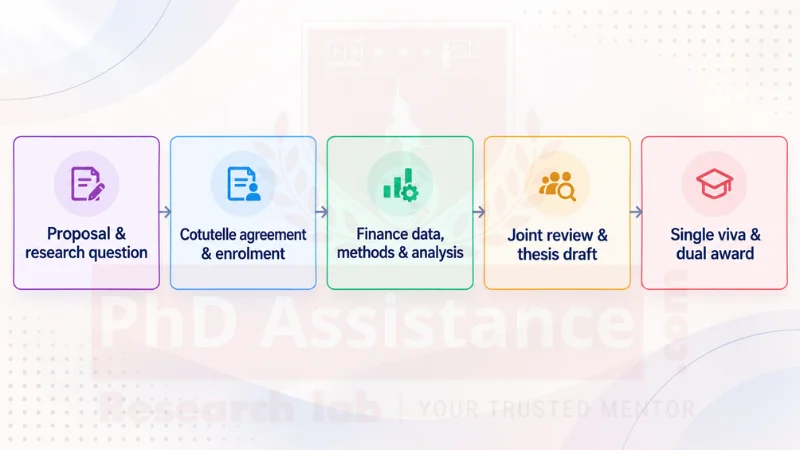
Figure 1. From proposal to viva in a cotutelle finance doctorate
Note. The sequence is indicative. The signed cotutelle convention and current requirements of both doctoral schools take precedence.
Conclusion
A successful finance PhD under France’s cotutelle framework combines a clear scholarly contribution with early administrative coordination. Define a question that benefits from two institutions, formalise supervision and mobility in the convention, make data and methods defensible, and maintain a coherent thesis narrative. Confirm current requirements with both doctoral schools: cotutelle creates a jointly organised doctoral pathway, but its practical rules are implemented through the institutions’ agreement and applicable regulations.
Looking for reliable PhD assistance to advance your doctoral research? Get expert guidance in research proposal development, literature review, methodology, data analysis, and dissertation preparation. Strengthen your research, overcome academic challenges, and move closer to completing your PhD with confidence. [Contact us today to get started with your PhD research journey]!
Reference
- Adu, P., & Miles, D. A. (2024). Dissertation research methods: A step-by-step guide to writing up your research in the social sciences. Routledge.
- Creswell, J. W., & Creswell, J. D. (2023). Research design: Qualitative, quantitative, and mixed methods approaches (6th ed.). SAGE Publications.
- Saunders, M. N. K., Lewis, P., & Thornhill, A. (2023). Research methods for business students (9th ed.). Pearson.
- Ministère de l’Enseignement supérieur et de la Recherche. (n.d.). International joint doctoral supervision (cotutelle). La plateforme nationale du doctorat. https://doctorat.gouv.fr/en/before/international-cotutelle/
- République française. (2022). Arrêté du 25 mai 2016 fixant le cadre national de la formation et les modalités conduisant à la délivrance du diplôme national de doctorat (as amended on August 26, 2022). Légifrance. https://www.legifrance.gouv.fr/loda/article_lc/LEGIARTI000046241993/