
Critical Review of Precision medicine: personalizing healthcare by bridging aging, genetics, and global diversity
Introduction
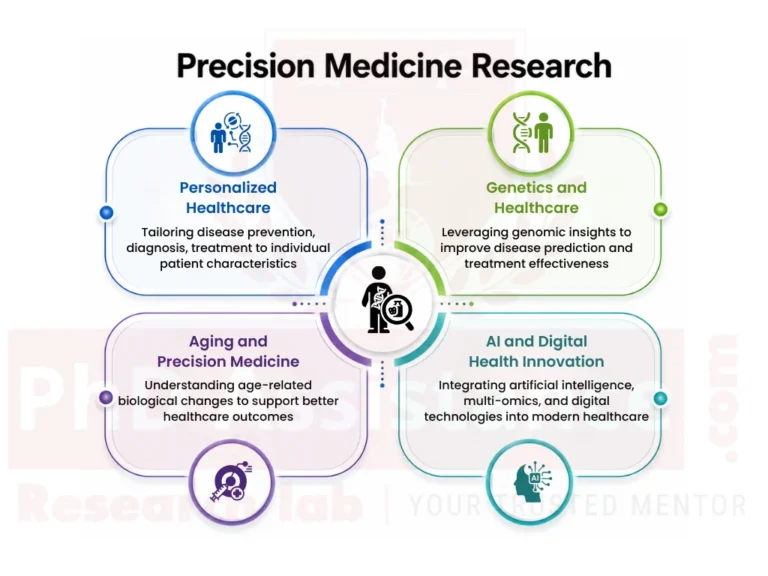
Precision Medicine has revolutionised the way modern health care is delivered by permitting personalised strategies of disease prevention, diagnosis and treatment based on the patients’ genotype, biological traits, environmental exposures, and lifestyle. Since health care systems have moved far beyond generic medical practices, precision medicine has offered a reliable tool to improve therapy efficacy and minimise undesirable drug-related adverse effects.
In an article entitled Precision medicine: tailoring healthcare through ageing, genes and world diversity, Edvardsson & Heenkenda (2025) explore how ageing, gene pool diversity and global health equity impact the direction of precision medicine in the future. They contend that current health care approaches are often dependent on generic clinical models that often don’t acknowledge biological ageing and variation in a particular population. They discuss underrepresentation in genomic research, age-associated physiology, inadequate current reference interval values, and the emerging influences of AI, multi-omics and digital health.
The paper uses a conceptual narrative review approach and enriches the field of Precision Medicine Research, offering an expanded conceptualisation where ageing, genetics and demographic heterogeneity are integrated in health care provision to the individual.
Summary of the article
This article provides a useful and detailed overview of precision medicine and its potential role in advancing healthcare through Personalized, Genetics and Healthcare strategies. The authors describe the biological basis of age-associated risk, the role of ageing in immunology, and individual differences in drug response and biomarker utilisation. The article also points out the inadequacies of current diagnostic reference intervals derived from young, healthy individuals.
One of the key themes in the paper is global genetic diversity. The authors point out that currently most genetic studies have been performed among the European ancestry population, making it problematic to apply these findings to the non-European ancestry population. The review mentions that variants of specific population-specific alleles, which influence disease risk and drug metabolism, are examples of the necessity for ancestry-guided medical care.
The paper then reviews technological advances in artificial intelligence, pharmacogenomics, digital monitoring of health, and multi-omics integration. The authors propose a conceptual framework, with ageing, genomics and equity as core connecting components of an Ageing and Precision Medicine ecosystem.
Critique
Significance and contribution of the field
An article that is also strongly relevant to this particular field of Precision Research is its timely attention to inclusiveness. While other papers and articles focus primarily on genomic technologies and Personalized Healthcare therapies, Edvardsson and Heenkenda (2025) incorporate ageing and world-diverse approaches into the realm of precision medicine.
Sirugo et al. (2019) validate the authors’ concern of underrepresentation in databases with the fact that >80% of the subjects who participate in genome-wide association studies are of European ancestry. Also, Fatumo et al. (2022) address the fact that lack of genome representation for African, Asian and Middle Eastern peoples limits the accuracy of disease prediction models and adds to health disparities. The article helps by shedding light on these issues to contribute to discussions on fair access to healthcare.
Also, this manuscript complements the goals of the NIH All of Us Research Program, which aims to enhance participation of populations traditionally absent in biomedical research (Ramirez et al., 2022). Highlighting the importance of diversity not only makes the study highly applicable, but also further supports the overarching purpose of Precision Medicine: Personalising Healthcare through a combination of ageing, genetics, and global diversity.
Although this article is conceptually strong, there are some shortcomings in the use of anecdotal discourse and sparse quantitative evidence to demonstrate clinical implications of genomic underrepresentation. Comparative analysis between the outcomes of different ethnicities could have provided stronger supporting arguments for this claim.
Methodology and research design
In terms of methodology, the authors conducted a conceptual narrative review, rather than a systematic review. By utilising this methodology, the authors are able to use existing data from the research of ageing, genomics, pharmacology, and health policy to propose a wider-reaching model for Personalized Treatment Strategies.
The interdisciplinary nature of the review is one of its greatest strengths. It allows for examination of multiple facets of tailoring healthcare in a concurrent manner. The review pulls evidence from clinical medicine, genetics, epidemiology, and public health in order to fully explore present-day healthcare challenges. However, the lack of a systematic literature review protocol in the study has methodological limitations.
Page et al. (2021) state that reproducible, systematic evidence synthesis provides greater reliability, as it involves reduced subjectivity. Compared to a large-scale precision medicine review by Ashley (2023), this paper provides broader conceptual conclusions, but falls short on systematic evidence appraisal methodology.
Theoretical and Interdisciplinary Analysis
The article integrates aspects of genomics, biology of ageing, pharmacogenomics, artificial intelligence and health care policy in an effective way, illustrating an understanding that biological, social and environmental factors in concert contribute to health outcomes.
Kennedy et al. (2022) similarly proposed that biological ageing pathways impact vulnerability, response to therapy and health outcomes in a range of conditions. Similar findings by Levine et al. (2022) indicate that biological age markers provide an improved prediction of disease over the traditional measure of chronological age.
The article also succeeds in Incorporating the pharmacogenomic angle. The references on CYP2C9, VKORC1 and CYP2B6 polymorphisms are consistent with the work of Relling & Evans (2015) that showed the benefits of using genetic tests to improve safety and effectiveness of treatments.
While these advantages exist, the theoretical model discussed is largely descriptive. The article mentions ageing and genetics as two parallel factors but doesn’t discuss various models that explain how these two aspects might intersect within health systems. The work would have been conceptually strengthened if systems medicine approaches or precision health principles had been incorporated more deeply.
Ethical Considerations
This article rightly addresses the ethical concerns regarding precision medicine, such as privacy of genetic information, healthcare equality, lack of participation of minority groups in studies, and the availability of genomic technologies.
The authors rightly mention that minority groups have been excluded historically from biomedical studies. These are valid concerns in light of the study by Popejoy & Fullerton (2016), which claims that inequalities in genomics are leading to biased clinical decisions and medical treatment.
The article also acknowledges the increasing importance of AI in the health sector. However, ethical issues of algorithmic bias receive comparatively little attention. Char et al. (2020) had already shown that the use of non-representative data to train AI could contribute to deepening healthcare inequalities. A greater discussion on governance, transparency and fairness regarding the use of AI in the health sector would have enriched the analysis from an ethical point of view.
On the other hand, problems regarding the ownership of genomic data, informed consent, and the regulation of international data-sharing schemes are not discussed in a more elaborated way, even though these aspects become more and more important in the worldwide PMR project.
Writing Style and Structure
It is clear the article is well structured and progresses in a clear logical manner through ageing, biological changes, genomics and variation through to the context of future healthcare systems. The use of succinct subheadings helps to break down the multi-disciplinary nature of the subject and make it easy to follow.
The writing is easy for any member of the scientific community, including clinicians, geneticists, healthcare policy makers and public health scientists, to read and understand. It appears technical terms are usually adequately explained for the reader to be able to access information from another scientific community.
On the other hand, some passages overemphasised similar debates of health equity and genomic diversity. Also, some arguments could be stronger through more critical discussion of rival ideas. Mostly, this review highlights the advantages of precision medicine, with less emphasis on implementation issues, economic issues, or counterevidence.
Conclusion
The article by Edvardsson and Heenkenda (2025) offers a compelling argument to broaden the scope of precision research by embracing diversity (aging, human variability, and equity in healthcare). The authors skillfully identify the challenges within current precision medicine frameworks and propose a compelling conceptual model for innovation in healthcare delivery.
The most significant strength of the review is the inclusion of an interdisciplinary focus with a significant emphasis on inclusion within genomic studies worldwide, addressing increasing needs related to the ageing population, medicine grounded in ancestry, and equitable care access.
However, the methodological limitations of the narrative review methodology, the lack of quantitative support, and relatively brief examination of implementation issues somewhat dilute the study’s analytical depth. Empirical verification of the model with longitudinal clinical studies, multi-ethnic genome studies and application with AI-guided precision healthcare needs to be a priority in future studies.
“Are you facing challenges in writing a high-quality critical review for your research? The PhD Assistance Research Lab offers specialised guidance tailored to research scholars and early-career researchers.”
Reference
- Ashley, E. A. (2016). Towards precision medicine. Nature Reviews Genetics, 17(9), 507–522. https://doi.org/10.1038/nrg.2016.86
- Char, D. S., Shah, N. H., & Magnus, D. (2018). Implementing machine learning in health care—Addressing ethical challenges. New England Journal of Medicine, 378(11), 981–983. https://doi.org/10.1056/NEJMp1714229
- Edvardsson, M., & Heenkenda, M. K. (2025). Precision medicine: Personalizing healthcare by bridging aging, genetics, and global diversity. Healthcare, 13(13), 1529. https://doi.org/10.3390/healthcare13131529
- Fatumo, S., Chikowore, T., Choudhury, A., Ayub, M., Martin, A. R., & Kuchenbaecker, K. (2022). A roadmap to increase diversity in genomic studies. Nature Medicine, 28(2), 243–250. https://doi.org/10.1038/s41591-021-01672-4
- Kennedy, B. K., Berger, S. L., Brunet, A., Campisi, J., Cuervo, A. M., Epel, E. S., Franceschi, C., Lithgow, G. J., Morimoto, R. I., Pessin, J. E., Rando, T. A., Richardson, A., Schadt, E. E., Wyss-Coray, T., & Sierra, F. (2014). Geroscience: Linking aging to chronic disease. Cell, 159(4), 709–713. https://doi.org/10.1016/j.cell.2014.10.039
- Levine, M. E., Lu, A. T., Quach, A., Chen, B. H., Assimes, T. L., Bandinelli, S., Hou, L., Baccarelli, A. A., Stewart, J. D., Li, Y., Whitsel, E. A., Wilson, J. G., Reiner, A. P., Aviv, A., Lohman, K., Liu, Y., Ferrucci, L., & Horvath, S. (2018). An epigenetic biomarker of aging for lifespan and healthspan. Aging, 10(4), 573–591. https://doi.org/10.18632/aging.101414
- Page, M. J., McKenzie, J. E., Bossuyt, P. M., Boutron, I., Hoffmann, T. C., Mulrow, C. D., Shamseer, L., Tetzlaff, J. M., Akl, E. A., Brennan, S. E., Chou, R., Glanville, J., Grimshaw, J. M., Hróbjartsson, A., Lalu, M. M., Li, T., Loder, E. W., Mayo-Wilson, E., McDonald, S., … Moher, D. (2021). The PRISMA 2020 statement: An updated guideline for reporting systematic reviews. BMJ, 372, n71. https://doi.org/10.1136/bmj.n71
- Popejoy, A. B., & Fullerton, S. M. (2016). Genomics is failing on diversity. Nature, 538(7624), 161–164. https://doi.org/10.1038/538161a
- Ramirez, A. H., Sulieman, L., Schlueter, D. J., Halvorson, A., Qian, J., Ratsimbazafy, F., Loperena, R., Mayo, K., Basford, M., Deflaux, N., et al. (2022). The All of Us Research Program: Data quality, utility, and diversity. Patterns, 3(8), 100570. https://doi.org/10.1016/j.patter.2022.100570
- Relling, M. V., & Evans, W. E. (2015). Pharmacogenomics in the clinic. Nature, 526(7573), 343–350. https://doi.org/10.1038/nature15817
- Sirugo, G., Williams, S. M., & Tishkoff, S. A. (2019). The missing diversity in human genetic studies. Cell, 177(1), 26–31. https://doi.org/10.1016/j.cell.2019.02.048