
How to Write a Computer Science PhD Proposal (Expose) for German Universities: Problem, Novelty and Feasibility
- Core Skills for Proposal Development
- Understanding the German Doctoral Research Framework
- Defining a Research Problem Worth Investigating
- Problem Formulation, Novelty and Feasibility
- A Step-by-Step Approach to Proposal Development
- From a Broad Research Idea to a Focused PhD Proposal
- Research Proposal Readiness Checklist
- Conclusion

Recent Post
Introduction
Selecting a subject for a Computer Science PhD is one of several steps towards doctoral study. Applicants need to demonstrate their understanding of the chosen subject, its relevance, and how it can be investigated. A Computer Science PhD proposal for German universities provides a structured way to communicate this understanding.
Germany offers various ways of conducting PhD research: individual supervision, structured doctorate, and research program funding among others. Though the requirements may vary from one university to another, there are some basic elements that any research proposal in Computer Science should have.
A good Computer Science PhD research proposal is not merely a description of an interesting technology. It should identify a direction for further investigation and explain how the proposed work could contribute to Computer Science.
Core Skills for Proposal Development
- Define a research problem suitable for doctoral investigation.
- Determine the research gap through literature review.
- Make your research unique without any false claims
- Demonstrate the feasibility of a Computer Science PhD proposal.
- Organise an Exposé for German doctoral applications.
- Connect a selected topic with a realistic research methodology.
Understanding the German Doctoral Research Framework
An Exposé is a preliminary research document that presents the proposed doctoral investigation. It allows applicants to communicate their research interests and demonstrate their understanding of the academic requirements of the subject.
For Computer Science applicants, the proposal may involve artificial intelligence, cybersecurity, distributed systems, software engineering, human-computer interaction, computer vision, or computational methods. However, selecting a trending area does not automatically produce a suitable doctoral project. For example, artificial intelligence is a broad research area. A proposal becomes more meaningful when it identifies a specific limitation, such as the difficulty of maintaining model reliability when data distributions change. The applicant should then define the setting in which the limitation will be examined, the existing approaches to be considered, and the evidence that would be used to evaluate a proposed improvement.
The research proposal should also reflect the interests and expertise of the intended supervisor or research group. Applicants should review relevant publications, ongoing projects, and institutional doctoral requirements before finalising their research direction.
Defining a Research Problem Worth Investigating
Many Computer Science PhD research proposals become weak because they describe a technology rather than an unresolved research problem.research problem
Statements such as “This research will develop an advanced AI system” do not explain what existing systems cannot achieve. A doctoral proposal needs a precise explanation of the limitation, the context in which it occurs, and its academic significance.
Three common challenges require particular attention:
- Problem definition: The research problem is too broad to investigate within a doctoral project.
- Research novelty: The proposed contribution resembles existing studies without clearly explaining its difference.
- Feasibility: The objectives require datasets, computing resources, access, or expertise that may not be available.
Solving such problems early on allows the applicant to create an academically relevant and feasible proposal.
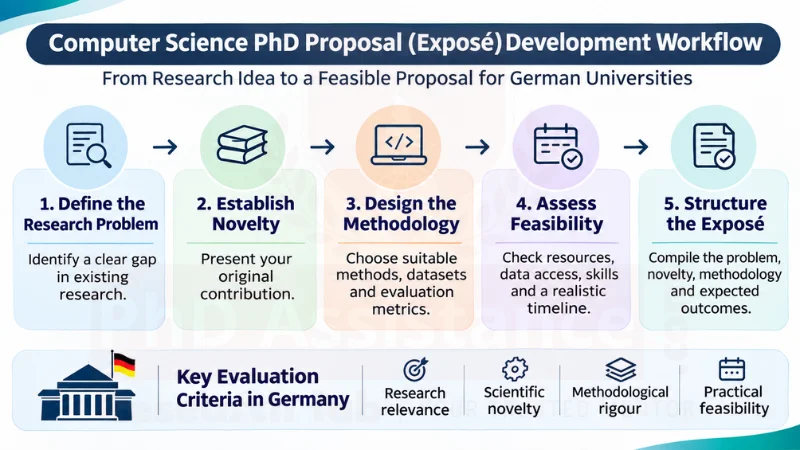
Figure 1. Computer Science PhD proposal (Exposé) development workflow.
Problem Formulation, Novelty and Feasibility
1. Defining the Research Problem
The research problem should emerge from an identifiable limitation in existing knowledge or technology. Applicants can begin by examining recent journal articles, conference papers, systematic reviews, and relevant doctoral research. They should compare the stated objectives, methods, datasets, and limitations of relevant studies rather than relying on titles or abstracts alone.
A useful research problem answers three questions: What limitation exists? Why does it matter? What remains insufficiently investigated?
A practical way to narrow the problem is to record the limitation reported by each relevant study, the conditions under which it was observed, and the method used to evaluate it. This comparison helps distinguish a recurring research gap from an isolated implementation issue.
For example, existing machine-learning algorithms may perform effectively on test datasets but show reduced accuracy when they are applied to changing real-world datasets. A focused investigation could examine which types of distribution shift affect performance, how selected adaptive learning techniques respond, and which evaluation measures can demonstrate whether performance has improved.
The research problem in a Computer Science PhD proposal should be clearly defined so that the research questions and objectives follow directly from the limitation being investigated.
2. Establishing Research Novelty
Novelty refers to the contribution that distinguishes the proposed research from existing work. It does not necessarily require inventing an entirely new technology.
For example, a proposal may retain an established model architecture but contribute a new evaluation framework for testing its performance under a defined data condition. The novelty claim should describe that specific contribution rather than suggesting that the entire technology is new.
A contribution may involve a new algorithm, an improved architecture, a different evaluation framework, an original dataset, or a new understanding of an existing computational problem. The proposal should state what will be different and why that difference matters.
Applicants should compare their proposed approach with relevant studies and explain the remaining limitation. A useful comparison identifies what existing approaches do, where their limitations remain, and how the proposed work will address a defined part of that limitation. Claims such as “the first study ever conducted” should be avoided unless supported by a comprehensive and defensible literature review.
PhD research novelty becomes convincing when the proposed contribution follows directly from the identified research gap and can be evaluated against relevant existing approaches.
3. Demonstrating Research Feasibility
A research idea may be interesting but unsuitable for a doctoral project if its implementation is unrealistic.
A feasibility assessment can make these decisions explicit by mapping each research objective to its required data, tools, computational resources, evaluation procedure, and estimated time. Where a resource is uncertain, the proposal should identify a realistic alternative.
Feasibility requires applicants to consider available datasets, computational infrastructure, software tools, research skills, evaluation methods, and project duration. They should also identify access restrictions, licensing conditions, hardware constraints, and possible alternatives if a planned resource is unavailable.
For example, a proposal involving deep learning should explain whether suitable data are available, how model performance will be evaluated, which baseline approaches will be used for comparison, and what computational resources are required.
A realistic Computer Science PhD research methodology should connect each objective with an appropriate research activity, an evaluation method, and a measurable outcome.
A Step-by-Step Approach to Proposal Development
- Topic selection: Limit the scope of the research domain to a specific problem related to either theory or technology.
- Literature review: Review previous work and determine gaps which need to be filled.
- Research Question Formulation: Translate the research gap into specific, answerable research questions.
- Contribution to Knowledge: State the contribution the research makes to the existing body of knowledge.
- Methodology: Describe the algorithms, dataset, experimental design, analytical methods, and evaluation strategy.
- Feasibility Evaluation: Explain the resources required for conducting the research and any limitations involved, and possible alternatives.
- Time Plan: Plan the period for doing the literature review, methodology, experimentation and analysis and writing of the thesis.
- Exposé Guidelines: Follow the applicable guidelines of the German university, doctoral programme, or supervisor.
- Institutional Guidelines: Check the Exposé guidelines and required proposal format provided by the relevant German university, doctoral programme, or supervisor, as expectations may differ.
Applicants seeking PhD research proposal writing assistance should ensure that the final document reflects their own research understanding, academic decisions, and responsibility for the proposed work.PhD research proposal writing assistance
From a Broad Research Idea to a Focused PhD Proposal
PhD proposal example: Explainable AI for Medical Image Classification
For this example, a research question could be: “How consistent are selected explanation methods when the same medical-image classification task is evaluated across datasets from different hospitals?” The proposal would then specify the datasets, model types, explanation methods, consistency measures, and comparison procedure before claiming that an alternative method improves reliability.
A broad proposal might aim to develop an explainable AI model for medical images. However, this description does not establish a clear research gap. It does not identify which explanation method is being assessed, what reliability problem remains, or how reliability will be measured.
A more focused direction could investigate whether explanation methods remain reliable when medical image data differ between hospitals, including whether explanations remain consistent across datasets and evaluation conditions.
The research questions might examine how explanation consistency changes across datasets, which factors contribute to any observed differences, and whether an alternative evaluation method can improve the assessment of reliability.
The proposed contribution could be a new evaluation framework or an improved explanation method. Feasibility would depend on dataset availability, computational resources, clearly defined evaluation metrics, and access to appropriate domain expertise. The proposal should also explain how the selected datasets and evaluation conditions represent the intended research setting.
This example demonstrates how a broad Computer Science PhD topic can develop into a focused research proposal with a defined problem, a defensible contribution, and an achievable investigation.
Research Proposal Readiness Checklist
Before submitting a Computer Science PhD proposal for German universities, verify that:
- The research problem is clearly defined.
- The research gap is supported by relevant literature.
- Research questions are specific and investigable.
- The proposed contribution is distinguishable from existing studies.
- The methodology addresses the research questions.
- Data, tools, and computational resources are realistically available.
- Expected outcomes are academically meaningful.
- The timeline reflects the scope of doctoral research.
- The proposal aligns with the intended supervisor or programme.
- Institutional requirements have been followed.
Conclusion
A convincing Computer Science PhD Exposé depends on the relationship between the research problem, novelty, and feasibility. Applicants who explain these elements clearly can communicate their research direction more effectively and prepare for discussions with prospective supervisors.
Once the research direction is established, the next step is to organise it into a formal proposal. The research proposal structure can be supported by the Computer Science PhD Research Proposal Template, which can help applicants organise their research questions, objectives, methodology, and timeline.
For students who require additional academic guidance, Expert PhD Computer Science Research Proposal Writing Services from PhD Assistance can support proposal development, research problem refinement, methodological planning, and academic structuring while keeping the applicant’s research direction central to the process
Next step: Research Proposal Template | PhD Assistance Research Proposal Support
Ready to develop your Computer Science PhD proposal for a German university? PhD Assistance provides expert research proposal support to help refine your research problem, strengthen methodological planning, and structure your proposal around your research objectives.
Explore our Research Proposal Writing Services and take the next step towards developing your doctoral research plan.
Reference
- Carrera-Rivera, A., Larrinaga, F., & Lasa, G. (2022). How-to conduct a systematic literature review: A quick guide for computer science research. MethodsX, 9, Article 101895. https://doi.org/10.1016/j.mex.2022.101895
- German Academic Exchange Service. (n.d.). How to write a research proposal. https://www2.daad.de/medien/deutschland/stipendien/formulare/gerls-guideline_research_proposal.pdf
- Georgetown University Center for Research & Fellowships. (n.d.). Structuring your research proposal. https://crf.georgetown.edu/research/research-toolkit/structuring-your-research-proposal/