
Research Methods for Second Language Emotions

Recent Post
Introduction
It is evident that emotions are an integral part of language-learning process in daily life. A learner may be confident while performing a well-known classroom activity but anxious when addressing people. Likewise, emotions such as enjoyment, boredom, frustration, and self-confidence can be situational.
In order to understand what students experience, asking them about their emotions is not enough. Researchers need methods that can capture emotional changes and explain how they relate to language learning. Wang et al. (2024) highlight the importance of examining emotional fluctuations over time and discuss approaches such as experience sampling, the idiodynamic method and time-series analysis.
The special issue Research Methods for Second Language Emotions invites contributions that examine and advance the methods used to investigate emotions in second language learning and teaching. It encourages researchers to reflect on existing practices, address methodological challenges and explore approaches that offer a closer understanding of learners’ emotional experiences.
The methodological contribution must be central. Suitable papers should develop, adapt, compare, validate, or critically evaluate a method, measure, research design, data-collection procedure, analytical technique, or reporting practice for studying second-language emotions. A paper that only uses an established method to report findings about learners’ emotions, without examining the method itself, may fall outside the special issue’s remit.
Why Publish in This Issue?
This special issue provides an opportunity to contribute to a growing area of applied linguistics research through a clear methodological focus.
Present innovative ways to investigate second language emotions.
• Examine ways of measuring emotions in different learning contexts.
• Mitigate limitations in the current measures and methods of collecting data.
• Share analytical techniques that can strengthen future language-learning research.
The journal is dedicated to research methods in applied linguistics, including research design, data collection, coding, analysis and reporting practices. It welcomes quantitative, qualitative and mixed-methods research.
Scope
The special issue welcomes research addressing methodological approaches to emotion research in language learning, including:
- Emotion Measurement: Developing and validating tools to examine anxiety, enjoyment, boredom and confidence.
- Research Design: Cross-sectional, longitudinal, experimental and mixed-methods designs.
- Data Collection: Surveys, interviews, learner diaries, classroom observation, experience sampling method.
- Data Analysis: Statistical modeling, thematic analysis, time series analysis, dynamic approaches
Learner-experience studies are most relevant when they demonstrate a methodological contribution—for example, by testing how repeated self-reports, stimulated recall, interaction records, or diary data capture emotional change, and by evaluating the validity, limitations, or interpretive consequences of those data. Substantive findings alone are not sufficient to establish fit with a methods-focused special issue.
- Learner Experience: Studying the emotional experiences of language learning, participation and achievements.
- Digital Learning Environment: Studying emotions in digital language learning, online language learning, technology-mediated language learning and face-to-face language learning
- Quality of Research: Validity, reliability, ethics and reporting
The issue is particularly relevant to researchers examining how emotions develop and change rather than treating them as fixed learner characteristics Yu (2022), for example, identifies the need for broader research perspectives and more innovative methods in the study of foreign language learners’ emotions.
Need support with your research design or methodology? Explore PhD Assistance’s research methodology services
Know More About This Issue
Experience sampling collects repeated, often brief reports close to the moment an emotion occurs, helping researchers examine within-person fluctuation and its contextual triggers. The idiodynamic method typically combines a participant’s moment-by-moment ratings of an experience (often using a video-recorded task) with a stimulated-recall interview to explore why ratings change. These approaches answer different questions and create different data: repeated ratings can map temporal patterns, while recall interviews can help interpret participants’ own accounts of those patterns. Researchers should justify sampling frequency, recall procedures, measurement burden, and the limits of retrospective explanation.
The study of second language emotions continues to raise important methodological questions. A single questionnaire may capture how learners feel at one moment, but it may not explain how those feelings change during a lesson, task or interaction.
Researchers can explore these changes through repeated measurements, learner reflections, recorded interactions and suitable analytical techniques. The special issue encourages contributions that consider which methods are appropriate for different research questions and how emotional data can be collected and interpreted responsibly.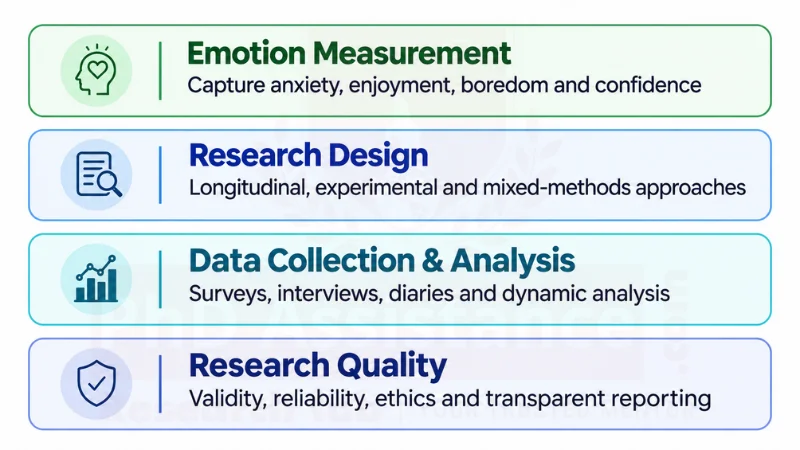
Figure 1. Methodological dimensions for researching second language emotions.
Key Factors
- Methodological Fit: Select methods that are aligned with the research question, theoretical framing, temporal scale and type of emotional evidence required.
- Emotion Measurement: Select appropriate instruments to measure learners’ emotional experiences.
- Contextual Relevance: Recognise the role of classroom tasks, students and learning settings.
- Analytical Rigour: Choose the appropriate methods to analyse trends of emotion.
- Research Transparency: Explain methodological choices, constraints and ethical processes clearly
How We Support Your Submission
A well planned methodology enables investigators to study emotional experiences more clearly. PhD Assistance helps authors in developing and fine-tuning the methods of research for their studies.
- Research Design: Choosing qualitative, quantitative or mixed-methods approaches.
- Development of methodology: Creating a clear research framework and justifying methodological decisions.
- Sampling and Data Collection: Planning for selection of participants, interviews and research instruments.
- Data Analysis: Selecting suitable statistical and qualitative methods of analysis.
- Research Validation: Reliability, validity and methodological consistency.
- Methodology Review: Review whether the research questions, methodology and findings are clearly aligned
Manuscripts should make a clear methodological contribution to research methods for second-language emotions in language learning and teaching.
Journal Guidelines
- Empirical studies, review articles, brief reports and method-focused contributions are welcomed.
- Manuscripts should address research methods for second language emotions in language learning and teaching.
- Contributions may examine research design, sampling, instrumentation, measurement, data collection, analysis and reporting.
- Qualitative, quantitative and mixed-methods approaches are accepted.
- Studies presenting methodological innovation, underrepresented perspectives or new directions for future research are encouraged.
- Manuscripts must be original and not under review elsewhere.
The abstract-submission stage closed on 1 May 2026, with notifications scheduled for 1 August 2026. The currently stated deadline is for full manuscripts: 3 January 2027. Authors should verify the live submission instructions and article-type requirements on the journal’s official special-issue page before submitting.
- Authors should follow the journal’s editorial and manuscript preparation guidelines.
- Submissions are subject to peer review.
- Full manuscript submission deadline: 3 January 2027.
Ready to strengthen your research before submission? Get expert research methodology support from PhD Assistance
Frequently Asked Question
Methods for investigating emotions in second language learning and teaching.
Yes. Qualitative, quantitative and mixed-methods contributions are welcome
Yes. Review articles and method-focused contributions are invited.
Reference
- Wang, P., Ganushchak, L., Welie, C., & van Steensel, R. (2024). The dynamic nature of emotions in language learning context: Theory, method, and analysis. Educational Psychology Review, 36, Article 105. https://doi.org/10.1007/s10648-024-09946-2
- Yu, Q. (2022). A review of foreign language learners’ emotions. Frontiers in Psychology, 12, 827104. https://doi.org/10.3389/fpsyg.2021.827104