
Critical Review of How to Integrate Nanotechnology into Chemical Engineering Education: Curriculum Standards, Research Trends, Pedagogical Challenges, and Future Prospects
Introduction
Nanotechnology has evolved into an influential domain that is revolutionising the realms of industrial practices, advanced materials, energy systems, and engineering education. With the increasing integration of nanotechnology in industries, there has been a need for changes in the Engineering Curriculum to prepare students with interdisciplinary and digital skills. In the article being discussed, Nandiyanto et al. (2026) explore the possibilities of incorporating nanotechnology in the realm of Chemical Engineering using a bibliometric and technological review of curricular standards, research trends, pedagogic challenges, and prospects.
This article makes a significant contribution to the existing body of work on Nanotechnology in Chemical Engineering Education, which combines bibliometric data with curricular analysis and a technology perspective. The same problem was highlighted by Bilques et al. (2023), who noted that a lot of engineering programs do not include emerging industrial skills. Similarly, Vahedi & Farnoud (2019) stated that inclusion of nanotechnology in undergraduate education helps to deepen students’ knowledge of advanced materials.
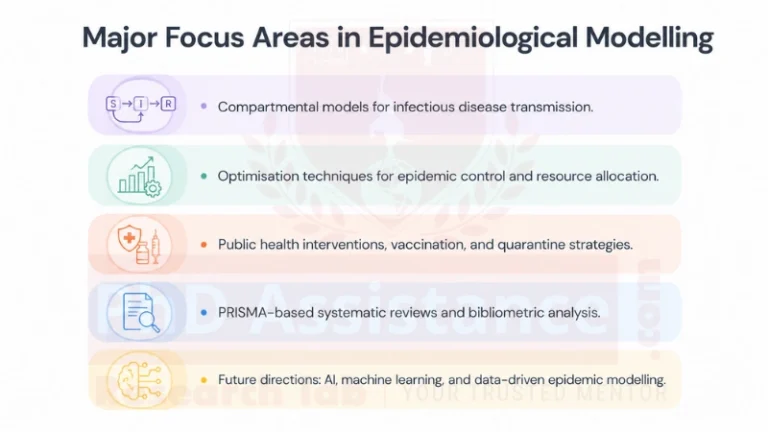
Even though the research is mainly concerned with engineering education, the stress that the research places on computational modelling can also be applied in other subjects. This can be seen from other subjects where similar methodologies have been adopted, including Compartmental Models in Epidemiology.
Summary of the article
This paper investigates the use of nanotechnology in higher education via a bibliometric and technological analysis. With the help of bibliometric data from 707 Scopus-indexed papers published from 1998 to 2025, the authors conducted an analysis of global research, development in curricula, pedagogy and technology trends in Chemical Engineering Education.
Findings show an increasing trend in studies related to nanotechnology, especially from the year 2019, due to the rising global interest in interdisciplinary engineering education. It is suggested by the authors that the curriculum of Chemical Engineering should be updated by including nanoscale thermodynamics, nanomaterials, molecular simulation, artificial intelligence, virtual labs, and problem-based learning projects.
The research highlights some of the implementation difficulties as well, such as lack of expert faculty, inadequate laboratory facilities, inconsistencies in curriculum standards, and disparities in the use of digital technology. To overcome such problems, the authors recommend standardisation of curriculum, cooperation between universities and industries, and digital learning in Nanotechnology and for Industry 4.0.
Critique
Significance and contribution of the field
One of the strengths of this article is that the discussion about curriculum development is quite wide and is not based on developments in the field of nanotechnology alone. The use of bibliometric data in the process of education reform makes this research very relevant for Engineering Education.
The results are consistent with past studies on the increasing significance of nanotechnology in engineering education. This is evident in Vahedi & Farnoud’s (2019) study, which found that laboratory experiments involving nanotechnology contribute to practical learning among students, and in the case of Raza & Raza (2013), it was shown that simulated learning aids in nanotechnology-related concepts. The same applies to the study conducted by Chiu, Meng, Chai, King, Wong, & Yam (2021).
Nonetheless, the article is more focused on the benefits of technological integration than the problems associated with it. According to research conducted by Bilques, Belton, & Campbell (2023), technological integration in higher education will be effective not only because of the presence of advanced technology but also due to institutional readiness, faculty development, and organisational support. Further, the article fails to compare itself with international accreditation criteria like ABET and EUR-ACE.
Eventually, this article offers a great contribution to the area of Nanotechnology Education through innovation of curricula, e-learning and sustainability. Nonetheless, a balanced analysis of implementation challenges and international curriculum standards would have added practical value to the article.
Methodology and research design
In the study, the researchers used a bibliometric review along with a qualitative technological analysis approach to assess the incorporation of nanotechnology in Chemical Engineering. The researchers used the Scopus database and reviewed 707 articles from the year 1998 to 2025. Trends of publication, co-occurrence of keywords, contributions of countries, and thematic development have been analysed through this approach. This approach is justified as bibliometric analysis gives an objective view of research production and collaborations.
One of the strengths of the methodology employed is the systematic collection of data and the transparent nature of the search process, which improves the reliability of the results presented. The use of the visual mapping technique makes it possible to see how nanotechnology research has developed and the growing impact that it has had on engineering education.
Though there are some advantages of the methodology, it has several disadvantages as well. The research is based only on the Scopus database without taking into consideration those articles which are indexed in such databases as Web of Science, IEEE Xplore, ERIC, and Google Scholar. Besides, the use of bibliometrics allows identifying trends in publishing but does not assess the efficiency of the implementation of curricula.
Further research can be conducted to prove the validity of these findings using surveys, interviews, or case studies conducted on teachers, learners, and industry experts. These kinds of studies would yield more insights into the adoption of nanotechnology in engineering programs.
Theoretical and Interdisciplinary Analysis
Nanotechnology and higher education are addressed through an interdisciplinary approach by making a connection between nanotechnology and curriculum design, digital learning, sustainability, and technological innovations. It reflects how the current Higher Education Curriculum has evolved, which involves engineering education combining concepts of material sciences, computer science, artificial intelligence, and environmental engineering.
Moreover, the review shows the increasing significance of modelling and computer software in the field of engineering education. There is a similar use of models in other sciences like epidemiology, where Compartmental Models are used for simulation of infectious diseases to support the evidence-based decision-making process. Though there is no direct correlation between epidemiology and the article discussed above, there is still common ground between the two areas, which includes analysis and interdisciplinary cooperation.
Nevertheless, the theoretical aspect of the study may have benefited from the use of existing educational approaches like constructivism, experiential learning, or competency-based education. Reference to existing learning theories within the context of the curriculum suggestions could have made the study more theoretically valid.
Ethical Considerations
Although the article touches on some ethical issues that revolve around the responsible application of nanotechnology and sustainable engineering practices, ethical issues get little attention despite the significance of ethics in the education of chemical engineering students. Even though the authors advocate for technological advances and curriculum changes, the issue of ethics associated with nanotechnology gets scant attention.
In this research, the author does not highlight any significant issues related to the safety of the environment, responsible innovation, or the impact of nanotechnology on society. Also, there is no mention of the ways by which ethics may be integrated into the engineering curriculum via teaching or learning experiences.
Since future engineers are supposed to design technologies that influence society and the environment, ethics need to be emphasised in engineering education along with technical expertise. Increased importance of research ethics, risk analysis, and sustainability would have made the recommendations even more valuable in the article.
Writing Style and Structure
It is clearly structured and written in a coherent style, starting with the bibliometric analysis and moving on to the recommended curriculum development and further research. Graphical tools help to present the results more clearly and simplify the interpretation of the bibliometric data. The style of the paper is clear and concise.
Nonetheless, some parts include repetitive descriptions of technological progress and educational gains. If the author cut the repetition and compared the paper with existing literature on curricula, the balance of the paper would be better.
Conclusion
Overall, it makes a significant contribution to the field of nanotechnology by exploring ways to incorporate nanotechnology into the Chemical Engineering Curriculum. Its application of bibliometric and technological reviews results in a complete survey of current trends in research, innovative curriculum development, and education for the future. In addition, this research successfully emphasises the significance of interdisciplinary learning, information technologies, and cooperation between universities and industries for Industry 4.0.
Nonetheless, the review could have been made better with the inclusion of more than one database of literature, more discussion of educational theories, and analysis of the institutional constraints to the implementation of the curriculum. Further, there is room for improvement in terms of addressing ethics and providing empirical evidence of learning outcomes.
Regardless of the above limitations, the article lays a good basis for future curriculum development and will be an excellent source for any person who wishes to update Engineering Education and Higher Education curricula on new technologies.
“Need support with your critical review? PhD Assistance Research Lab provides expert guidance for doctoral scholars and early-career researchers to enhance their review in the integration of nanotechnology and chemical engineering.”
Reference
- Nandiyanto, A. B. D., Kurniawan, T., Bilad, M. R., Al-Obaidi, A. S. M., Farobie, O., & Hammouti, B. (2026). How to Integrate Nanotechnology into Chemical Engineering Education: A Bibliometric and Technological Review of Curriculum Standards, Research Trends, Pedagogical Challenges, and Future Prospects. ASEAN Journal of Educational Research and Technology. https://www.ejournal.bumipublikasinusantara.id/index.php/ajert/article/viewFile/871/683
- Bilques, Z., Belton, D. J., & Campbell, G. M. (2023). Structure and content of BEng chemical engineering programmes in the UK, relative to the Frontiers in Chemical Engineering Education model. Process Integration and Optimisation for Sustainability, 7(5), 1003–1030. https://doi.org/10.1007/s41660-022-00307-6
- Chiu, T. K. F., Meng, H., Chai, C. S., King, I., Wong, S., & Yam, Y. (2021). Creation and evaluation of a pre-tertiary artificial intelligence (AI) curriculum. arXiv. https://arxiv.org/abs/2101.07570
- Raza, H., & Raza, T. Z. (2013). A hands-on laboratory and computational experience for nanoscale materials, devices and systems education for electronics, spintronics and optoelectronics. arXiv. https://arxiv.org/abs/1303.6368
- Vahedi, A., & Farnoud, A. M. (2019). Novel experimental modules to introduce students to nanoparticle characterization in a chemical engineering course. Journal of Chemical Education, 96(9), 2029–2035. https://doi.org/10.1021/acs.jchemed.9b00423