
How to use this list
This list is for master's and doctoral researchers in control, mechatronics, manufacturing and related fields who need a topic in industrial automation or robotics. Sixteen topics are grouped into four themes, each with a question one project can answer, a likely design and a reason it matters now.
The topics are starting points. A topic becomes yours when you narrow it to a specific system, data source and comparison that your laboratory, industrial partner or public datasets can support.
Background: what industrial automation covers
Industrial automation is the control of machines and processes by programmed logic and feedback, with sensors, actuators, controllers and supervisory software. Automation is usually organised in levels, from the shop floor to enterprise planning, and Industry 4.0 architectures link these levels through cyber-physical systems (Lee et al., 2015).
- 1Field: sensors and actuators
- 2Control: PLCs, CNC and robot controllers
- 3Supervisory: SCADA and human-machine interfaces
- 4Operations: manufacturing execution systems
- 5Enterprise: planning, orders and logistics
| Type | What it means | Typical use |
|---|---|---|
| Fixed (hard) automation | Equipment configured for one sequence of operations | High-volume production of one product |
| Programmable automation | Sequence changed by reprogramming between batches | Batch production with CNC machines and robots |
| Flexible (soft) automation | Changeover between products with little lost time | Mixed-model production |
| Commonly cited benefit | Commonly cited drawback |
|---|---|
| Higher productivity and consistent quality | High initial capital cost |
| Lower operating cost per unit | Some tasks remain hard or uneconomic to automate |
| Fewer routine inspections through closed-loop control | Need for skilled maintenance and programming staff |
| Safer work by removing people from hazardous tasks | Changes in jobs and tasks for workers |
Theme 1: Fault detection, predictive maintenance and digital twins
| Topic | Researchable question | Likely design | Why now |
|---|---|---|---|
| Fault identification with few labels | How much labelled fault data does a semi-supervised classifier need to match a fully supervised one on a given machine? | Experimental comparison on a public or partner dataset | Faults are rare, so labels are scarce |
| Choosing a maintenance algorithm | Which data characteristics should decide between anomaly detection, classification and remaining-life models? | Framework application across several cases (Arena et al., 2024) | Algorithm choice is often ad hoc |
| Model or digital twin? | Does a live-updated twin of a line detect drift earlier than a static simulation model? | Comparative case study (Wright & Davidson, 2020) | The term "digital twin" is used loosely (Jones et al., 2020) |
| Twin-based anomaly detection | Can a twin-based detector be transferred between two similar production cells? | Transfer experiment (Xu et al., 2023) | Retraining for each cell is costly |
Theme 2: Security of industrial control systems
| Topic | Researchable question | Likely design | Why now |
|---|---|---|---|
| Physics-based attack detection | Can process models flag manipulated sensor values that network monitoring misses? | Testbed experiment (Giraldo et al., 2018) | Attacks can mimic normal traffic |
| Intrusion detection evaluation | How do detectors trained on public datasets perform on a different plant? | Cross-dataset evaluation (Mitchell & Chen, 2014) | Results rarely generalise |
| Security digital twins | Can a twin of a control system be used to test defences without risk to production? | Design science study (Kampourakis et al., 2026) | Live systems cannot be attacked for testing |
| Distributed ledgers in industrial IoT | What, if anything, does a ledger add to integrity protection over conventional authentication in a defined use case? | Threat model and prototype comparison | Claims often outrun evidence (Abraham et al., 2025) |
Theme 3: Robotics and adaptive assembly
| Topic | Researchable question | Likely design | Why now |
|---|---|---|---|
| Adaptive automation in assembly | Does adjusting the level of automation to the worker's state improve both throughput and satisfaction? | Laboratory experiment with operators | Assembly is still labour-intensive |
| Shared workspaces | How do workers and maintenance staff manage safety around industrial robots in practice? | Ethnography or interviews (Barker & Jewitt, 2022) | Safety rules and practice can diverge |
| Reconfigurable cells | How quickly can a robot cell be reconfigured for a new product, and what limits it? | Case study with time measurements | Product variety is rising |
| Robot controller tuning | Does a learning-based tuner beat classical tuning on a specific manipulator under payload change? | Simulation then hardware test | Payloads vary in flexible production |
Theme 4: Labour, firms and the management of automation
| Topic | Researchable question | Likely design | Why now |
|---|---|---|---|
| Automation and firm performance | How did adoption of automation technologies relate to productivity and employment in manufacturing firms of one country over a decade? | Panel data analysis | Firm-level data are increasingly available |
| Tasks rather than jobs | Which tasks in a given occupation were automated, and which grew? | Task-based analysis (Acemoglu & Autor, 2011) | Job-level counts hide task change |
| Automation or augmentation | When do plant managers use AI tools to replace decisions rather than support them? | Multiple case study (Raisch & Krakowski, 2021) | Both strategies coexist |
| Skills for automated plants | What maintenance and programming skills do small manufacturers lack after automating? | Survey with follow-up interviews | Skills shortages limit benefits |
Figures
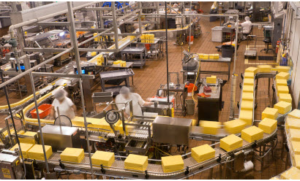
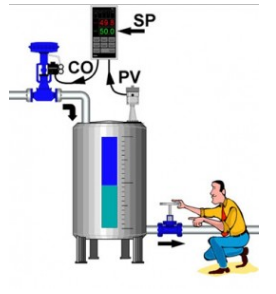
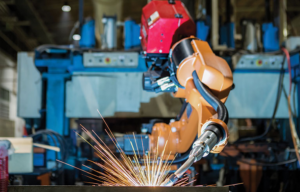
Images of industrial automation. They are kept for reference.


How to test a topic before you commit
Engineering doctoral students often choose topics through their supervisor's funding, available equipment and personal interest (Mosyjowski et al., 2017). A structured check helps balance these influences (Luse et al., 2012).
- Access. Do you have the plant, testbed, robot or dataset the question needs, and permission to use it?
- Comparison. Is there a clear baseline, such as current practice or an established method?
- Measurement. Can you measure the outcome reliably, for example detection delay, downtime or cycle time?
- Safety and ethics. Do experiments involve workers or live plant, and what approvals are needed?
- Scale. Can the question be answered within the funded period?
Where the data and test platforms come from
Most topics in this field stand or fall on access to a system or data. Plan the source before the question is fixed, and record its limits in the proposal.
- Industrial partners offer real operating data and realistic constraints, but data-sharing agreements, confidentiality and production schedules take time to arrange. Start the conversation in the first months.
- University laboratories and testbeds allow controlled experiments, including security tests that could never be run on live plant, but may differ from industrial conditions in scale and noise.
- Public datasets make results comparable with other studies, but a model that performs well on one public dataset may not transfer to a different machine or plant, so plan a second dataset where you can.
- Simulation and digital twins let you vary conditions systematically; state clearly how the model was validated against the physical system (Wright & Davidson, 2020).
- Surveys, interviews and observation suit the organisational and labour topics in Theme 4 and the human factors questions in Theme 3, and need ethics approval.
Worked example: narrowing one topic (illustrative)
A researcher starts with "intelligent fault detection in automation". An industrial partner offers two years of vibration data from twelve pumps, with only a few dozen labelled faults. The topic narrows to: "How many labelled faults does a semi-supervised model need to match a supervised model in detecting bearing faults in centrifugal pumps?" The design compares models on the partner data and a public dataset, measures detection delay and false alarms, and treats the labelling budget as the main variable.
Common mistakes
- Choosing a topic that needs plant access you do not yet have.
- Calling any simulation a digital twin.
- Reporting detection accuracy without false-alarm rates or detection delay.
- Proposing a technology, such as blockchain, before defining the problem it should solve.
- Studying automation effects on jobs without looking at tasks within jobs.
For a related example in educational robotics, see the annotated Robot as a Service proposal; for method choices in engineering, see designing an engineering PhD methodology.
Key takeaways
- Industry 4.0 links field devices to enterprise systems through cyber-physical architectures (Lee et al., 2015).
- Fault and maintenance topics need a clear choice of algorithm family and baseline (Arena et al., 2024).
- Control-system security is a growing field where testbeds and twins make safe experiments possible (Abraham et al., 2025).
- Study the effects of automation on tasks, not only on job counts (Acemoglu & Autor, 2011).
- Check access, comparison and measurement before committing to a topic (Luse et al., 2012).